The Title 42 border policy is ending. What does that mean?
Everything you need to know about Title 42 ending and what it means for the future.
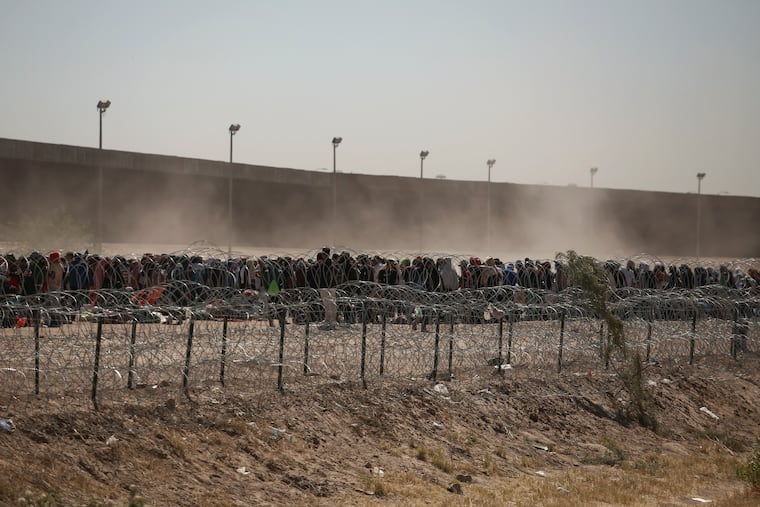
The border policy that allowed the United States to quickly expel migrants is about to expire.
Title 42 — an emergency order that was enacted under former President Donald Trump with the justification of curbing the spread of COVID-19 — is being lifted at 11:59 p.m. Philadelphia time on Thursday. The contentious rule has allowed U.S. authorities to remove nearly three million migrants since it was implemented in March 2020.
As the expiration date looms, there’s been an increase in asylum seekers crossing the U.S.-Mexico border. Homeland Security, shelter operators, immigrant advocates, and local politicians say they are anticipating the influx to put a strain on resources.
» READ MORE: Philly receives first bus of immigrants from Texas in four months, readies for more arrivals
The policy’s end marks a major change regarding how the United States will process migrants. Still, experts warn, it doesn’t mean the process will suddenly become easy for those seeking asylum.
President Joe Biden’s administration is expected to roll out a plan that it says will “humanely manage the border.”
Here’s what you need to know.
What is Title 42?
Title 42 is a health law that dates to World War II and allows the government to expel people to help stop the spread of communicable diseases. The policy overrides the country’s immigration laws that let people ask for asylum after entering the country illegally.
When the COVID-19 pandemic was revving up, the Centers for Disease Control and Prevention released a public health order with initiatives to help stop the spread of the disease. The order let authorities quickly expel migrants as they arrived on U.S. land.
Through an agreement between the United States and Mexico, migrants from Mexico, Cuba, Venezuela, and Central America can be expelled to Mexico. Migrants from other areas, including Haiti, are expelled to their native country unless they have documentation to live in Mexico. The Mexican government has agreed to continue accepting migrants from Cuba, Haiti, Venezuela, and Nicaragua when they’re expelled from the United States.
Under the Trump administration, unaccompanied migrant children were also subject to expulsion, a major point of contention. The Biden administration later exempted children from the practice.
Why is it called Title 42?
As noted by CNN, the policy got its name from the statute number in the Code of Federal Regulations that allowed the CDC director to issue it.
The 42nd statute in the U.S. code says the existence of quarantinable communicable diseases allows the director the right to prohibit people from foreign countries from entering the United States.
What is happening at the border now?
With border restrictions about to change, tens of thousands of people are waiting in Mexico to flee violence, poverty, and political instability, NPR reported.
“There’s going to be chaos” initially, said Priscilla Orta, an immigration attorney with Lawyers For Good Government in Brownsville, Texas. “But hopefully within the next week or two, there will become a rhythm.”
Border towns are already observing an increase in migrants. Some mayors elsewhere say they are overburdened by migrants already being bused from Texas, CNN reported.
A bus carrying immigrants who crossed the border into Texas arrived in Philadelphia on Wednesday, as part of Gov. Greg Abbott’s effort to target Northern sanctuary cities. It was the first bus to arrive locally in four months.
» READ MORE: Philly receives first bus of immigrants from Texas in four months, readies for more arrivals
To prepare for the expected surge, the Pentagon is dispatching extra active-duty troops to the border to help Department of Homeland Security agents, according to CNN.
But migrants crossing illegally will face a new set of policies.
What will happen next?
The Biden administration campaigned on promises to change the immigration system into something more humane and comprehensive but has continued some of Trump’s policies — including Title 42, until now.
This week, the White House said a version of asylum restrictions that were proposed earlier this year would be enacted.
Under the finalized policy, migrants will need to either first apply for protection in a third country or apply for admission through the U.S. Customs and Border Protection mobile app. Officials said people who don’t follow the newly outlined steps would be removed quickly. It’s unclear how long the turnaround time for applicants’ appointments or acceptance could take.
A White House official said on a call with reporters Tuesday evening that CBP was adding interview rooms and phone lines to expedite the process and was ready to deploy as many as 1,000 asylum officers to handle interviews.
A finalized version of the new policy is expected to be published Thursday. So far, the proposed policy has been met with criticism across the aisle. ABC reports it is likely to be challenged in court.