Takeaways from our investigation into an anti-violence group that got millions in public funds, yet faced evictions and a tax lien
An Inquirer investigation dug into why a nonprofit that received millions from city and state funders was in financial distress, and had to shut down its housing program after just a few years.
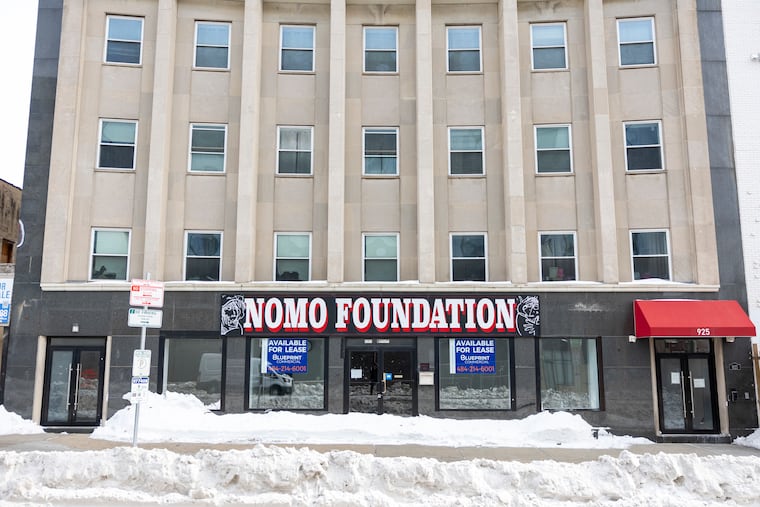
On Wednesday, an Inquirer investigation detailed how a local anti-violence group had to terminate a housing program, displace tenants, and stave off financial collapse, despite receiving millions of dollars in city, state and federal funds over several years.
City bureaucrats had raised questions about the stability of NOMO, which is short for New Options, More Opportunities Foundation, for years. But elected officials publicly promoted the group and funds kept flowing, which initially provided youth afterschool programs before taking on significant expenses to launch an affordable housing initiative.
The nonprofit became one of the city’s signature efforts to support anti-violence work. But records show earlier concerns about NOMO turned into reality as a financial crisis hit the organization in late 2024.
NOMO subsequently faced an IRS lien and five lawsuits over the last two years concerning hundreds of thousands of dollars in unpaid rent.
Although the group’s director says the nonprofit is now financially stable, it ended the housing program, laid off staff and curtailed its afterschool programming. And NOMO’s problems raise further questions about the city’s management of its anti-violence grants, meant to stabilize and grow similar grassroots groups.
» READ MORE: The city spent millions to grow one anti-violence nonprofit. Instead, it nearly imploded.
Here are five takeaways from the Inquirer report:
Grant administrators noticed red flags early on — but kept funding the group
After NOMO received its first $1 million city grant in 2021, grant managers almost immediately flagged issues at the organization, records obtained by The Inquirer under the Pennsylvania Right to Know Law revealed.
One administrator warned the city about “significant weaknesses” with its financial controls, including the absence of audited financial statements and balance sheets. The administrator warned of a lack of oversight for spending decisions.
Yet the city kept pushing funding through.
Four years later, city officials still did not know who serves on NOMO’s board. Nevertheless, since 2020 the group has been awarded $2.4 million in city grants, another $2.9 million in grants funded by federal Temporary Assistance for Needy Families (TANF) money, and another $1.1 million in state public-safety grants.
Tenants were displaced after NOMO’s housing program failed
NOMO was initially a small nonprofit focused on anti-violence programming. But when it sought a city Community Expansion Grant, its application included one sentence proposing a housing program — which soon became the group’s largest budget item.
Its annual lease obligations totaled $750,000, which included renting an entire newly constructed apartment complex near Drexel University’s campus at a cost of more than a half-million dollars annually. Records do not show any sign that city officials questioned the wisdom of the housing program or examined how it supported the organization’s core anti-violence mission.
NOMO launched the housing effort with an apartment giveaway, in which tenants were surprised with new homes and treated to shopping sprees. It earned positive media attention, and NOMO’s executive director said the program supported 23 young women, many of them single mothers.
Just a few years later, a landlord filed to evict NOMO from the building over $418,000 in back rent.
The city sought to direct $700,000 in federal rapid rehousing funds to NOMO to save the program, but the money came with restrictions that NOMO was unable to meet. NOMO gave up the apartments, and its tenants relocated to the homes of relatives or were placed into transitional housing services.
NOMO made other questionable spending decisions
NOMO executive director Rickey Duncan tripled his own salary shortly after receiving the city grant and signed leases for new locations with large ballrooms. Duncan has said he envisioned that NOMO’s three youth centers in North, West, and South Philadelphia would become revenue generators for the nonprofit, serving as venues for baby showers, weddings, Eagles watch parties and other events.
Meanwhile, city grant administrators raised concerns as spending on NOMO’s core programming declined. Last year, as the group faced legal action over unpaid rent, Duncan sought reimbursement for a pair of Sixers season tickets. The city denied this request.
NOMO laid off staff and curtailed operations last year
During the peak of NOMO’s financial crisis last spring, the city froze its funding after discovering a four-month-old federal tax lien. At the same time, the TANF funds ended. NOMO had to cut most of its staff and end its housing program.
Duncan says the group’s finances have stabilized since renegotiating its leases and cutting costs, and the lien was the result of an accounting error.
But the organization now serves about 140 children a year across its three youth centers — roughly the same as when it was operating in just one location and before the city spent millions of taxpayer dollars to expand NOMO’s reach.
Problems dog Philly’s anti-violence grant program
NOMO’s main city funding source, the Community Expansion Grants, has had other high profile problems.
A 2023 Inquirer report found some of the groups that had been selected for funding were poorly equipped to manage the sudden cash infusions. A city controller report the following year corroborated many of these findings.
Last year, the District Attorney’s Office charged nine police officers with conspiracy and theft of $392,000 in CEG funds linked to an afterschool boxing program.
Mayor Cherelle L. Parker referred questions about NOMO to the city’s Office of Public Safety, which praised the group’s efforts.
Council President Kenyatta Johnson also praised NOMO in a statement responding to The Inquirer’s findings. He added that he expects the Office of Public Safety to “review these matters thoroughly, fairly, and professionally.”
“It is crucial that any concerns are taken seriously and examined through the proper channels, with facts guiding the outcome,” Johnson’s statement said.
ACKNOWLEDGMENT