With the smoke cleared, key questions emerge in the wake of a deadly nursing home blast
Attorneys and experts said the investigation will likely center on actions of Peco and the nursing home’s new owner.
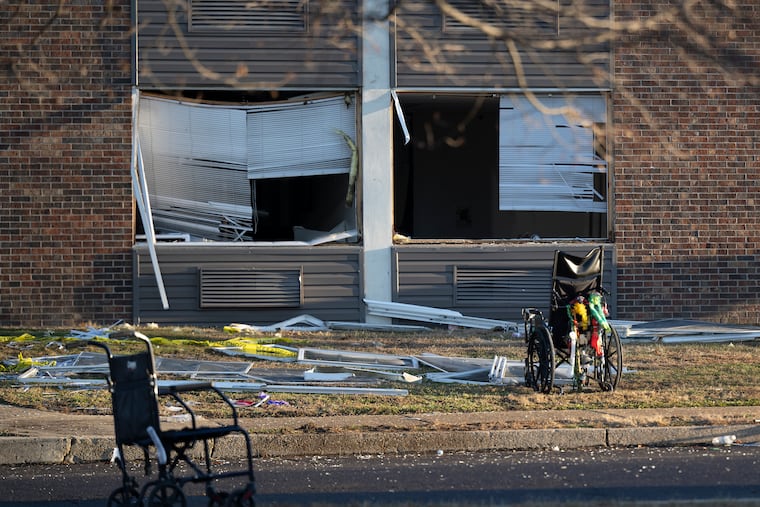
Twenty-four hours after two gas explosions ripped through a Bucks County nursing home, the dead and injured had been identified, survivors were accounted for, and the cleanup was underway. But unanswered questions about the blast’s cause mounted.
On Wednesday morning, Peco provided a drastically different account of when its crews responded to reports of a gas odor on Tuesday, saying technicians had actually arrived hours — not minutes — before the blast at Bristol Health & Rehab Center.
Then, the energy company went silent, declining to answer any additional questions as the National Transportation Safety Board (NTSB) took over a sprawling investigation that will also involve other federal law enforcement and regulatory agencies.
Meanwhile, the new operator of the 174-bed nursing home, Saber Healthcare Group, is also coming under scrutiny amid questions about the poorly maintained facility on Tower Road that it took over from another provider just three weeks ago.
It could take months to get answers about what caused, and who is at fault for, the blast that killed two people and left 19 hospitalized, one in critical condition.
Experts and attorneys told The Inquirer the investigation will likely focus heavily on the actions of Peco and the nursing home’s operators.
“If the facility doesn’t maintain the equipment and the gas in their own facility, then they would be responsible,” said Robert Mongeluzzi, an attorney who has represented victims of gas explosions. “If there were reports of the gas leak, and Peco is notified and the facility isn’t cleared … there’s going to be responsibility on both of them.”
In a statement, the NTSB said investigators will not be able to fully evaluate the natural gas service line until “a safe path is cleared.” That effort alone could take several days. The agency provided no timeline for its initial findings.
Saber Healthcare Group took over operations at the nursing home on Dec. 1. Prior to that, the facility had been managed by another privately run for-profit healthcare company, the Ohio-based CommuniCare Health Services.
CommuniCare, which had operated the home since 2021, racked up a long list of code violations for unsafe building conditions and substandard healthcare. Just two months ago, state inspectors cited the facility for lacking a fire safety plan, failing to maintain extinguishers, and allowing conditions that would cause poor smoke ventilation.
Federal inspection records also show numerous citations over previous years for substandard healthcare, poor infection control, and mismanaged medical records, earning the facility a one-star rating. CommuniCare incurred more than $418,000 in fines due to violations in 2024, records show.
“We have worked to improve and fix prior issues, and we will continue that work in the wake of this tragedy,” Saber said in a statement Tuesday.
Attorneys watching the news unfold questioned whether Saber should have evacuated residents sooner on Tuesday. Peco’s own guidelines urge people who smell gas to evacuate the building immediately.
“If you or I smelled gas in our apartment or house, we’d be like, ‘Where is it?’ You have to get everybody out,” said Ian Norris, an attorney at Philadelphia-based McEldrew Purtell who has sued Saber and other nursing home operators accused of negligence. “In a nursing home, you have a higher standard of care. They are dependent residents who are there on the basis that they need help.”
A Saber representative said the company was looking into the evacuation procedures. In its statement Tuesday, the company said “facility personnel reported a gas smell” to Peco. The statement made no mention of an evacuation effort.
The smell was confined to the kitchen area of the nursing home, according to the Saber representative.
A Peco gas technician arrived at the nursing home on Tuesday afternoon. He was working alone in the basement below the kitchen area to address the issue, and as he went to his truck to retrieve more tools, the building erupted, said Larry Anastasi, president of IBEW Local 614, the union that represents Peco workers.
Whether Peco’s gas lines played a role in the blast remains unknown. But the utility company’s aging gas infrastructure will likely come under closer inspection as the probe progresses, according to attorneys with knowledge of investigations following such explosions.
One detail that became clear Wednesday was that Peco’s gas meter was located in the basement of the nursing home — not outside and aboveground as required by a 2011 order from the Pennsylvania Public Utility Commission (PUC).
The PUC, like Peco, declined to comment and referred questions to the NTSB.
While the age and condition of the gas line near the nursing home were not clear, Peco has acknowledged it had 742 miles of substandard gas lines across the state — including cast iron, plastic, and uncoated steel piping — that needed replacing. The lines accounted for 5% of Peco’s gas service but 82% of leaks, according to a report from the PUC.
Peco plans call for all of those lines to be replaced by 2035 and to invest roughly $6 billion to inspect, modernize, and perform maintenance on all of its systems over the next five years.
Richard Kuprewicz, an expert on gas pipeline safety and investigations, said it is too early to tell if Peco or the nursing home acted improperly. He warned against jumping to conclusions the day after the explosions.
“We just don’t have the facts on this,” Kuprewicz said. “The tragedy is they had an explosion from a gas release that they knew was occurring. People will raise questions about this for months.”
In the immediate aftermath Tuesday evening, Peco spokesperson Greg Smore said in a statement that the company’s crews had responded to the nursing home “shortly after 2 p.m.” Tuesday and that while they were on site, the explosion occurred. The blast was reported just before 2:20 p.m. Tuesday, according to Bristol Fire Chief Kevin Dippolito.
But in a revised statement Wednesday morning, the company backtracked, saying its crews actually arrived “a few hours” before the explosion. It would not provide a specific time.
Peco said it shut off natural gas and electric service “to ensure the safety of first responders and local residents.” But, again, it would not say when.
Depending on where the gas leak was, Kuprewicz said, significant amounts of gas could continue to seep out after a shutoff.
“There isn’t one standard answer for all this,” he said. “Even when you shut it off, it doesn’t [always] stop flowing.”
Inquirer staff writers Samantha Melamed and Barbara Laker contributed to this article.

The Inquirer’s journalism is supported, in part, by the Lenfest Institute for Journalism and readers like you. News and editorial content are created independently of The Inquirer’s donors. Gifts to support The Inquirer’s high-impact journalism can be made at inquirer.com/donate. A list of Lenfest Institute donors can be found at lenfestinstitute.org/supporters.