Five takeaways from our investigation into Pa.’s booming — and unregulated — weed industry
Almost every "legal" sample The Inquirer had tested proved to be over the potency limit or contaminated with mold or pesticides.
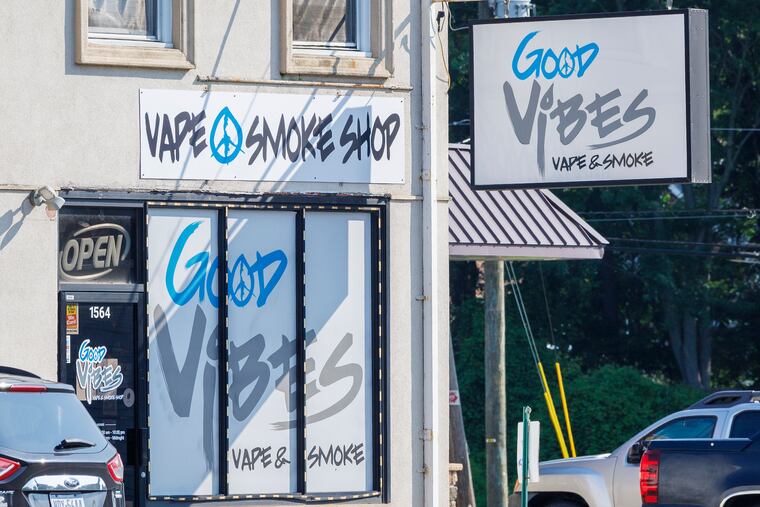
Pennsylvania doesn’t have a recreational marijuana program. Yet under an apparent loophole in the 2018 U.S. Farm Bill, a cottage industry of intoxicating hemp products has developed for cannabis users.
The result is something that resembles the over-the-counter recreational sales in states like New Jersey or California — but without oversight. And many hemp companies that market their alternative products as safe and legal are deceiving consumers.
An Inquirer investigation published on Tuesday illustrated how hemp-derived THC products sold under the cover of the Farm Bill are often illegal and full of toxins.
The Inquirer’s reporting — which included buying THC products in the area and then paying a laboratory to have them tested — illuminates a gray market that has risen up alongside recreational and medical marijuana programs.
Here’s what we found:
1. Pennsylvania is fueling a multibillion dollar gray market nationwide due to legislative inaction
Under the Farm Bill, hemp became legal if it contained less than .3% Delta-9 tetrahydrocannabinol (THC) after harvest. But the legislation, meant to spur a struggling agricultural sector, was soon exploited.
Entrepreneurs began extracting trace amounts of intoxicating THC variants from those legally grown hemp flowers and turning them into powerful, alternative cannabis products. The thinking went like this: So long as the products tested below the limit for Delta-9 THC, the compound in marijuana that gets users high, they had good legal standing.
The hemp-derived THC market boomed nationwide over the last seven years, with Pennsylvania smoke shops and wellness stores fueling the business.
Meanwhile, Harrisburg lawmakers are still debating what to do, despite now being surrounded by five states with government-regulated recreational cannabis programs. (On Friday, sales for recreational use began in Delaware.) And Pennsylvania has only just begun holding hearings on unregulated hemp products.
2. Tests show products in Pa. are rife with illicit pesticides and other toxins
While marijuana sold in medical dispensaries undergoes extensive testing, that is not the case for hemp-derived products sold in smoke shops, gas stations, and corner stores across the state.
The Inquirer purchased 10 flower samples that were marketed as legal hemp from 10 shops around Philadelphia. Reporters then paid to have the samples tested at Trichome Analytical, a laboratory that services New Jersey’s recreational program.
The tests showed that nine out of 10 samples were over the federal potency limit — meaning that legally speaking, they’re just weed.
More alarmingly, seven of the samples contained aspergillus, a fungus with spores that can cause respiratory infections when smoked. Three contained pesticides, including one illegal chemical that’s banned in the U.S. and abroad. The danger of contaminants in gray-market weed is not well studied, experts told reporters.
3. What’s marketed as legal hemp is often just black market weed
Some manufacturers exploit the Farm Bill loophole by extracting THC from legally grown hemp crops and spraying the concentrate back onto CBD flower.
But in practice, chemists and industry experts say much of the hemp flower being marketed for legal sale is actually just marijuana.
Chemists at Trichome Analytical said seven out of the 10 samples they tested for The Inquirer could not have been grown in a legal hemp program. That means they were just conventional marijuana either illegally grown or trafficked from states with recreational cannabis programs and relabeled as hemp.
That’s significant because it shows how the hemp-derived THC industry has gone from skirting a loophole to brazen lawlessness.
4. Manufacturers are deceiving consumers about the legality and purity of their products
Pa.’s unregulated hemp stores claim to sell products that are both legal and often free from the impurities that are barred in most recreational cannabis systems.
The proof: “certificates of authenticity” (COA) — documentation of lab results that purport to show products are under the Delta-9 THC limit and often toxin-free.
But The Inquirer’s investigation found some hemp suppliers provided lab results that had been digitally altered to remove evidence of contamination from pesticides or — ironically — to show elevated levels of THC as an inducement to buyers.
Several cannabis testing labs nationwide confirmed that hemp companies had used their template to falsify lab reports or hide contamination. In two cases confirmed by The Inquirer, labs said the hemp company had never even been their client.
5. Hard designer drugs are found in hemp products — but enforcement is rare
The full scope of adulterants in hemp-derived THC products is far greater than those captured by The Inquirer’s sample study. For example, The Inquirer did not test vape cartridges or gummies for contaminants like heavy metals.
But data shared by the Horsham-based Center for Forensic Science Research & Education — which provides free drug testing with funding from the U.S. Drug Enforcement Administration — found evidence of lab-made designer drugs in other hemp-marketed products sold in Pennsylvania.
One vape pen purchased in Philadelphia last month contained traces of dimethylpentylone, a synthetic stimulant often used in the club drug Ecstasy.
Enforcement of shops that sell these products varies by geography, however. The Pennsylvania State Police maintains that all THC products are illegal, while the Philadelphia Police Department says that some, like Delta-8 THC, are permissible.

The Inquirer’s journalism is supported, in part, by the Lenfest Institute for Journalism and readers like you. News and editorial content are created independently of The Inquirer’s donors. Gifts to support The Inquirer’s high-impact journalism can be made at inquirer.com/donate. A list of Lenfest Institute donors can be found at lenfestinstitute.org/supporters.