The new head of Chesco’s economic engine knows that open-space preservation is part of the county’s ‘culture’
Mike Grigalonis, who took over as CEO of the Chester County Economic Development Council in July, reflects on open space preservation, development, and more.
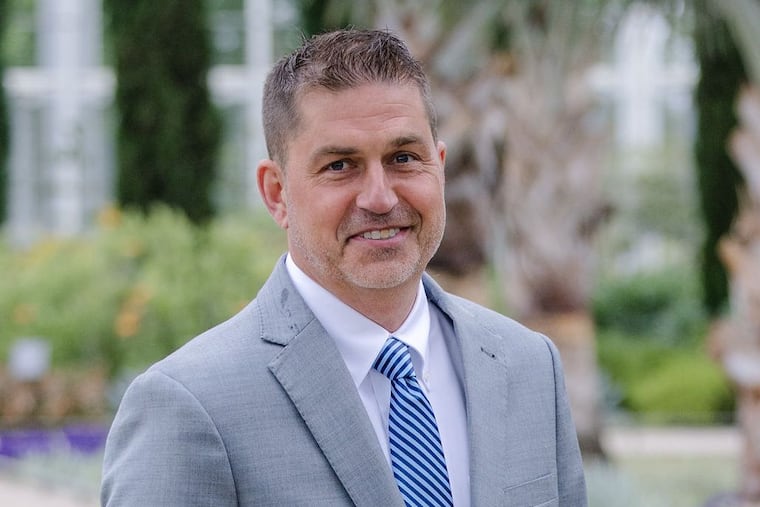
When he started as an intern 27 years ago, Mike Grigalonis never expected to become CEO at the Chester County Economic Development Council. But now he’s taken the top job, leading an organization that propels business growth in the county.
Since then, he’s seen the council grow from a six-person operation to one that boasts more than 40 employees, with teams dedicated to building out the workforce, supporting agriculture, and directing hundreds of millions of dollars to projects in the county. Grigalonis succeeds his longtime boss, Gary Smith, who stepped down July 1.
As the council has grown, so too has Chester County, which remains the richest of Pennsylvania’s 67 counties.
“I’m excited and grateful and humbled for this opportunity,” said Grigalonis, 53, who lives in Upper Uwchlan Township. “I don’t take it for granted, and I’m really excited about what’s to come.”
The Inquirer talked with Grigalonis about the current economic landscape of the county.
This conversation has been edited for clarity and brevity.
What’s changed most since you started in 1998?
In some ways there has been a lot of change, but in some ways there haven’t. I think about open space preservation, for example. … I think what this county, over generations of leaders, has done an amazing job of is balancing, making sure that we continue to have that open space, which is a big part of our culture, a big part of I think what makes us attractive and successful, but still having development and job creation and innovation and all those things happening at the same time.
How do you balance preserving the culture of Chester County while fulfilling the council’s mission?
Very carefully. ... I always start by saying up front that I totally support open space preservation. I completely acknowledge the value that it’s brought to the county.
Do I feel that sometimes we sometimes lean maybe a little too heavily with the open space? Maybe. The planning commission does what they call a non-residential construction report. They look at institutional, they look at industrial, and they look at commercial. And in 2025, which is the most recent data, that was down pretty dramatically, the lowest it’s been in like 10 or 11 years. Is that a trend? Is it an aberration? It’s too early to tell.
And why is that? There’s lots of reasons — construction costs are high, borrowing rates are high. There are tariffs that maybe were at play. There’s lots of reasons, but do people sometimes shy away from doing projects in Chester County? I don’t know that.
I want to make sure that we strike the balance again.
What do you see as the future for farming in Chester County?
I think the future remains bright. I think we, as an organization, are highly committed to supporting ag[riculture]. ... It’s a really strong ag team that’s grown over the last couple years. We have something called AgConnect, which is an awesome partnership with the county, and I’m seeing a lot of a lot more awareness and visibility.
We’ll see how that, longer term, translates to some of the economic metrics, but I think that awareness, engagement, visibility with the ag community is stronger because of the efforts of AgConnect and others.
What do you see as the future of suburban office development in the county?
I don’t know the answer. I wish I did. What I do see is obviously everybody’s aware of it. Developers are thinking smart about it. ... Obviously, King of Prussia has the main street, adjacent to the mall. … In Philadelphia, this is a huge thing where they’re converting office buildings to residential. There hasn’t been a ton of that out here, but there’s been a few of those that have happened. … You’re probably going to see some more destination mixed-use creative amenities, maybe some conversion to residential, and then a refresh of office space.
What’s the future of Coatesville?
I think, obviously, there’s been some starts and stops, and there’s been some successes and some things that haven’t worked. But I think there’s some great people in that community. There’s a lot of people that are dedicated to making sure that redevelopment happens there. I think there are signs. The train station obviously has made tremendous progress. There’s a new energy around The Flats. There’s some things that are going to happen on Lancaster Ave[nue] that are on the verge. Ash Park was just completed, so there’s a lot of things happening there. I just don’t want it to be forgotten.
We’re seeing some proposed redevelopment of Superfund or brownfield sites. Do you see this as a viable way of reusing this land?
We’ve always been super supportive of that. ... I think that will absolutely continue, and it should always be a top priority, because that enables us to strike that balance to take already developed sites and buildings and kind of repurpose them. That should be a huge part of our strategy moving forward.
Do you think the proposed data centers will actually be built here?
There are concerns that need to be addressed. I do think that data centers aren’t all evil. I think there are some positives that can come out of it. There’s construction jobs and there’s tax ratables. ... We’ve always competed as a county, as a region, really as a nation, on innovation. So I think data centers, we’re going to have to figure out: How do we construct them the right way? It should not be the Wild West. It needs to be very thoughtful and very careful.
What’s the future of QVC and its campus in West Chester?
QVC is an incredible success story. So, no matter what happens, we’ll always be super proud and grateful that QVC was born in Chester County. ... I don’t know how to forecast the future [as the company emerges from bankruptcy]. ... We certainly want to be supportive. We certainly hope they succeed.