Pennsylvania lawmakers make their first move to regulate data centers, as the industry booms
Data centers have become a flashpoint across the Philadelphia region and state, as residents fear the negative impacts the massive energy users will have on the power grid and water access.
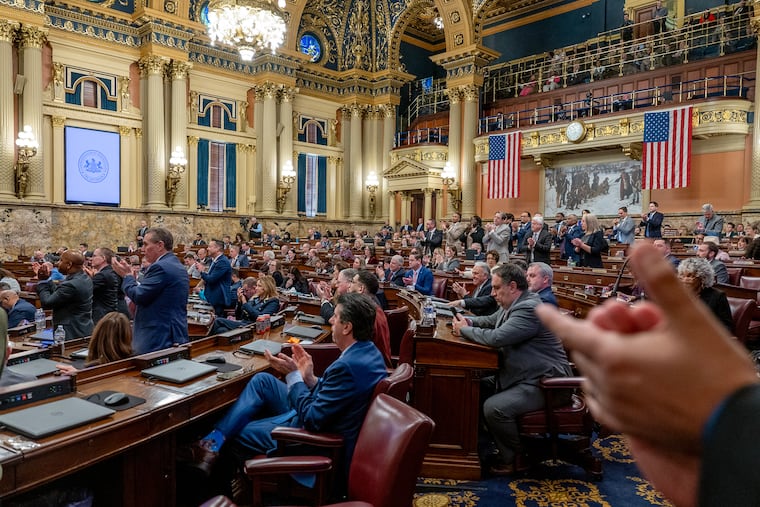
HARRISBURG — Members of the Pennsylvania House on Tuesday approved new regulations for data centers building in Pennsylvania, in the first effort by the state General Assembly to shape the booming market.
The Democratic-led House approved a bill with bipartisan support in a vote of 104-95 to require data centers to pay for any increased costs associated with their significant energy demands, as lawmakers try to stave off energy price increases for residents and small businesses.
The bill now heads to the GOP-controlled Senate.
The proposal mandates a percentage of centers’ energy usage come from a renewable energy source, as well as requiring data center developers to contribute additional funds toward the state’s low-income energy assistance programs.
Data centers have become a flashpoint for residents across the Philadelphia region and state, as residents fear the negative impacts the massive energy users will have on the power grid, water access, and other environmental impacts. These concerns are underpinned by the state’s already high energy costs, as Pennsylvania and its neighbors desperately attempt to get more electric generation online to meet the region’s energy needs in an artificial intelligence-economy.
“This is one of the biggest topics of the moment. We hear about them from our constituents, we hear about them from our municipalities,” said Rep. Rob Matzie (D., Allegheny), who authored the bill. “This legislation started with a simple premise that nobody’s electric bill should go up one cent if a data center comes to Pennsylvania.”
Across Pennsylvania, data centers are already online without any state law regulating them. There are 56 active data centers in Pennsylvania and another 55 proposed to come online, according to the citizen-run Data Center Proposal Tracker. At least six of the proposed centers are pitched to be built in Philadelphia’s collar counties.
Democratic Gov. Josh Shapiro created a fast-track permitting program in 2024 for major projects like data centers to get off the ground in the state. Since then, he’s boasted major investments from Amazon, Microsoft and Google to support the AI economy, but has more recently emphasized that communities should have a say on their development.
Few states have enacted regulations for data centers, with many states deferring to their independent utility commissions, said Dan Diorio, the vice president for state policy at the Data Center Coalition, which is the industry association representing major data center developers like Google, Amazon and Microsoft.
The Data Center Coalition opposes House Bill 1834 because it singles out data centers and has “extreme prescriptiveness” on how that will disincentivize data center developers from wanting to build in Pennsylvania to meet the region’s data needs, Diorio said.
The legislation was drafted — and amended twice — based on feedback from Pennsylvania’s consumer advocate, the Pennsylvania Utility Law Project, and dozens of other stakeholders, said Rep. Elizabeth Fiedler (D., Philadelphia), during a committee meeting on the bill last month.
The legislation requires at least 10% of its energy usage comes from “clean” energy sources beginning in 2027. That requirement would increase to 14.5% by 2030 and to 32% by 2035.
Among the Data Center Coalition’s largest objections is that the proposal would require data centers to curtail or stop their electric usage when needed, such as during heat waves or other times of high energy usage.
“The internet can’t shut off. We can’t just shut it down and say, ‘Sorry, you can’t have access to this service.’ That’s not how it works,” Diorio added.
The average American household has at least 17 devices connected to the internet, according to market research firm Parks Associates.
Most Republicans opposed the bill Tuesday, arguing that it would deter data centers from building in the state and did not offer any regulations for municipalities, which have become the battleground for data center proposals.
The proposal faces an uncertain future in the GOP-controlled Senate. Two Bucks County Republicans, Reps. Kathleen “KC” Tomlinson and Joe Hogan, voted in favor of the bill alongside Democrats. The two GOP lawmakers represent competitive parts of purple Bucks County and are facing reelection this year, as at least two data centers are proposed in the county.
While most GOP members opposed the bill, they agreed with Democrats that data center regulations will be a top issue for the General Assembly moving forward.
“This is something that might be, if not the most important, one of the most important issues that we deal with in this legislative session,” said House Minority Leader Jesse Topper (R., Bedford) on the floor Tuesday. “I think we will have the ability to come together on a final product that will achieve our goals on protecting rate payers and also incentivizing investment.”