How a pipeline leak disrupted a quiet Bucks neighborhood: ‘Never drink the water’
More than 2.5 million miles of pipelines transport fuels under homes and farms in the U.S. One line leaked under this suburban Bucks County community, upending life in the neighborhood.

More than 2.5 million miles of fuel pipelines run under homes, farms, parks, and schools in the United States — enough steel line to circle the earth 100 times.
One of those pipelines slices under Mount Eyre Manor, a suburban Bucks County neighborhood perched high above the popular Delaware Canal State Park towpath and only a few thousand feet from the Delaware River.
For years, residents barely gave any thought to the Twin Oaks Pipeline, owned by Sunoco and its parent company, Energy Transfer. That changed in January when state inspectors uncovered a jet fuel leak.
Now, the pipeline is always on their minds.
“We will never drink the water in this house again,” said Kristine Wojnovich, whose well was one of six tainted in the leak. Six metal tanks, part of a filtration system installed by Energy Transfer, now crowd her basement wall.
The Twin Oaks Pipeline stretches 106 miles. Built in 1958, its 14-inch diameter pipe carries jet fuel, diesel, or gasoline, depending on need, from Sunoco’s Twin Oaks Terminal in Aston, Delaware County, to a terminal in Newark, N.J.
Along its route, the pipeline burrows beneath suburbs, tunnels under waterways — including the Delaware River — and runs below a school’s grounds and state and local parks. It carves directly through Mount Eyre in the Washington Crossing section of Upper Makefield Township.
Federal regulators estimated that a “slow drip” had seeped undetected at least 16 months before the leak was detected.
Energy Transfer has accepted responsibility and apologized at public meetings. The company declined to comment for this article but noted that it has set up a website with updates and documents related to the spill.
» READ MORE: Pipeline leak tainted at least 6 water wells in Bucks town with jet fuel. Neighbors are outraged.
Signs of contamination
Wojnovich said she first noticed “something off with the water” as she was getting a drink after a workout in September 2023. She recalled the incident on a recent day from her living room as several white trucks owned by an Energy Transfer contractor were parked outside as part of well-monitoring work.
“It smelled to me like oil or gasoline or some kind of petroleum,” Wojnovich said.
Uncertain whether she was imagining it, she waited for her husband, Kevin, to return home. He, too, noticed the odor and suggested they call Sunoco.
The couple say Sunoco failed to locate a source of the odor and told them the likely cause was bacteria. Other neighbors had complained, too.
But it wasn’t until Jan. 21, 2025, that residents first learned of a leak discovered during an investigation by the Pennsylvania Department of Environmental Protection. The DEP advised the federal Pipeline and Hazardous Materials Safety Administration (PHMSA) that water samples from a Mount Eyre home “indicated the presence of kerosene, a major component of JP-8 jet fuel.”
PHMSA notified Energy Transfer and Sunoco.
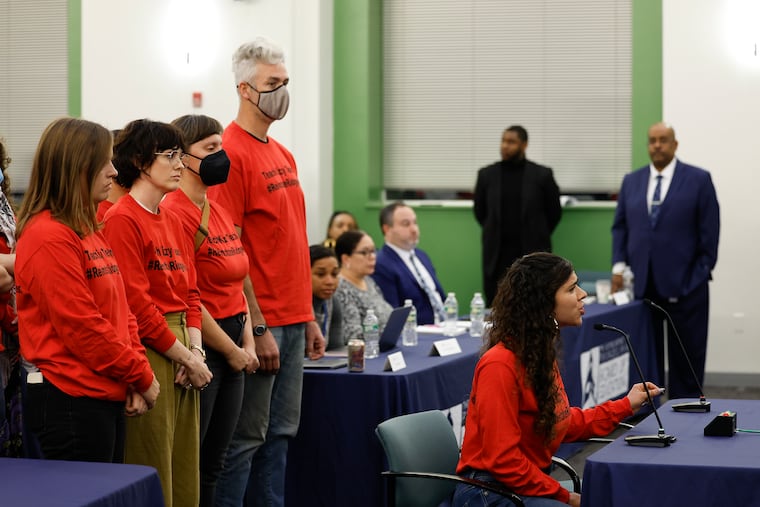
Since then, residents have attended hours and hours of meetings. They’ve filed seven lawsuits, including a class action. Wojnovich is one of the plaintiffs.
Most people won’t drink the water. Many won’t cook with it. Wojnovich and her husband, Kevin, bathe elsewhere.
Wojnovich noted that when her well was initially tested after the leak, “fumes came out. It was overwhelming. They measured 12½ feet of jet fuel on top of our drinking water well.”
Her water, which eventually tested positive for contamination, now gets routinely tested by contractors paid by Energy Transfer. The company has drilled a second well for the family. But the Wojnoviches say their water still has a pungent odor.
» READ MORE: Feds say Sunoco hazardous pipeline leaked fuel in Bucks Co. for at least 16 months
The fallout
Of six wells that tested positive for hydrocarbons, four exceeded contaminant levels for drinking water. Residents suspect other wells were, or are, tainted and are skeptical about the way testing has been carried out.
According to the DEP, jet fuel contains “contaminants of concern” including benzene, toluene, ethylbenzene, xylenes, cumene, naphthalene, trimethylbenzenes, dichloroethanes, dibromoethane, and lead, which is also naturally occurring. The compounds can be harmful if ingested in large amounts. Some are carcinogens.
Energy Transfer has purchased a home with a contaminated well on Spencer Road, adjacent to where the leak was detected, for $721,800. It is across from the Wojnoviches’ home and sits vacant. The company purchased the home to drill two recovery wells in order to remove contaminated water.
Since digging up and repairing the pipe section, the company has recovered 1,027 gallons of fuel. About 163 gallons came from private wells, according to DEP records.
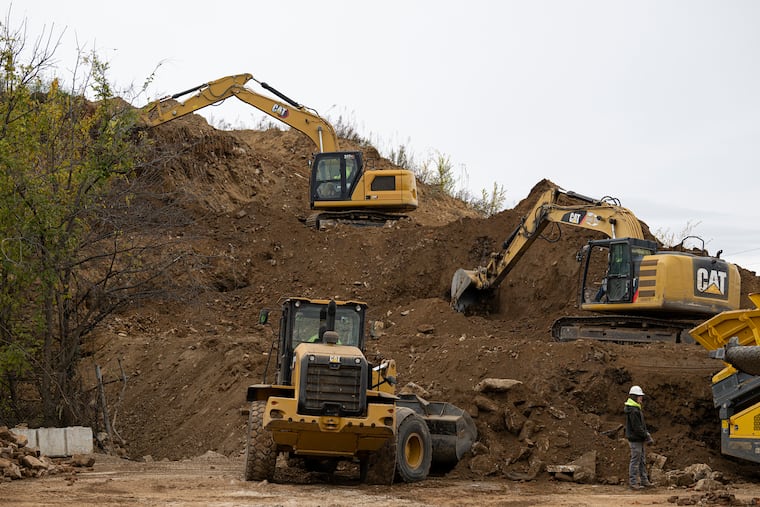
Energy Transfer has paid contractors to excavate and remove 276 tons of petroleum-impacted soil, according to a DEP document. It has installed four wells to recover petroleum from underground, dug 26 wells to monitor groundwater, and put in 181 point-of-entry treatment filtration systems in homes. It has collected 1,289 water samples from 363 individual wells.
Over the summer, Energy Transfer, using an inspection tool, identified multiple anomalies in the pipeline in Upper Makefield Township that required excavation, according to an Oct. 22 update.
The company said in an August letter that the anomalies presented no immediate danger and that there is no “data or information that the continued operation of the pipeline presents a critical safety concern or that the pipeline is leaking.”
One of those excavations took place in a section of pipe next to the popular canal path used by cyclists and hikers. It is being dug up and replaced.
The excavation along Taylorsville Road won’t disturb the canal trail, company officials said during a recent meeting. The term anomaly does not mean a pipe section is an immediate threat to the safety or integrity of the pipeline, Matt Gordon, vice president of operations at Energy Transfer, said at the meeting.
Meanwhile, the pipeline continues to deliver fuel.
» READ MORE: Pennsylvania A.G. launches criminal investigation into Sunoco pipeline spill
‘Another house is up for sale’
The spill has upended life in and around Mount Eyre, neighbors say.
Joe Babiasz said many neighbors had bonded through their children’s schools and activities before the spill. Now, instead of talking soccer, they talk pipelines.
“It’s become part of daily life at this point,” Babiasz said. “When we get together socially, it’s the thing we talk about. It’s been kind of hard to just hang out with people and have it not come up. You can’t walk around the neighborhood without seeing a reminder. ‘Oh, there’s the monitoring well,’ or ‘another house is up for sale.’”
Residents have expressed outrage and skepticism toward Energy Transfer, the parent company of Sunoco, over the handling and testing of the contamination. They say they don’t trust the company’s methods and doubt the safety of the 67-year-old pipeline.
“There are the trucks out there now,” Babiasz said on a recent day. “You can see them or hear them. It’s been integrated into our daily life.”
He asked: “Are they actually telling us everything?”
Residents wonder if the leak would have been discovered if they had municipal water. They wonder whether the leak created a toxic plume underground and where it might drift to, including into the river.
Neighbors plan to attend the next update by the DEP during a Dec. 8 webinar.
Katherine LaHart, a plaintiff in the class-action suit, said her well water was once clear. Now it is “black — Texas brown.”
“I worry every day about the integrity of our water, air and soil and the pipeline that runs through our neighborhood,” LaHart said. “It keeps me up at night.”