The ‘promised land’ of Chester County is growing. Kennett Square leads the way, surging 16% over 5 years.
What once was mostly rural mushroom farms has become more and more residential.
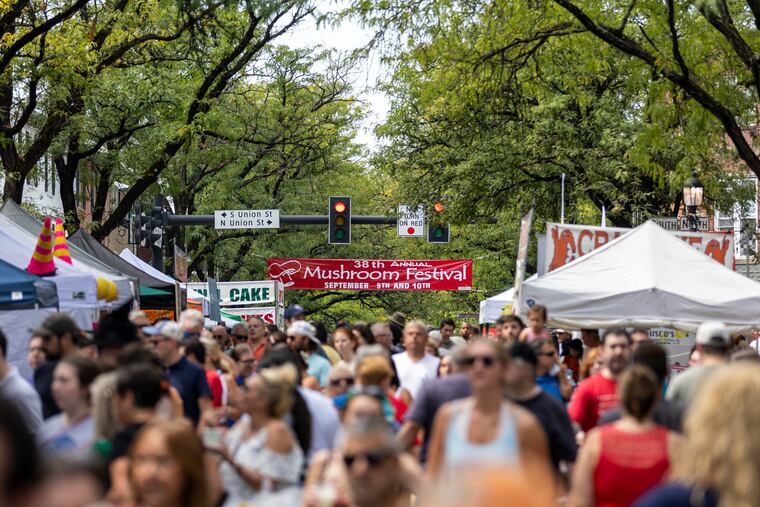
When Daniel Embree saw Kennett Square after visiting nearby Longwood Gardens a few years ago, he thought, “This is the kind of place I want to be.”
Embree, executive director of the community events and programs organization Kennett Collaborative, was not alone. In the past five years, the population of the borough and encircling Kennett Township in Chester County has surged, outpacing the growth of the whole county, according to newly released estimates from the U.S. Census Bureau.
Between the two, the municipalities have added almost 2,000 people, with Kennett Square seeing a 16% increase since 2020 — the largest percent change in that period across Chester County. Kennett Township, which surrounds the borough entirely, has grown by nearly 12%, with the combined population at about 16,000.
Other Chester County municipalities saw more residents join their ranks during that time frame, with the county’s overall population growing by roughly 4% to 557,116.
Next to Phoenixville and West Chester, which each boasts around 20,000 residents and added roughly a thousand people, maybe the Kennetts’ growth seems a bit modest. But the borough’s percentage change was the highest in the county, and the township followed in fourth place.
And for these small municipalities, swaddled by mushroom farms, the supply of available housing isn’t aligned with the demand of people wanting to live there. It also has put increased stress on the essentials such as water, sewer, infrastructure, plus fire, emergency medical services, and police.
The growth is manifesting in a few ways. The borough has seen a 12% increase in foot traffic in its business district since 2022, Embree said. The annual holiday light parade saw about 20,000 people in November. That’s four times the number just a few years ago, he said. In tandem, real estate agents are watching houses get snapped up as soon as they come on the market.
There’s no one reason for the growth, said Jake Michael, senior demographer for the county’s planning commission. It’s a combination of large-scale economic factors, alongside regional and local reasons. And the Kennetts are a bit unusual, he said.
The borough and township are in a “unique setting,” Michael said, sitting just beyond the suburbs that fan out from Philadelphia and Wilmington to the east, while being padded by protected open space to its west.
“That’s really not something you see close to the other boroughs in Chester County that have undergone a lot of development,” he said.
The boom has required strategic planning from the local officials, as they try to balance the needs of longtime residents and their influx of new community members.
“We’re bursting at the seams,” said Pat Muller, chairwoman of Kennett Township’s board of supervisors. “Everybody knows Chester County is the promised land and people are beginning to really know it, and really view this as a final destination.”
Who’s moving in?
Bob Norris, Kennett Square council president, has carved up the population into four groups: the young millennials, who are drawn to the walkability and charm, plus the proximity to cities like Philly, Washington, and Wilmington. They may be starting families of their own.
Next, there are the people who have lived in Kennett Square “forever,” who are watching the addition of more restaurants and its streets getting busier. Then there’s the baby boomers whose children have left home, who used to live in New Garden or in the suburbs and want something “more social, walkable” along with a cultural experience. They have the financial ability to move into the borough by downsizing from their larger home.
Last but not least, he said there’s the growing Hispanic population. Many are second generation in Kennett Square, and are getting involved in local government and nonprofits, and opening businesses, Norris said.
“There’s an awful lot of overlap, but there’s also needs that are unique for each of those groups,” Norris said.
A changing landscape
When Muller first moved to the area in the ’80s, things looked different. The community was largely rural, with lots of farmland.
Though there are still beautiful open spaces and horse farms, some former mushroom farms have given way to new development without a family legacy to continue operations.
Kennett has contained much of the residential development close to Kennett Square, since it has the infrastructure in place to support a more dense population. Meanwhile, the township is trying to match the county’s goal of 30% of open space, looking for easements when opportunities arise.
Within the borough, Kennett Square has one singular piece of land that is undeveloped, and its future has sparked debate. The former National Vulcanized Fiber site, a Superfund site that accounts for a significant chunk of Kennett Square’s modest one-square-mile footprint, could become home to almost a thousand more people, with a number of affordable units required.
A divided borough council recently rejected the first steps to rezoning the parcel for residential use. The proposal could come before them again for reconsideration.
With limited space, and a lot of desirability, both municipalities are contending with affordability.
“I think many people, even prosperous people here, realize that their own children can’t afford to live on the street where they grew up,” said Geoff Gamble, vice chair of the Kennett Township supervisors.
The township’s staff are working on recommendations to address the housing stock.
Kennett Square has been looking at capping and restricting homes that can be used solely as short-term rentals. They’re also considering how to infuse more affordable housing — like working with Habitat for Humanity — into the borough.
A ‘symbiotic’ relationship
Though the Kennetts are distinct, there’s still an interconnectedness. They have walking trails that lead from the township to the borough; township residents benefit from the rich and plentiful borough event calendar.
“We have to work together, we’re symbiotic,” Muller said.
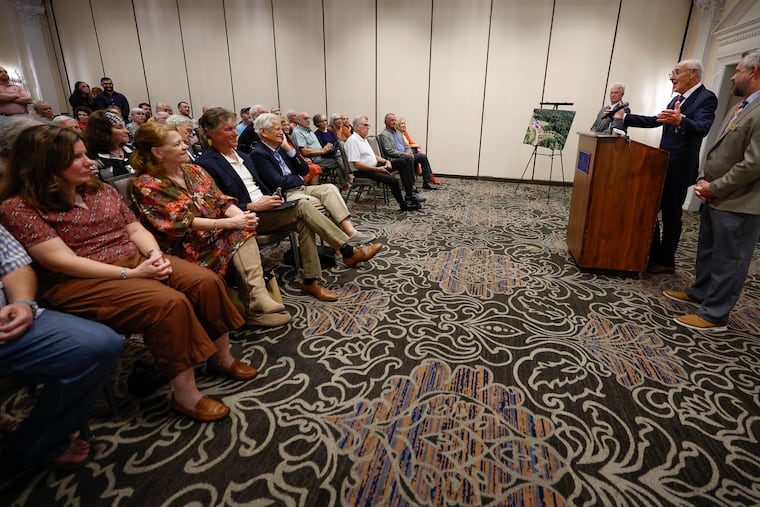
Recently, the officials from the neighboring municipalities met to talk about common needs, and how they could collaborate more — like they already do for regional fire and EMS — when it comes to things like policing, or public utilities, as they prepare for even more people to make the area home.
“As we address anticipated and continued growth, we are working diligently to really focus on value and maintaining our welcoming rural culture and sense of community,” Muller said.