Early efforts to develop a former industrial site into housing in Kennett Square fail to pass council
Plans to redevelop the former National Vulcanized Fiber site ran into opposition at borough council.
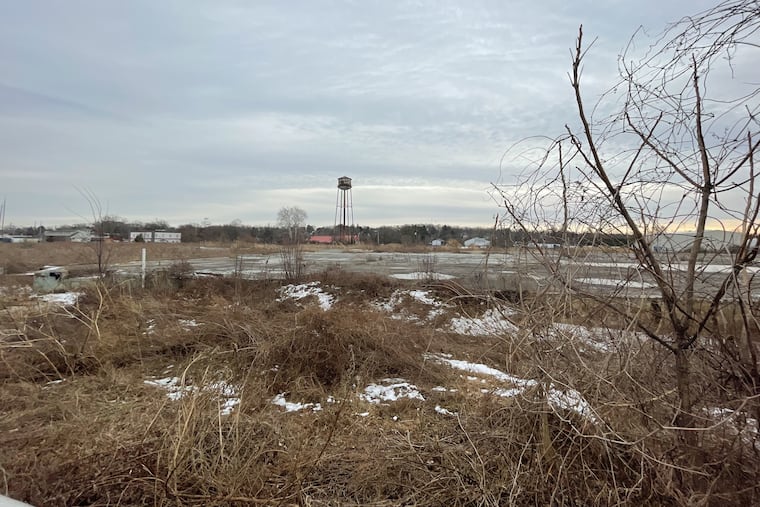
Ambitions to redevelop a Kennett Square industrial site contaminated with forever chemicals into high-density affordable housing hit a roadblock this week after borough council lacked the votes to begin the process of changing the zoning.
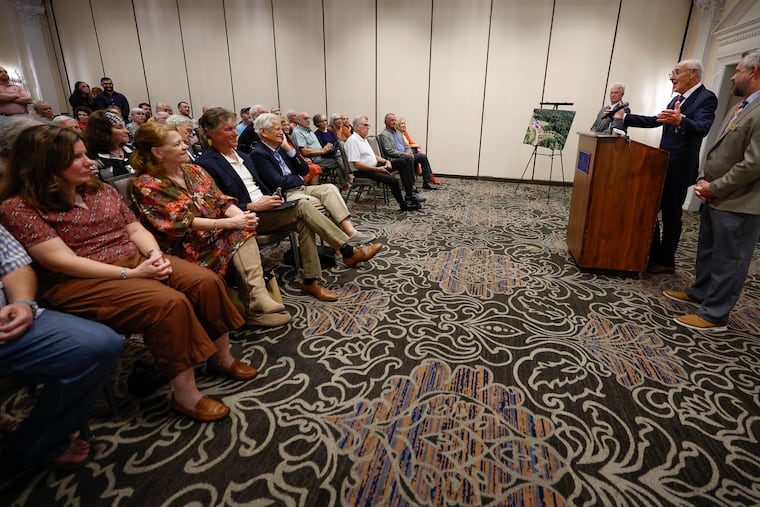
With a slightly diminished council — with one vacant seat and one absent council member — a vote Monday failed to garner enough support to advertise an ordinance change that would allow the 22-acre National Vulcanized Fiber site to become a residential development.
The board voted, 3-2, against advertising the ordinance. The proposed ordinance change could still come back to council in the future, but for now, the property will remain zoned only for industrial use. The developer, who owns the property and is proposing the development, did not return a message seeking comment.
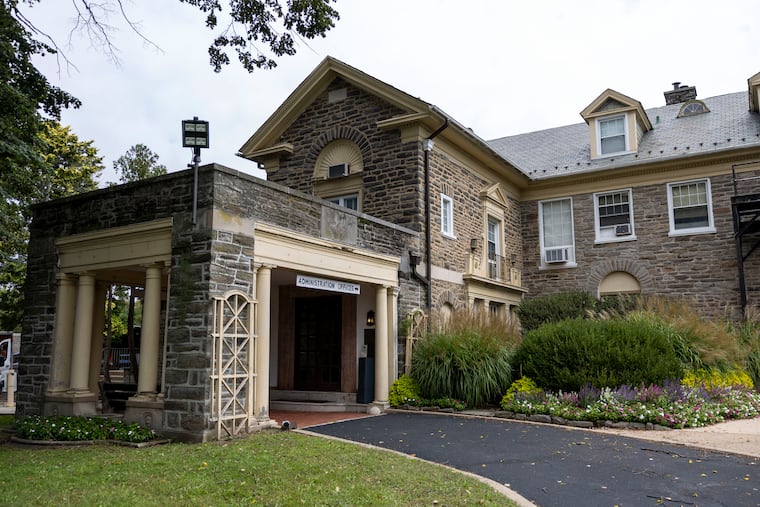
The change would be a massive revitalization effort for the land, which housed NVF from the late 1890s until it shut down in 2007. The parcel has sat largely untouched for roughly 20 years, and has been the subject of cleanup efforts for more than a decade after the land was found to be contaminated with so-called forever chemicals.
For about six years, developers have eyed turning the land into a development, and borough officials have seen it as an avenue to add a slate of affordable housing for residents in an increasingly expensive county. The proposed residential complex would have 246 townhomes and 48 apartments.
Under the proposed ordinance, at least 15% of the units would have to qualify for affordable housing, with some parameters established in the measure. A fine would be imposed upon the developer if they failed to meet that standard.
The property was purchased by its current owner, Rockhopper LLC, in 2009.
Before the developer — which is led by two firms, Delaware Valley Development Corp. and Catalyst City — and homebuilding company Lennar could break ground, the land has to pass muster for cleanup by state and federal agencies.
Nearby residents have worried about the potential impact of developing the land for residential use — both for the people who would be living on the remediated site, and those nearby, who fear what could be kicked up during development.
“First off, the ground hasn’t been released to be OK for anything,” Todd Oplinger, a resident, told the board. “I’m not sure why you’ve got to advertise now. You’re putting the cart in front of the horse.”
An affirmative vote would have begun a process for the borough to advertise adding residential use alongside the industrial designation for the site. If the proposed ordinance was later approved, adding the residential zoning to the site, it would have eventually opened the door for the developer to submit an application to redevelop the site into housing. The process would have taken 18 to 36 months. Though it’s possible that this resurfaces when the board is again at full capacity, there’s no guarantee.
But council members raised concerns about the impact the change could have. Michael Bertrando worried about taking away an industrial site that could offer economic diversity. He also raised concerns about the developer’s role in crafting the ordinance.
“This ordinance is for no other reason than for this developer,” he said. “This ordinance was made with their input, not with any other developers. So this ordinance is being dictated, I feel, by these entities.”
The chance of future industrial development is slim, said Mayor Matt Fetick. For years, the owner “entertained multiple users; industrial users, office users,” Fetick said.
“None of them put an offer on the property, not one,” he said.
Joel Sprick, vice president of the board, agreed that given the site’s history, it was unlikely they’d see warehouse use.
“The idea of this not becoming residential, and say, not changing the ordinance … would be to say the property would more than likely remain vacant,” he said. “I think that we would have more angry residents if we had them put a factory there than if we had them put a neighborhood there.”
Some residents agreed with that.
“I would rather see this than a possible data center,” said resident Hillary Holland. “I think everybody should keep that in mind.”

Want to get Inquirer Chester County straight to your inbox every week? Sign up here for our guide to the news, stories, and events shaping life in your community.
This suburban content is produced with support from the Leslie Miller and Richard Worley Foundation and The Lenfest Institute for Journalism. Editorial content is created independently of the project donors. Gifts to support The Inquirer’s high-impact journalism can be made at inquirer.com/donate. A list of Lenfest Institute donors can be found at lenfestinstitute.org/supporters.