East Vincent’s planning commission has again recommended the rejection of a proposed data center for the Pennhurst site
The amended plan, which increases the center's footprint and adds power generation, came before the commission ahead of a conditional use hearing later this month.
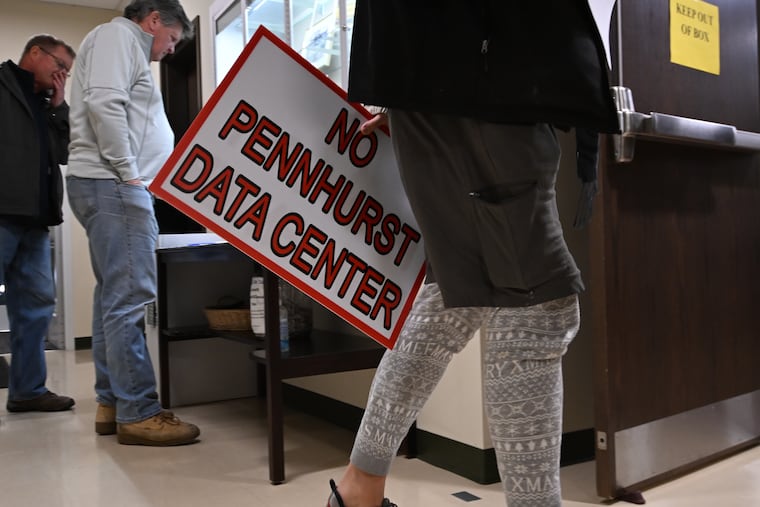
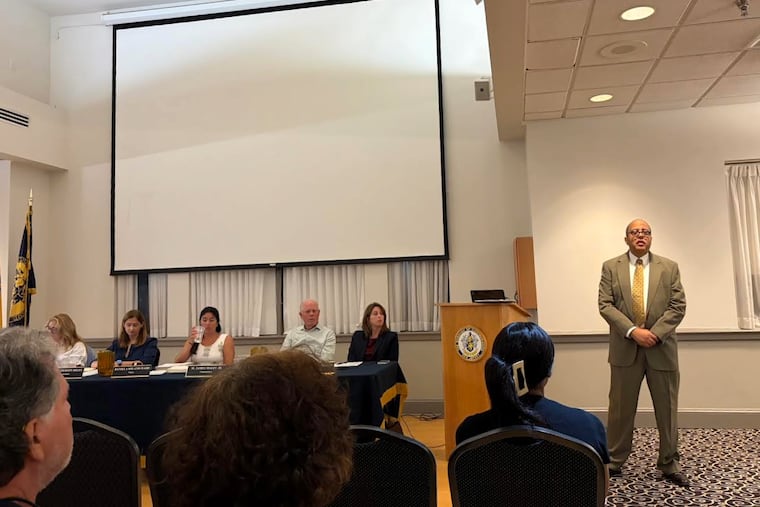
For a second time, East Vincent’s planning commission is recommending that the township’s elected officials reject a proposed data center project slated for the former Pennhurst State School and Hospital.
The nonbinding decision, approved by the seven-person body on Thursday night, comes more than a week before the East Vincent board of supervisors will begin a slate of conditional use hearings to weigh whether a proposed 1.9 million square foot data center can be built on the historic property that sits near the Schuylkill River.
Planning commission members felt the amended plan, which would increase the size by about 600,000 square feet, also had “significant deficiencies,” arguing that the application didn’t provide enough details for the land development.
“I think we’re all feeling that our time is being wasted by the applicant because we are given so little information and no opportunity to ask questions,” said the commission’s chairwoman Rachael Griffith.
It’s not the first time the planning commission has highlighted such concerns. When an earlier version of the application appeared before them in February, the planning commission also recommended that the supervisors reject the plan, again citing deficiencies. On Thursday, they considered an amended plan. They’ve chafed at both meetings that the representatives of the developer, Pennhurst LLC, have declined to appear.
The applicant will make their case later this month when the conditional use hearing process begins, scheduled for April 20.
“All along, we have been focused on the conditional use hearing and we are eager to go forward and participate in that hearing when it commences later this month,” said Kevin Feeley, a spokesperson for the developer.
When the hearing kicks off, the developer will lay out its revised plan for the site, which it submitted to the township last month. The amended plan increases the overall footprint from 1.3 million square feet over five buildings, to 1.9 million square feet across three buildings. It struck an office building, and added a five-acre power generation and battery storage facility.
Representatives for the developer said previously that the addition of power generation, likely to be natural gas, prompted by Gov. Josh Shapiro’s February budget address, which called on data center developers to bring their own energy as to not saddle homeowners with excessive bills for power usage.
During the conditional use hearing — which was delayed until late April after severe weather derailed the initial March meeting — the board of supervisors will sit in a “quasi-judicial” capacity, where the developer will testify and present evidence.
Residents and organizations have the ability to apply for “party status,” allowing them to present evidence and cross-examine witnesses. The township had received 35 applications ahead of the initial March 16 meeting, an official said at the time.
The planning commission also voted Thursday to send one member to the hearing later this month to provide comments about the commission’s recommendation.
Planning commission members felt that the required multiple zoning variances, could threaten water resources and environmental stability, add noise, and was incompatible, and was incompatible with the surrounding land uses.
“My view on this is this is a plan that looks like three big boxes have been dropped from Planet Zog onto the Pennhurst tract with no thought for local topography or local impact, and certainly no explanation of that,” said commission member Lawson Macartney.
The planning commission’s vote comes amid an ever-changing landscape of data centers in Chester County and the region. Last month, public pushback over a 1.6 million square foot proposal in East Whiteland prompted supervisors to vote to revise its zoning ordinance regarding data centers. Residents across the region have also become more outspoken against such projects, citing concerns for health and the environment.

Want to get Inquirer Chester County straight to your inbox every week? Sign up here for our guide to the news, stories, and events shaping life in your community.
This suburban content is produced with support from the Leslie Miller and Richard Worley Foundation and The Lenfest Institute for Journalism. Editorial content is created independently of the project donors. Gifts to support The Inquirer’s high-impact journalism can be made at inquirer.com/donate. A list of Lenfest Institute donors can be found at lenfestinstitute.org/supporters.