The Pittsburgh Post-Gazette is shutting down
Earlier this week, owner Block Communications also announced the closure of City Paper, a Pittsburgh alt-weekly.
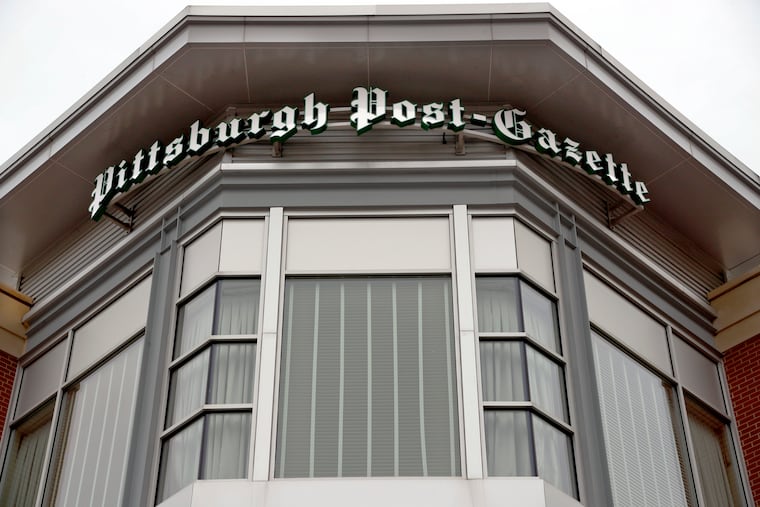
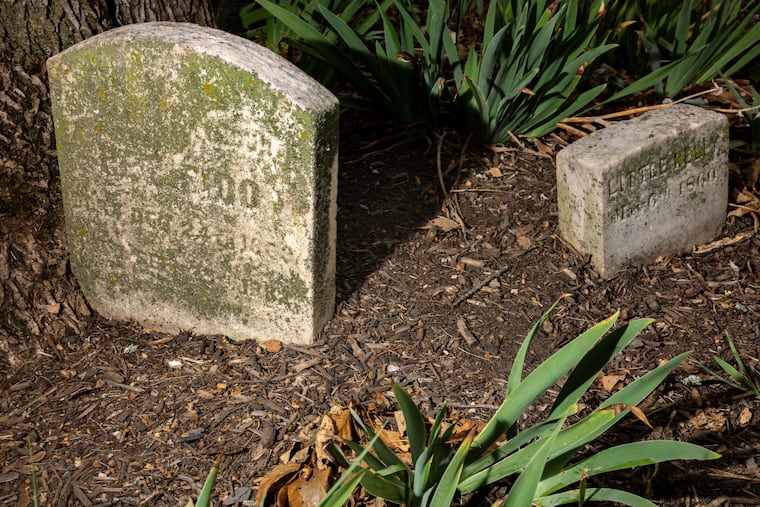
The Pittsburgh Post-Gazette will fold after nearly a century. The paper will cease operations entirely — both its digital and physical versions — on May 3.
The announcement comes on the heels of years of declining ad revenue and internal strife within the newsroom, including a yearslong labor strike.
With the paper’s closure, there are concerns that Pittsburgh could become a news desert, leaving locals without a range of diverse and credible outlets to turn to in an age of increasing misinformation.
The Post-Gazette was led by former Inquirer senior vice president and executive editor Stan Wischnowski. He resigned from The Inquirer in 2020 after a controversy following a headline after the murder of George Floyd.
Block Communications, the paper’s owners, released a statement Wednesday about the shutdown, citing “continued cash losses” that were “no longer sustainable.” About 150 union, nonunion, and management employees are impacted.
The owners added that the paper has lost more than $350 million in operational funds over the last 20 years.
The paper’s union, meanwhile, said the closure was a result of “losing a nearly decade-long attempt to bust unions at the paper.”
Andrew Goldstein, current president of the Newspaper Guild of Pittsburgh, said in a statement that “instead of simply following the law, the owners chose to punish local journalists and the city of Pittsburgh.”
A Zoom announcement
Post-Gazette staff said they found out about the paper’s closure via a companywide prerecorded Zoom announcement just moments before the news went public. Multiple reporters told The Inquirer that no company representatives spoke live during the video and that there was no opportunity provided for follow-up questions or discussion.
In a leaked recording of the Zoom announcement obtained by Pittsburgh’s KDKA Radio, a spokesperson asked staff to continue to publish under “business-as-usual conditions” for the paper’s remaining months. The spokesperson added that Block Communications would “of course” give the Post-Gazette the opportunity to break the news of the closure first.
News desert concerns
Block Communications, the family-owned multimedia company based in Toledo, Ohio, owns several broadcast news stations, the Post-Gazette, and the Toledo Blade, the Post-Gazette’s sister newspaper. The Blade is unaffected by the shutdown, owners said.
Earlier this week, the company also announced the closure of City Paper, the Pittsburgh alt-weekly that first published in 1991, “effective immediately.”
The closure will leave the Pittsburgh Tribune-Review as the region’s last major newspaper. The Tribune-Review is a digital-only publication. Other specialized publications, including the New Pittsburgh Courier and Pittsburgh Business Times, also remain.
Tim Franklin, the founding director of the Medill Local News Initiative, a research and development project designed to bolster local news sustainability, said the closure was “startling,” given the paper’s size and the region’s market size. Pittsburgh is considered a competitive news market.
“Even in this economic climate, it’s unusual to see a metro daily newspaper shutter,” he said. “This may be the first metro newspaper closure since the Tampa Tribune in 2016,” which was acquired by the Tampa Bay Times on May 3, 2016, and ceased publication.
Franklin says the Post-Gazette’s closure symbolized a deepening crisis in local news nationwide, which has led to almost 150 newspaper closures in the past year, according to Medill data, or an average of more than two closures a week.
According to the Medill State of Local News Report, the country has lost nearly 40% of its newspapers in the past 20 years.
“Today’s news, though, is especially troubling because it highlights a newer, growing trend — the loss of independent, largely family-owned local newspapers," Franklin said.
In the past, the bulk of newspaper closures were attributed to large chains closing clusters of outlets. Now, Franklin says, there’s a rising trend in independently owned papers closing. “If even longtime independent owners are hanging it up, that shows the seriousness of the challenges facing the industry.”
Allegheny County Executive Sara Innamorato said in a statement that she was troubled by the Post-Gazette’s closure, calling it “devastating” for the region.
“This is a major loss to the people of Pittsburgh when it comes to transparency in government, accountability from our institutions, and learning about what is happening in our communities,” she said.
Innamorato added that she wasn’t sure if Block Communications pursued other pathways for buyers or alternatives to shutting down both the Post-Gazette and City Paper entirely.
“But destroying two legacy papers in a week leaves a gaping hole in our local news environment,” she said.
Block Communications could not be reached for comment as of publication time.
On social media, readers expressed contempt toward ownership for the decision and concern regarding whom to turn to for local news.
“This is a huge loss,” one user commented on a Reddit thread about the closure. “Who will do the work of journalism? … Will we all be going off rumors on Reddit and Nextdoor?”
A complicated past
The Pittsburgh Gazette Times, a weekly publication, was founded in 1786. It’s regarded as the oldest newspaper published west of the Allegheny Mountains. The paper took on its current form as the Post-Gazette in 1927 as part of a merger between the Gazette Times and the Pittsburgh Post.
The newspaper’s shutdown comes on the heels of several internal challenges in recent years.
In 2019, tension grew between the newsroom staff and Post-Gazette publisher and co-owner John Robinson Block regarding his “bizarre” and “violent” behavior toward employees.
At the time, according to multiple accounts, Block entered the newsroom in an agitated state with his 12-year-old daughter on a weekend night and appeared out of control as he ranted about the newspaper’s union and its employees.
» READ MORE: Pittsburgh Post-Gazette employees say they remain on edge after publisher’s ‘bizarre’ and 'violent’ behavior
That year, the paper cut its print edition from daily to three days a week, citing declining ad revenue.
Then came the monumental labor strike.
In 2022, the Post-Gazette saw significant labor disputes, leading to a Guild-approved strike that lasted three years. During the strike, many of the employees impacted established the Pittsburgh Union Progress, a strike paper that published over 4,000 stories covering community news, the strike, and more.
In November, a federal appeals court ordered the newspaper to reinstate its 2014 union contract, forcing the return of the striking journalists. The U.S. Third Circuit of Appeals ruled that the paper had illegally removed benefits and would need to restore conditions and return to bargaining.
Block Communications in its statement about the paper’s closure said that those recent court decisions legally requiring it to follow its 2014 labor contract would make it impossible to keep the paper running.
Union leaders say it’s a cheap excuse after years of attempted union-busting from company owners.
“The Pittsburgh Post-Gazette and Blocks spent millions on lawyers to fight union workers, fight journalists, and break federal labor law,” said NewsGuild-CWA President Jon Schleuss. “They lost at every level, including now at the Supreme Court. Pittsburgh deserves better and we will continue to fight to make sure all news companies follow the law and serve our communities.”
Franklin, with the Medill Local News initiative, says it’s inevitable that some people will say the Post-Gazette’s closure is a “special case” because of its extended labor dispute that threw the paper into turmoil for years.
“And certainly, that standoff played a role in today’s news,” he said. “But the fact that the Post-Gazette owners saw no other option but closure is chilling.”
The company’s statement went on to say it regretted how the decision would affect Pittsburgh and its surrounding coverage area.
The Block family said it was “proud of the service the Post-Gazette has provided to Pittsburgh for nearly a century.”
As for what’s next, Goldstein with the local guild says readers should stay tuned for more from its journalists.
“Post-Gazette journalists have done award-winning work for decades and we’re going to pursue all options to make sure that Pittsburgh continues to have the caliber of journalism it deserves,” he said.