Pa. House Democratic committee passes transit funding again, while a top GOP senator is calling for a short-term budget
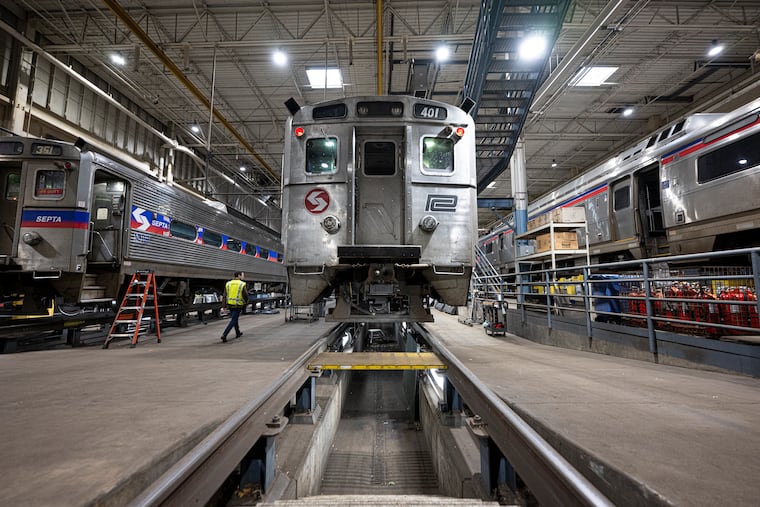
The General Assembly is under greater pressure to pass a budget in the next week, as SEPTA announced it needs additional state funding by Aug. 14 to avoid 20% service cuts on Aug. 24.

HARRISBURG — A state House committee again advanced a mass transit funding plan Wednesday that Democratic leaders hope will address Senate Republicans’ outlying concerns and allow state lawmakers to reach a budget deal before SEPTA enacts major service cuts.
Meanwhile, Senate President Pro Tempore Kim Ward (R., Westmoreland), the top Republican in the state Senate, said leaders should now negotiate a short-term, six-month budget if they don’t reach a deal by next week. Any short-term budget would likely exclude any funding for the current sticking points, such as mass transit, until a final deal is reached.
The two differing approaches represent the larger divide between the two chambers, as Pennsylvania enters its second month without a state budget with major disagreements between the GOP-controlled Senate, narrow Democratic majority in the state House, and Democratic Gov. Josh Shapiro.
While Ward said Wednesday she believes leaders should focus on disbursing most of the state’s funds while a final deal is negotiated, House Democrats are again showing their willingness to compromise with Republicans to stop the looming SEPTA cuts, which will be massively disruptive for Philadelphia commuters and residents.
Wednesday marked the fifth time in two legislative sessions that a Democratic-led House committee had advanced a transit funding plan.
Ward — who is the top Republican but not the main negotiator at the table for closed-door talks between the House, Senate, and Shapiro — said she doesn’t know if a short-term budget is being talked about among the principal negotiators. However, she hinted that the Senate GOP may be prepared to send a short-term budget over to the House if a deal doesn’t come soon.
“If they can’t come to an agreement on the budget in the next week or so, and we send a stopgap budget and the governor refuses to sign it, then all those entities, and all of those schools that don’t get funded, will be on the governor,” Ward said.
Shapiro, at an unrelated news conference on Tuesday, shot down any chance of a stopgap budget. House Majority Leader Matt Bradford (D., Montgomery) said a short-term budget is “laughable,” now that the budget is already more than a month late and SEPTA cuts are about to take place.
SEPTA announced Wednesday that if lawmakers can’t reach a budget deal by Aug. 14, the state’s largest mass transit agency serving 700,000 people daily will need to cut its service by 20% and raise fares on Aug. 24. The deadline could not be more urgent or noticeable to residents in Southeastern Pennsylvania who rely on SEPTA to get around Philadelphia and the surrounding counties.
Senate Majority Leader Joe Pittman (R., Indiana) said in a statement Wednesday that he met with Shapiro on Tuesday and he remains “optimistic that consensus on a responsible budget can be reached.”
Lawmakers are constitutionally required to deliver a balanced budget to the governor each year by the start of the next fiscal year, beginning July 1. Legislators often miss the July 1 deadline, requiring school districts and counties to take out loans to hold them over until state funding is distributed. However, leaders usually reach a deal well before reaching an impasse, and before its tardiness is noticeable to most residents.
But this year is different with the prospect of the elimination of 32 SEPTA bus routes among other cuts to service.
“We’re out of time, and I think we’re out of excuses,” Bradford said.
Another mass transit funding bill, this time with GOP language
The bill was introduced Wednesday by Rep. Sean Dougherty (D., Philadelphia) and fast-tracked for consideration by the House transportation committee. This latest iteration of a transit spending proposal now includes language from a package of GOP Senate bills, sponsored by Dougherty’s fellow Northeast Philadelphia colleague, Sen. Joe Picozzi (R., Philadelphia), to make SEPTA more accountable to the state. Dougherty’s bill also includes bonds for roads and bridges, another GOP priority, including some of the state’s most rural roads.
Bradford said the bill advanced out of the House transportation committee, which passed 16-10 with bipartisan support from two GOP members, meets “every condition and precondition” that Senate Republicans have asked for, such as additional accountability measures and funding for roads and bridges. He likened House Democrats’ latest effort to that of a Rubik’s Cube, where House Democrats have changed their proposal to meet the demands of Senate Republicans.
“At some point, the Senate has to show what it has the votes for,” Bradford added.
However, House Democrats still included a funding mechanism that Senate Republicans have opposed over the last three years, each time Shapiro proposed it as part of his state budget address.
The Senate GOP has rejected Democrats’ proposal to increase mass transit’s share of the sales tax, because they are concerned that redirecting any portion of the sales tax would take away money from elsewhere in the state budget.
“To me, that’s a nonstarter,” Ward said in an interview Wednesday.
GOP Senate leaders have proposed other potential funding streams, such as regulating and taxing skill games, but have yet to pass any legislation to do so.
Manuel Bonder, a spokesperson for Shapiro, said in a statement the House has shown bipartisan willingness to fund mass transit across Pennsylvania — and that the Senate has the votes to do so. At least three GOP senators in the 27-23 GOP-controlled Senate, including Picozzi and Sen. Frank Farry of Bucks County, have said publicly they would support additional funding for Pennsylvania’s mass transit agencies.
SEPTA General Manager Scott Sauer said in a statement that the mass transit agency is “encouraged” by the House Transportation Committee vote and continues to support the additional accountability measures proposed by GOP senators.
SEPTA officials said they need state funding by Aug. 14 . If funding is obtained after Aug. 24 and service cuts have already been implemented, it will take about two weeks to restore them.
Staff writer Thomas Fitzgerald contributed to this article.