A court ruling in a Chesco case may mean higher stormwater bills in scores of Pa. towns
Pennsylvania Supreme Court justices held that a stormwater charge is a "tax," not a "fee." For homeowners, the difference is more than semantical.
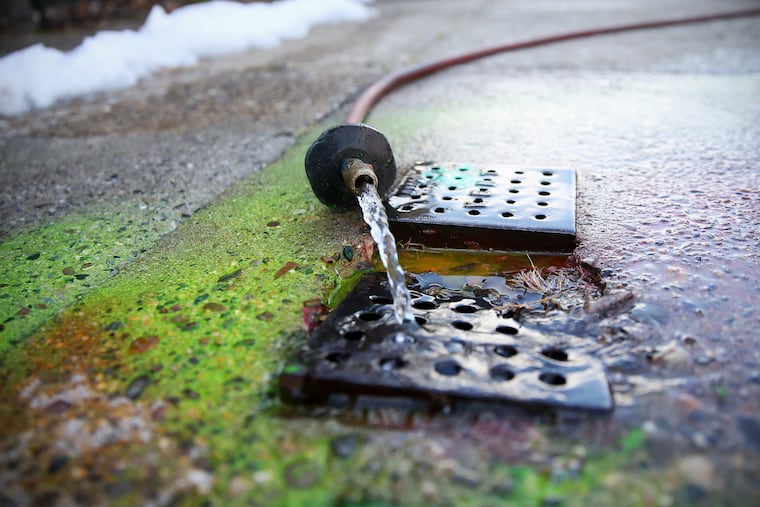
The residents of the bankrupt city of Chester, whose stormwater rates are among the highest in the nation, derisively have been calling it a “rain tax.”
In the view of the Pennsylvania Supreme Court, they have a point. And ultimately the court’s opinion may end up costing homeowners and businesses in Philadelphia, Norristown, and scores of other Pennsylvania communities more money.
Environmental advocates, legal experts, municipal officials, and stormwater specialists agree that the courts’ affirming that the money West Chester Borough (not to be confused with the city of Chester) charges for stormwater treatment constitutes a “tax” — not a “fee” — will have potentially profound consequences.
They also agree that right now no one is sure what those consequences will be, and they may even lap beyond stormwater fees.
“I don’t think anyone would have predicted this outcome,” said Emma Bast, senior attorney with the environmental advocacy group PennFuture.
The ruling handed down April 30 resulted from a suit in which West Chester University had argued that since it was tax-exempt, it shouldn’t have to pay the borough stormwater bill since those bills constituted a tax. Commonwealth Court concurred.
West Chester Borough Manager Sean Metrick said legal counsel was analyzing the ruling, as did officials in Chester, Philly, and Norristown, which are among the dozens of communities that might be affected.
“We are reviewing the decision,” said Kevin Hensil, spokesperson for the Pennsylvania’s State System of Higher Education, with which the university is affiliated.
Wait, didn’t they win?
“They got what they wanted,” said Bast, but the decision cast doubt upon the future of how the forever problem of stormwater will be managed and how it will be financed.
If the likes of universities, hospitals, churches, and government properties are exempt from payment, that could shift the burden to other property owners.
“The language of the decision is really broad, and I have heard municipal leaders question whether they need to consider other fees given this decision,” said Ellen Kohler, director of applied research and policy at the University of Pennsylvania Water Center.
Said Bast, “It was all kind of messy before this. What we have now is even more uncertainty.”
About stormwater authorities
Forget Shakespeare’s “gentle rain from heaven,” stormwater — the rain that gushes from gutters and pours off roofs and anything that covers the ground — is, itself, messy. It’s a favorite commuting method for all sorts of things you don’t want to think about (not everyone honors those “curb your dog” signs) to find their way into waterways.
Communities have to comply with federal regulatory requirements aimed at protecting streams and to mitigate flooding, and have to find ways to pay for it.
Even before the court ruling, officials in Norristown, which has massive amounts of tax-exempt real estate, were objecting to what they called the federal government’s “unfunded mandates.”
Towns have a variety of funding options, including general revenues, but with development and heavy rains driving up costs, a growing number have created fee-charging dedicated stormwater authorities.
Ten in the Philly region are among 90 Pennsylvania towns that have them, making the Keystone State a national leader, said Warren Campbell, a Western Kentucky University professor who assembles annual surveys of stormwater authorities and their fees. His 2025 national total was 2,147. The Garden State had only two, both in North Jersey.
The fees are based on a property’s impervious, or hard, cover — for example, roofing, driveways, parking lots, sidewalks.
Chester’s monthly average residential fee, $16.15 — nationally in the top 5% in Campbell’s survey — has been a source of contention in the bankrupt city, which has a poverty rate near 30% and the highest residential wage tax in the state. Philadelphia’s rate, $21.04, also would be among the highest. By contrast, the monthly fee in Upper Merion Township, Montgomery County, is $5.17.
The difference between a ‘fee’ and ‘a tax’
West Chester University, which filed its legal protest after receiving a $130,000 annual stormwater bill from the borough, won a ruling in state court in January 2023. The university had argued, “The stormwater tax walks, talks, and acts like a property tax.“
In affirming the ruling, the high court said: “Where a municipality is duty-bound to provide a service for the public benefit and in the absence of a voluntary, contractual relationship between itself and those receiving the service, the associated charge is a tax.”
For property owners, the difference between a tax and a fee is more than semantic. If a significant portion of a town’s real estate is off limits to taxation, “someone will still need to pay for municipal stormwater services,” said Andy Yencha, a Penn State stormwater expert. Or that may mean lesser services.
In a blog post, Chester Mayor Stefan Roots said that at some point “nontax exempt properties may have to pay significantly more in stormwater bills.”
What happens next?
“It seems this ruling throws into jeopardy the entire stormwater utility fee model,” said Yencha.
Following West Chester University’s example, “I would suspect that other nonprofit entities would look to void their fees as well,” he said.
Kohler said the ruling’s impact would be Pennsylvania-specific, since the court was interpreting the state’s case law.
In 2013, the Georgia Supreme Court decreed the charge was a fee not a tax. A federal appeals court in 2019 upheld the charge in Roanoke, Va., as a fee.
Kohler said she could see “two paths forward” — more “litigation about the questions raised by the decision with the hope of getting more clarity ... and/or state legislative action to provide clarity.”
The problem with either or both, she said, is that the courts and lawmakers tend not to move at the speed of stormwater, and that may leave municipal managers high and dry.
Staff writer Stephen Stirling contributed to this article.