Swarthmore Public Library closes the chapter on overdue book fees
Though counterintuitive, case studies have shown that library fees can actually discourage people from returning books on time, library officials said.
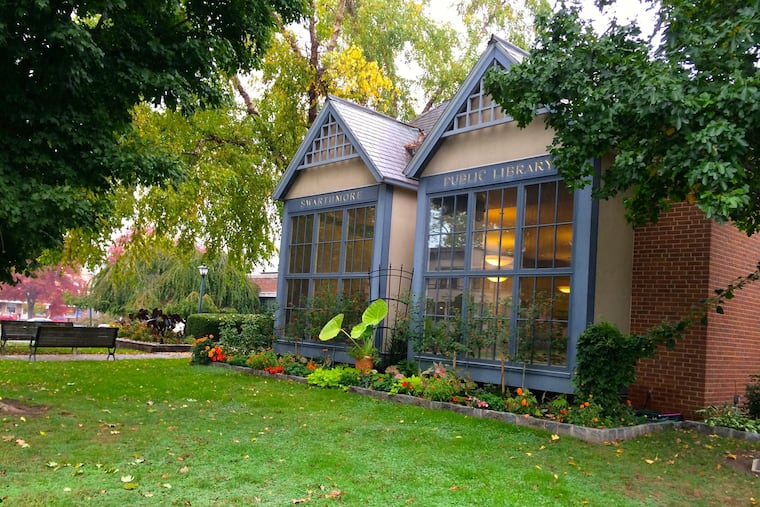
The Swarthmore Public Library has officially done away with overdue fees, joining a growing contingent of libraries that say the fines do more to drive patrons away than to get them to return their books on time.
Swarthmore’s library serves residents of Swarthmore and neighboring Rutledge and is a member of the Delaware County Public Library System. A nonprofit, the library is powered by private donations and government funding. It served around 3,100 cardholders in 2024.
Overdue fines can actually deter library use, all while bringing in marginal financial benefits, said Alec Staley, the library’s director.
Case studies have shown that library fees ultimately can discourage people from returning books. After the Chicago Public Library dropped fees in 2019, it saw a 240% increase in return of materials within three weeks. During a six-week fine-forgiveness program at the San Francisco Public Library in 2017, nearly 700,000 items were returned (the items returned were valued at $236,000).
Once late fees start accruing, many people, especially low-income library patrons, will stay away to avoid paying them, forfeiting their library access entirely. Oftentimes, late fees burden the people who need library resources the most.
Collecting fees has also become taxing for library staff, Staley said. Turning away families because of overdue fees has weighed heavily on Swarthmore’s librarians.
“We were just punishing [people] for no reason at all,” he said.
The new policy means any outstanding late fees will be wiped from cardholders’ balances.
Elizabeth Brown, president of the library’s board of trustees, said fine revenue is “not a meaningful source of our budget.”
Swarthmore Borough is set to contribute $277,000 to the library this year, up 17% from the year prior.
Late fees make up only around 1%, or $5,000, of the Swarthmore Public Library’s annual revenue. Library officials believe they can close the gap with fundraising.
Does this mean people will be able to take the books and run? Not really.
“We’ll still have a lost-item charge,” Brown said. “This is by no means a free-for-all.”
Unreturned items will be marked “lost” after three weeks and a fee will be charged. However, fees will be dropped if the “lost” book is returned.
The Swarthmore Public Library joins a growing group of Philly-area fine-free libraries.
The Free Library of Philadelphia went fine-free in 2020, a move the library system said would increase equity and bring back 88,000 cardholders who were unable to access library services due to fines.
In Delaware County, the Upper Darby Township and Sellers Memorial Free Public Library, Newtown Public Library, Media-Upper Providence Free Library, and Ridley Park Public Library are fine-free.
Ultimately, Staley said, imposing fines runs counter to the heart of what a public library is supposed to be.
“We champion that we’re one of the last free spaces in the United States,” he said. “But then we have this secret where we’re still charging fines.”

Inquirer Greater Media
This suburban content is produced with support from the Leslie Miller and Richard Worley Foundation and The Lenfest Institute for Journalism. Editorial content is created independently of the project donors. Gifts to support The Inquirer’s high-impact journalism can be made at inquirer.com/donate. A list of Lenfest Institute donors can be found at lenfestinstitute.org/supporters.