The West Goshen home at the center of a preservation fight will be demolished, a judge ruled this week
It’s a blow to advocates in the community who have been rallying to save the privately owned home, which has fallen into disrepair over the last two decades under the ownership of Joseph Kravitz.
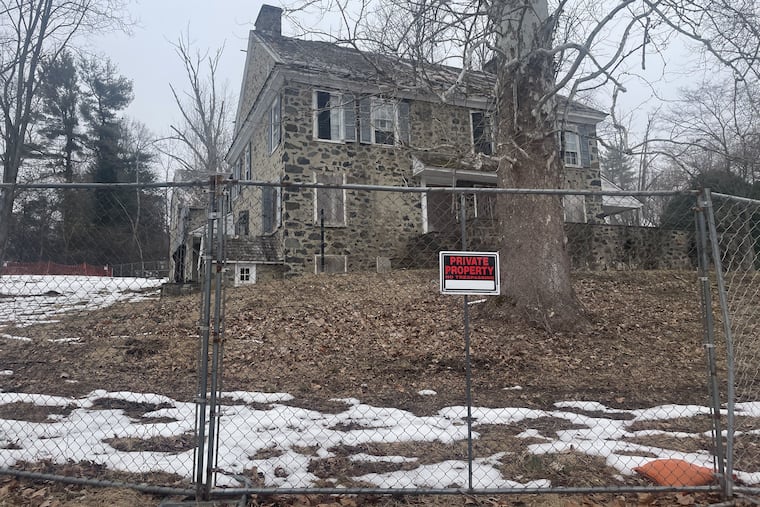
The deteriorating West Goshen house in “imminent threat of danger” that has been at the center of a preservation fight will be demolished, a Chester County judge has decided.
In his order Monday, Chester County Court Judge Anthony Verwey found that “rehabilitation of the buildings is not feasible” and approved the demolition of the property.
The appointed conservator said demolition could occur within 30 days.
It’s a blow to advocates in the community who have been rallying to save the privately owned home, which has fallen into disrepair over the last two decades under the ownership of Joseph Kravitz, who purchased the property in 2003. For months, they have advocated for the house to be preserved and turned into a historical site, honoring the region’s connections to abolitionist history, civil rights, and the Underground Railroad.
An attorney for Kravitz did not immediately respond to a request for comment. The township declined to comment.
The house at 905 Westtown Rd., set back in a copse of trees and accessible by a bridge crossing a small stream, had become an “attractive nuisance,” according to the township, which asked Verwey in November to place the property under conservatorship over safety concerns.
The residence, which is more than a century old, has attracted urban explorers to explore the water-damaged, five-bedroom, three-story fieldstone house, with its overgrown in-ground pool and its dilapidated and precarious stonemason barn. Police have repeatedly been called for reports of intruders or gunshots, but have worried about going too deep into the home for fear of the floor collapsing.
“This property is very clearly an imminent threat of danger,” Carl Ewald, an attorney representing the township, told the judge during a hearing Monday. “The barn is in an imminent state of collapse, and the interior of the property … is so dangerous the engineer was not willing to enter the property.”
Though the township issued citations over the property’s deteriorating and unsafe state, its concerns went unaddressed, prompting West Goshen officials to file for conservatorship. Under that order, Verwey appointed BDP Impact Real Estate as the conservator, which was tasked with creating a plan for abatement.
The conservator presented two plans to Verwey on Monday — including one that totaled the cost of demolishing everything on the property. Along with an estimated $171,730 to install a temporary bridge to ferry equipment to the property, it would cost roughly $121,600 to demolish the main house, the conservator estimated.
The other plan, in response to the advocacy of community members who formed the group Save Forsythe Farm — an unofficial name for the property honoring a former owner — estimated the cost of rehabilitation to be much higher: $1.2 million.
The property is appraised at $2 million in its current condition, officials said Monday. Kravitz said previously he would want to develop the land into multiple houses.
Sarah Bryant, a senior director for BDP Impact Real Estate, said Monday during her testimony that contractors were ready to start the project immediately, if the judge ordered demolition, and that BDP had the financial capital to do so.
But Jonathan Long, the attorney representing Kravitz, had petitioned the judge to terminate the conservatorship so Kravitz could take over the demolition, hiring his own contractors and reimbursing the cost to BDP so far. Verwey’s order did not address a further hearing date to discuss that, and he declined to consider the request Monday.
“We are in agreement with the township, related to the idea of demolition of the property,” Long said. “We agree with the township that the costs are just far too much in order to rehabilitate the property at this time.”
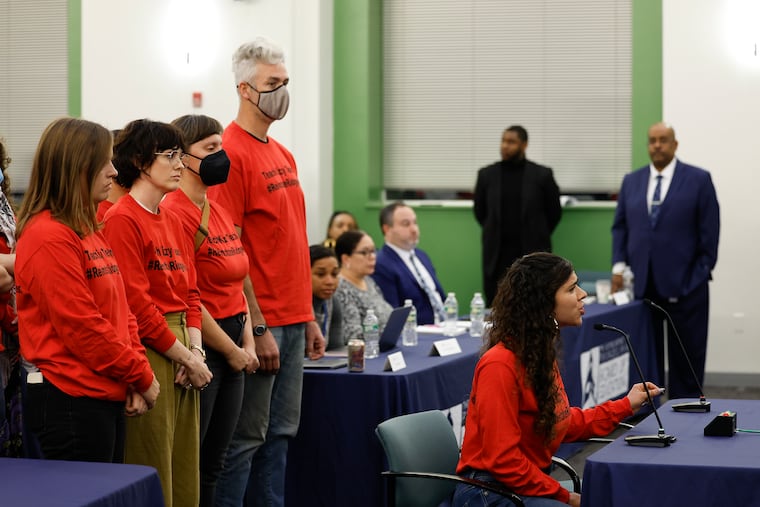
Save Forsythe Farm members, who showed up to court Monday in blue T-shirts promoting the effort, were frustrated by the proceedings.
Verwey had denied their petition to intervene in the case when their attorney did not appear Monday.
“Everybody’s in a difficult position, but the community that this most impacts is being shut out of this entire process,” said Stephen Lyons, chairman of Save Forsythe Farm.
In a statement Tuesday, the group said the relatively fast legal process had placed an “unreasonable burden” on the community for finding legal representation to fight the proposed demolition.
“Any demolition or development of this historic property will face the strongest opposition and Save Forsythe Farm will continue to seek legal recourse to protect neighbors, our environment and our history,” the group wrote.

Want to get Inquirer Chester County straight to your inbox every week? Sign up here for our guide to the news, stories, and events shaping life in your community.
This suburban content is produced with support from the Leslie Miller and Richard Worley Foundation and The Lenfest Institute for Journalism. Editorial content is created independently of the project donors. Gifts to support The Inquirer’s high-impact journalism can be made at inquirer.com/donate. A list of Lenfest Institute donors can be found at lenfestinstitute.org/supporters.