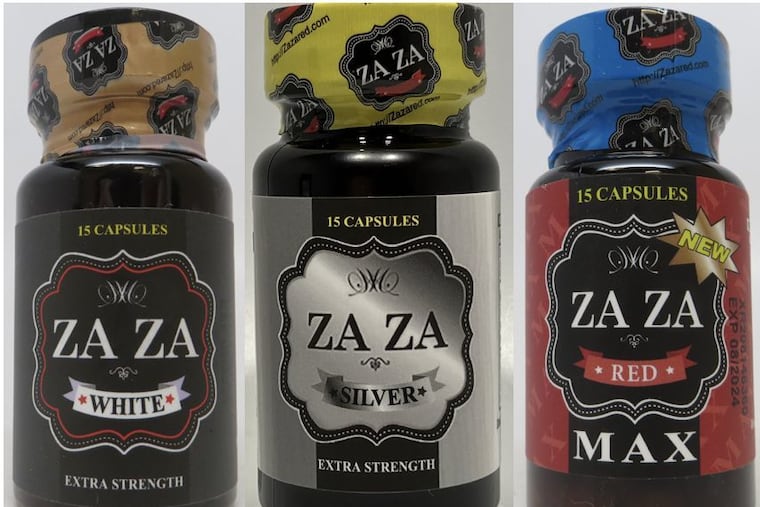
A Bucks County 20-year-old died after taking ‘gas station heroin.’ Her mother is suing the manufacturer.
The lawsuit names the manufacturer and distributor of the product called Zaza, nicknamed 'gas station heroin,' as well as the Quakertown store where it was purchased.
Twenty-year-old Lina Jenkins was found unconscious at her Quakertown home on Oct. 7, 2023.
The day before, the art-loving young woman bought a dietary supplement called Zaza at a local mini-mart. The 15 pills in each of the two bottles she purchased contained tianeptine, a synthetic chemical that is used as an antidepressant in other countries but is not approved for medical use in the United States.
On Oct. 8, Jenkins died of tianeptine toxicity, according to a lawsuit filed by her mother against the product’s manufacturer, its distributor, and the mini-mart.
In the complaint, filed last week in Common Pleas Court in Philadelphia, Angela Roos said that her daughter did not know the risk she took when she consumed Zaza, as the packaging contained no warning on potential side effects. The suit names Zaza manufacturer MRSS Inc., distributor Mossad & J Distribution, and the Qtown Mini Mart.
“Defendants chose profits over the safety of their customers, including Lina,” the suit says.
The Inquirer was unable to reach MRSS, Mossad & J Distribution, or Qtown Mini Mart based on publicly available information.
The lawsuit exemplifies the risk associated with the unregulated market of mood-altering supplements that are commonly sold but evade strict Food and Drug Administration testing and regulations that drugs face.
Tianeptine is not approved for medical use in the United States, but is sold as a supplement. The substance earned the nickname “gas station heroin” because of the location where it is commonly sold and because its effects are similar to opioid withdrawal.
It is part of a gray market that includes an array of products such as kratom and hemp derivatives, which an Inquirer investigation found often include toxins and potency levels above federal limits.
Children’s Hospital of Philadelphia’s Poison Control Center received 15 reports of tianeptine poisoning from Pennsylvania and Delaware in a 12-month period between 2023 and 2024. Nine patients were placed on a ventilator, and one died, according to a CHOP report.
» READ MORE: Pennsylvania’s Wild West of unregulated weed
Similarly, there were 20 severe cases of tianeptine poisoning in New Jersey between June and November 2023, according to a Centers for Disease Control and Prevention report.
Tianeptine can be used safely when it is sold as a prescription drug, as happens in other countries, said Kevin Osterhoudt, medical director of CHOP’s Poison Control Center. But that is not the case in the United States for people who buy Zaza or other tianeptine products over the counter.
“You have no idea what you’re getting or how much,” Osterhoudt said. “That makes all of these products very dangerous.”
Zaza’s manufacturers, distributors, and sellers should have known about the dangers of the product, the lawsuit says. The FDA has warned about tianeptine products from as early as 2018. The CDC warned of a “possible emerging public health risk” associated with tianeptine that year, noting an increase in exposure to the substance and adverse effects on the nervous, cardiovascular, and gastrointestinal systems.
The warnings escalated in the years since Jenkins’ death, as the FDA issued a letter urging retailers to stop selling tianeptine-containing products. The letter noted that at least 12 states have enacted laws to classify the substance as a scheduled drug.
Earlier this summer, State Sen. Doug Mastriano, a Republican from Franklin County, introduced legislation that would classify tianeptine as a Schedule II drug in Pennsylvania. Similar legislation passed the New Jersey Assembly and is pending in the Senate.
Roos’ main goal in bringing the lawsuit was to prevent other families from going through the tragedy she endured, said Douglas DiSandro, a Saltz Mongeluzzi Bendesky attorney who represents the mother.
Companies in this type of industry often do not heed warnings, or follow guidance, unless lawsuits and money get involved, DiSandro said.
“That’s really the only thing that makes these companies change their ways,” the attorney said.