‘Philly will eat you alive’: Runners brave the deceptively challenging route of the city’s marathon
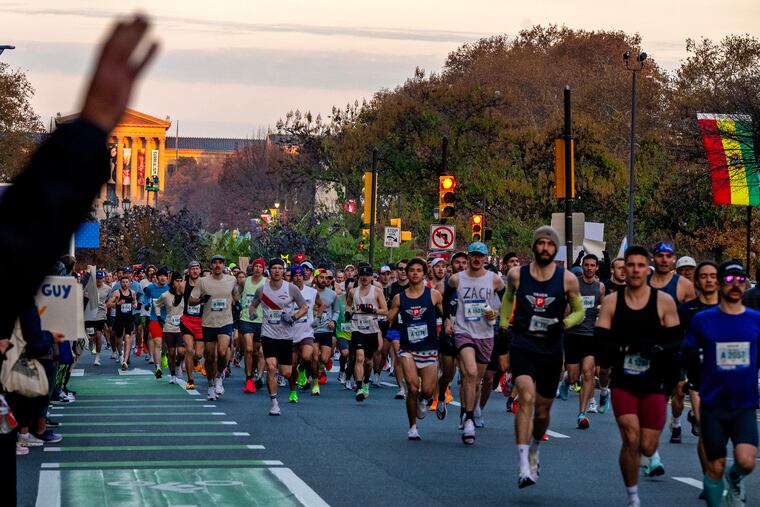
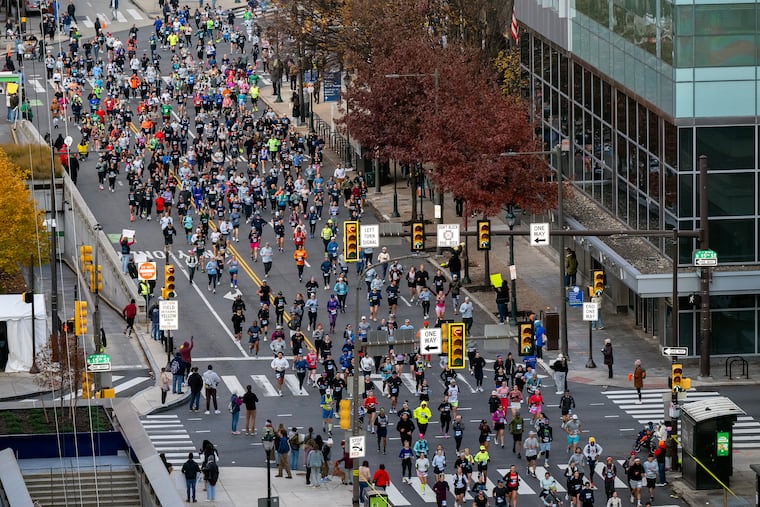
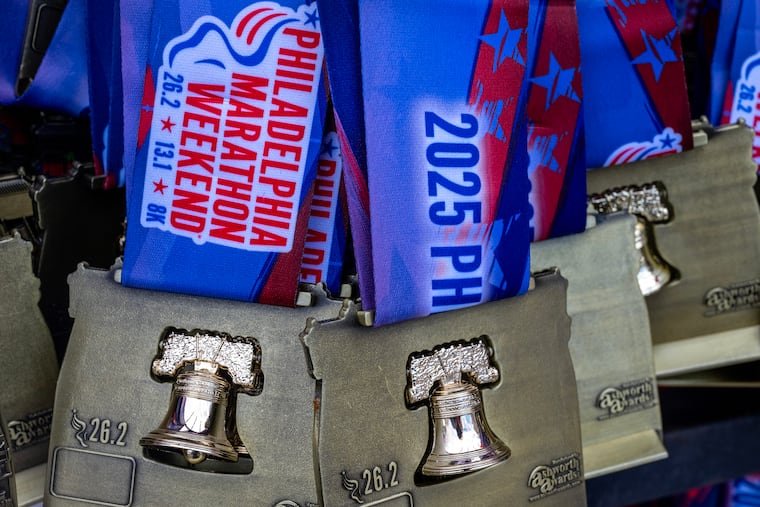
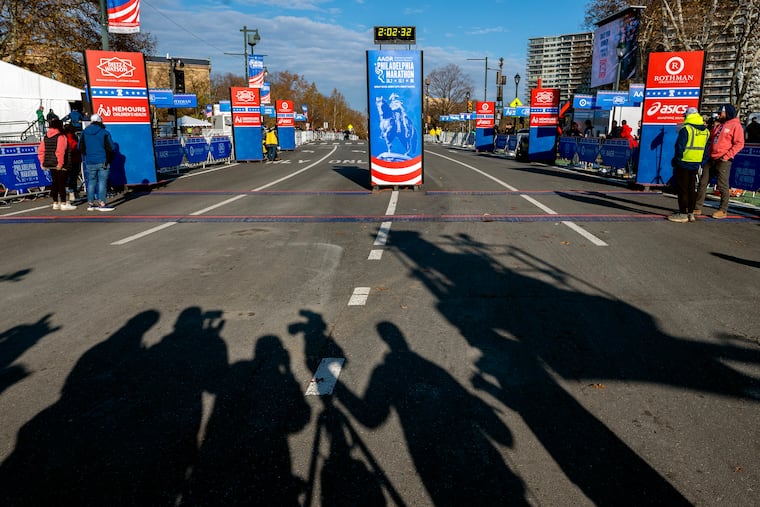
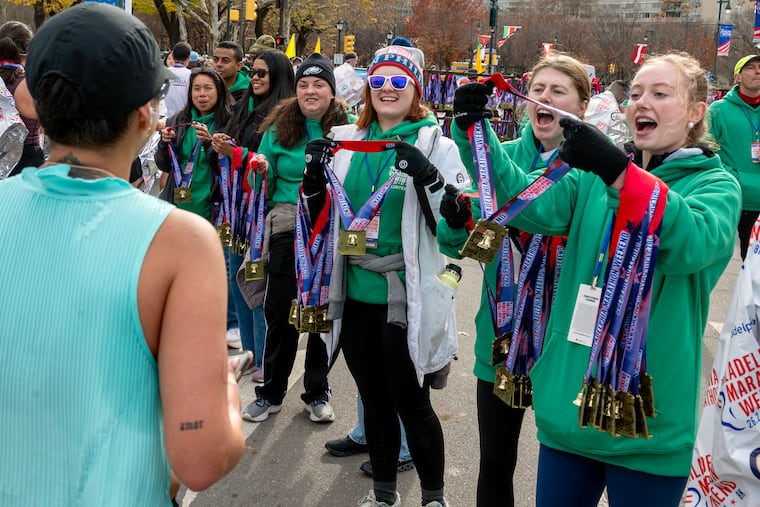
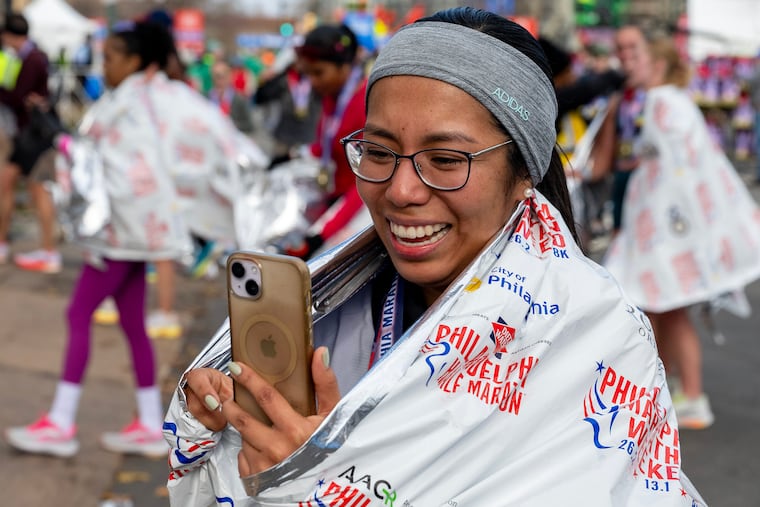
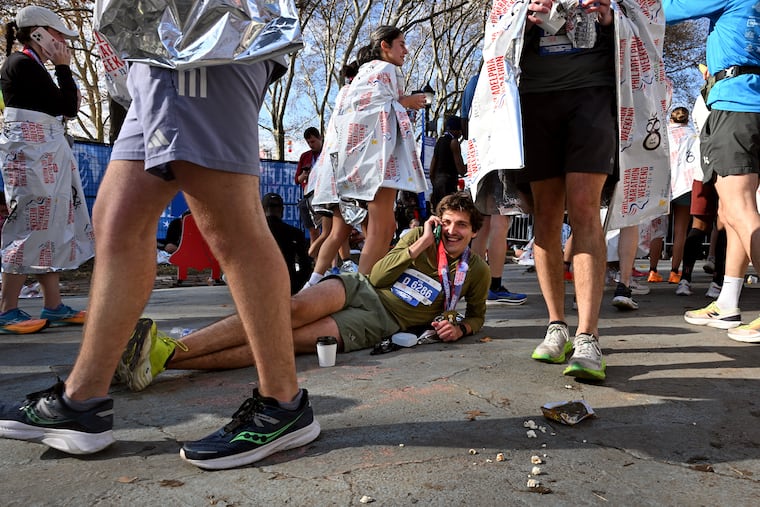
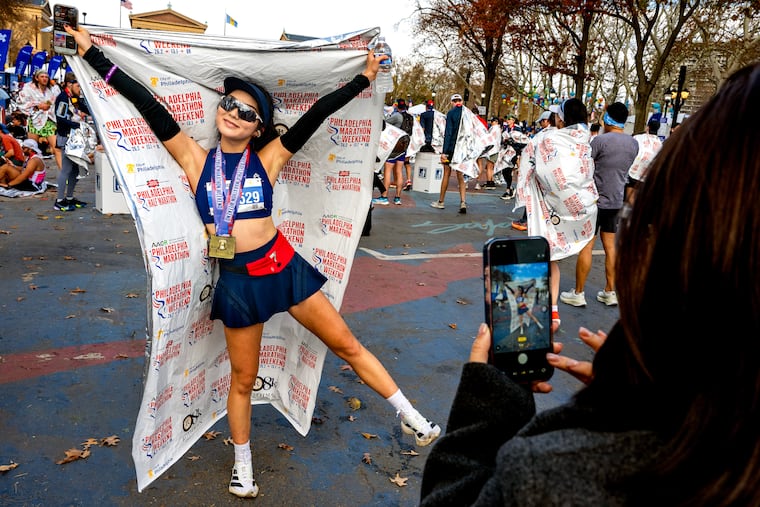
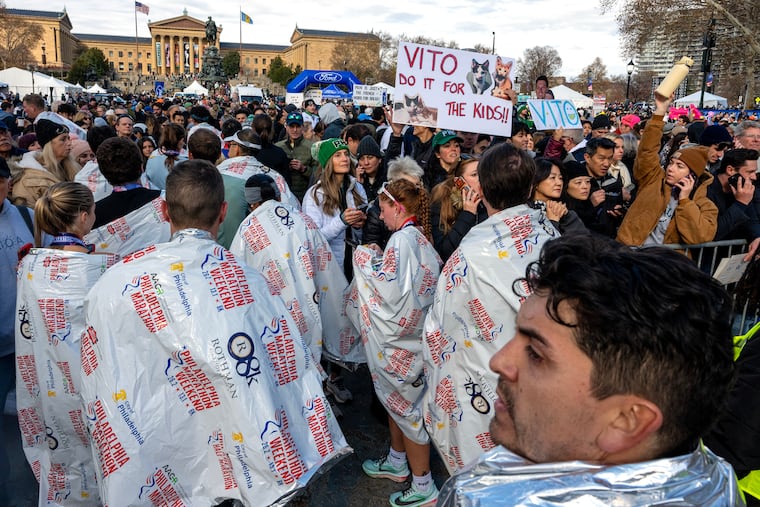
For the thousands of runners who crossed the Philadelphia Marathon finish line Sunday, the view of the Philadelphia Art Museum steps capped a blissful, sometimes brutal, 26.2-mile run.
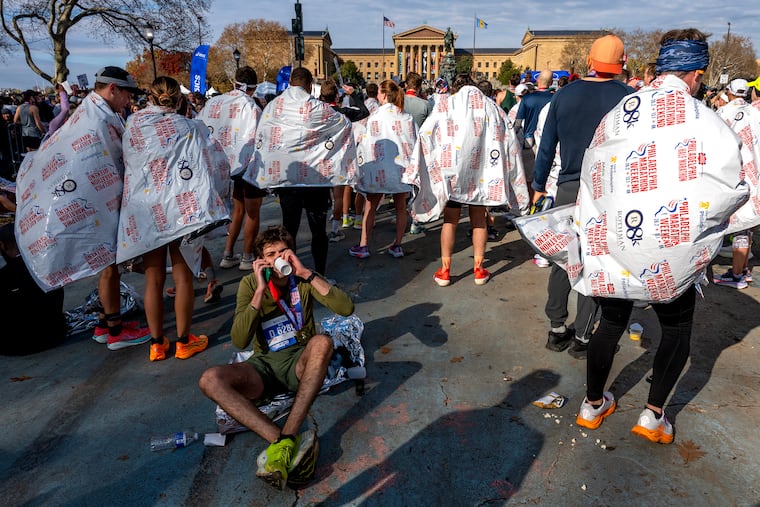
Feet blistered, toenails were lost.
Some chafed in places unimaginable.
Others questioned it all as they attacked the hill leading to the Manayunk portion of the race.
For the thousands of runners who crossed the Philadelphia Marathon finish line Sunday, the view of the Philadelphia Art Museum steps capped a blissful, sometimes brutal, 26.2-mile run.
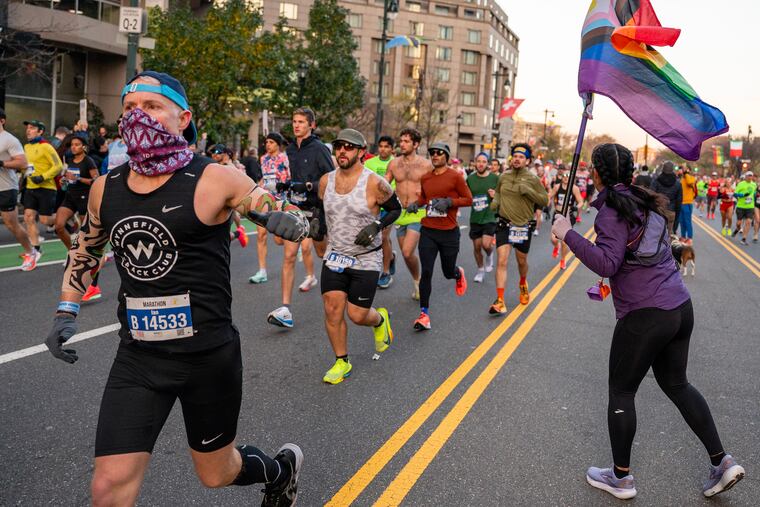
Whether they ran for personal bests or charity, the roughly 17,000 registrants couldn’t have asked for better weather, which largely remained in what studies say is the sweet spot of 39 to 50 degrees. No brutal winds to report, either.
The fine weather was a stroke of luck for runners and spectators alike.
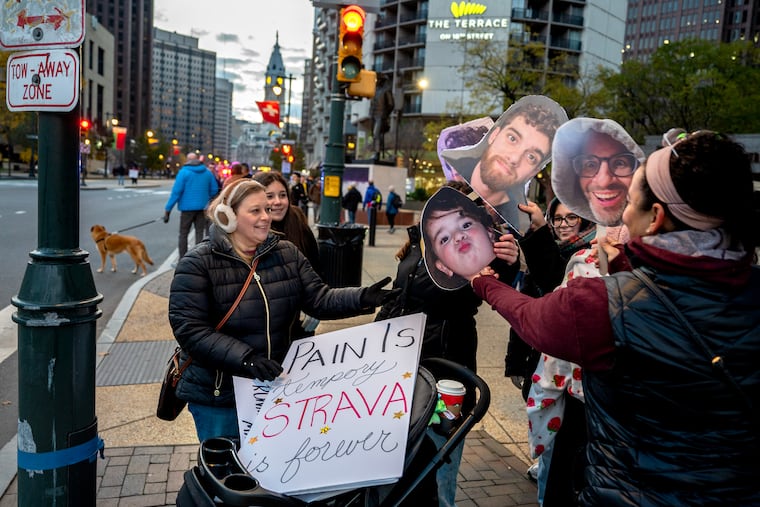
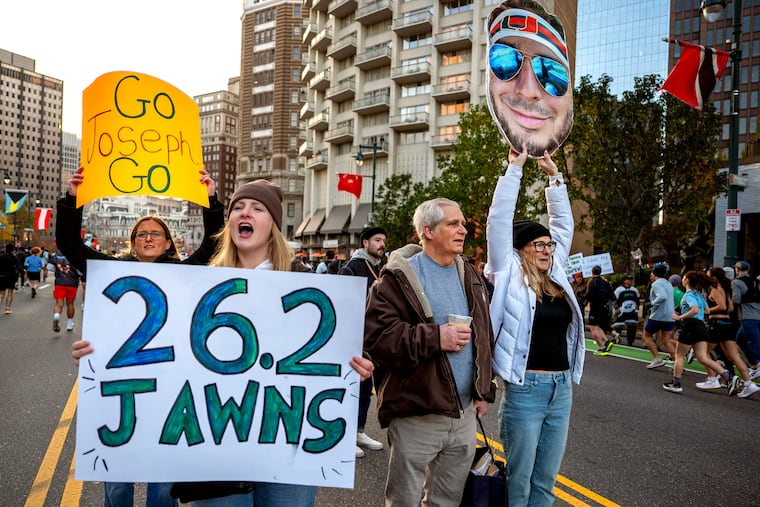
Philadelphia resident Latasha Clark, 47, and her daughter Brianna, 23, began waiting at Eakins Oval around 6:30 a.m., when it was much colder, with a homemade sign that read “you go girl” with carefully cut out letters.
Clark expected her daughter Trinity to finish around 11 a.m. but she wanted to secure a visible spot along the final mile. Philadelphia would mark her daughter’s first marathon and she trained for it while juggling classes at Arcadia University. Clark didn’t want to miss the photo finish and she wasn’t taking any chances.
“She would run every morning before class,” said Clark, beaming with pride. “She would call and wake me up and say, ‘I’m ready to run.’”
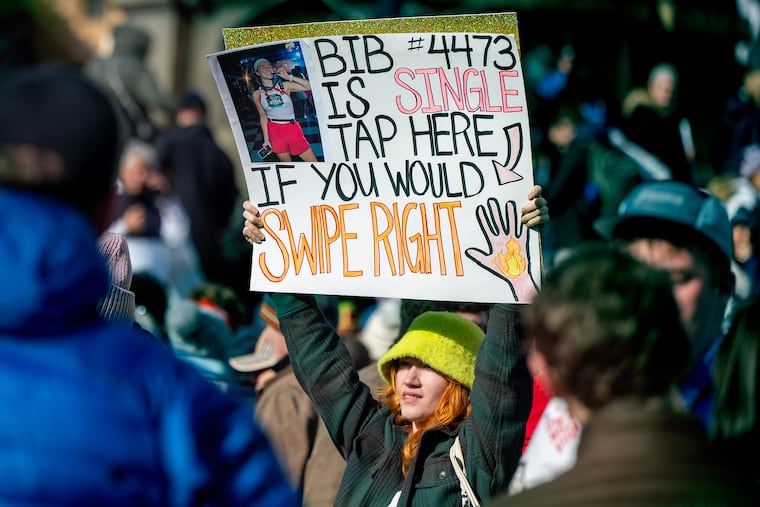
The crowd turnout did not go unnoticed.
First-time marathoner Charlie Marquardt, 31, said the spectators “really helped out” and he was ultimately able to run the race he wanted thanks to the weather and motivation. A new father as of March, Marquardt said he was likely going to take it easy for a bit and try to do the Broad Street run in May.
Caroline Kellner, 31, was also grateful for the crowds. The Ewing, N.J., resident couldn’t believe how many people were out cheering so early in the morning, calling it “the most spirited marathon” she’s participated in. There isn’t a huge running community in Ewing, said Kellner, making training runs somewhat lonely.
“Here I feel like the first 10 to 15 miles, you just feel so good,” she said of the spectators. “Then, you know, you hit mile 20, and it’s hanging on for dear life.”
The Philadelphia Marathon course is often billed in running circles as a relatively flat race. But there are some hills, and the one that leads to Manayunk’s boisterous Main Street is a bit of a cruel tease in timing.
Before the Manayunk crowds appear, toting shots of beer and doling out pastries and high fives, there’s a stretch of road where all you hear is the echo of sneakers bouncing off a wall — it’s tough for spectators to gather there.
It’s around the 18-mile mark that marathoners will sometimes hit “the wall,” a sign that a runner’s store of carbohydrates has slowly been depleted and calories are in need of replenishing. Still, the famous wall is as much psychological as it is physical.
New York City runner Mitch Kapler, 43, might be in the minority, but said he enjoyed the silence in a moment when his energy was drained and he needed to focus.
“Especially in the back part, there’s an element of not wanting to see as many people,” he said, adding that he appreciated that the course offered a taste of the city as well as a hint of scenic foliage.
In a way relatable to many long-distance runners, Kellner joked that she “blacked out” the memory of the lead-up to Manayunk, choosing to remember the effervescent crowds instead.
Burlington Township, N. J., resident Brooks Sanders, 42, said that the final section of the race is what, in his mind, makes Philly harder than the New York City Marathon.
“Philly will eat you alive,” said Sanders, who said people tend to underestimate the course difficulty. “In New York, you can rely on a crowd.”
For this race, that motivation has to come from the runner in the Kelly Drive stretches, where there aren’t a lot of people. And sometimes, runners like Kapler and Sanders fall short of personal goals. Wrapped in a Mylar blanket, Kapler was already planning his Philly Marathon “revenge tour” and Sanders, who was a few minutes shy of qualifying for the Boston Marathon, similarly planned his return.
Sanders said even the setback was part of the journey. He began running in 2021 when the love of his life and mother of his two children was diagnosed with stage 4 metastatic breast cancer. Running became therapeutic and he appreciated that the Philadelphia Marathon had close ties with the American Association of Cancer Research. By raising money for a possible cure, he felt he was doing something.
Though Sanders’ wife died last year before he ran the New York City Marathon and the Philadelphia Marathon, he remains a devout supporter of the AACR, the weekend’s title sponsor, whose runners collectively fundraised more than $800,000.
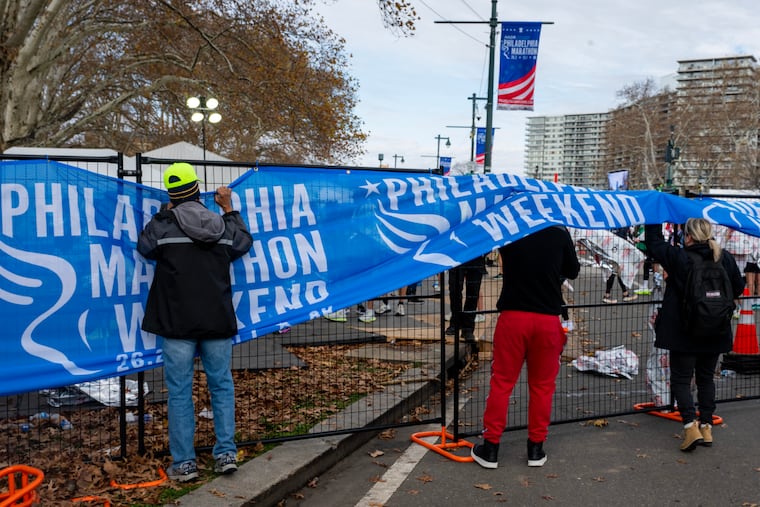
Between the amount raised for charity and the uncontrollable, such as weather, race organizers were pleased with the weekend’s turnout for the 8K, half marathon, and Sunday’s full marathon.
Kathleen Titus, Philadelphia Marathon Weekend race director, said even with last-minute dropouts, organizers expect close to 17,000 runners to have hit the road Sunday after pulling from a 3,000-person wait list.
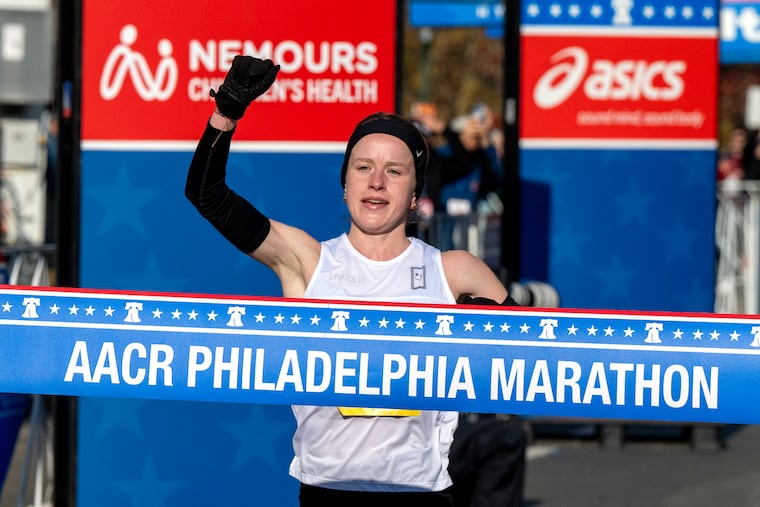
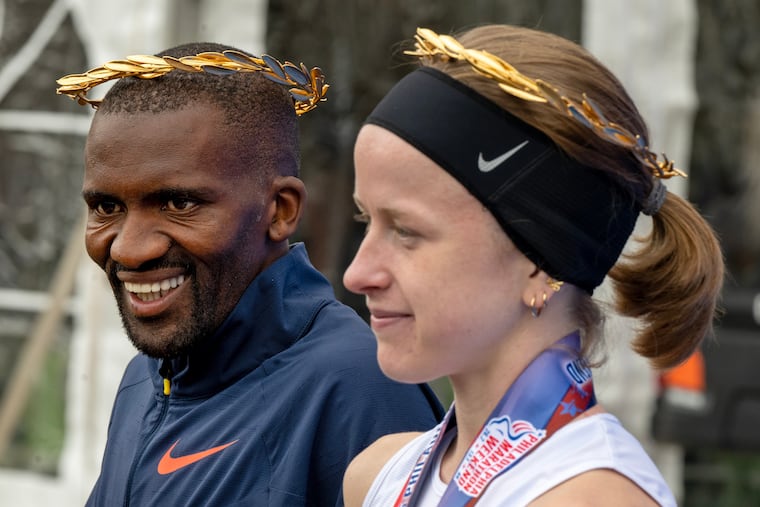
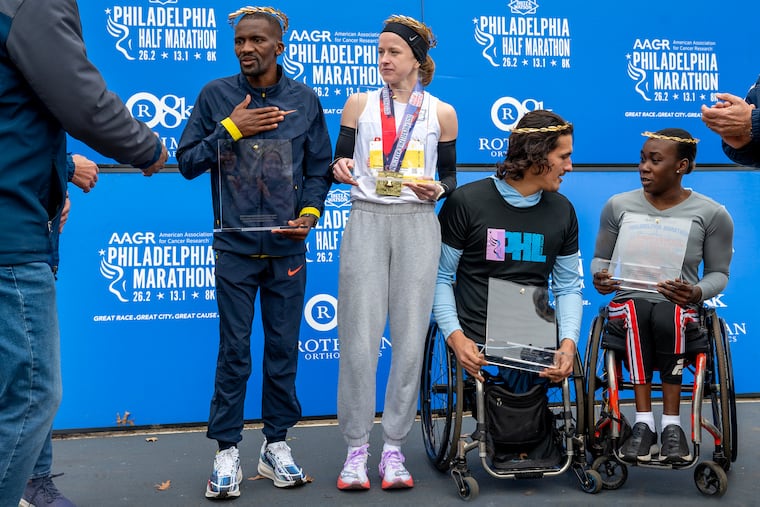
One striking note from Sunday, said Titus, was the rise in first-time marathoners. The top female runner, 26-year-old Anna Oeser from Connecticut, ran her first marathon at 2:34:55. People who took up running during COVID-19 lockdowns have graduated from their 5K, 10K, and half-marathon races.
“Over the past couple of years, we have seen the surge in participation in sport,” Titus said. “But people who maybe got their toes wet during the COVID period are now taking to the streets.”
It wasn’t all first-timers on the course, however, with South African professional runner Melikhaya Frans, 35, winning the male category with 2:13:57. He was a last-minute addition to the race after the Sanlam Cape Town Marathon, a major, was canceled due to weather.
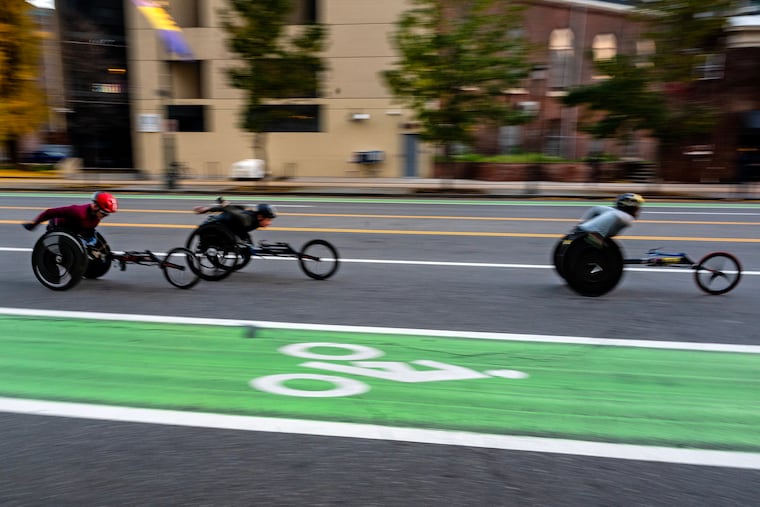
The top male in the wheelchair category was Miguel Vergara of California at 1:44:22. Hannah Babalola of Illinois won the female wheelchair category at 2:15:21.
Close to the finish line, families waited for their loved ones with changes of clothes and slippers.
Joanna Campo, 50, a triathlete all too familiar with this particular feat of endurance, waited for her 17-year-old nephew from Rhinebeck, N. Y., to finish his first marathon, ready to provide some levity.
“I’ve been training for months to hold this sign,” read Campo’s poster board of encouragement.
The teen’s mother, Concetta Ferrari, 43, hoped to squeeze in some Philadelphia sightseeing but figured they’d probably let her son “soak in a bathtub and sleep.”