Philadelphia reacts to the capture of President Nicolás Maduro and Trump’s plan to take control of Venezuela
The military operation and takeover Saturday elicited reactions from Philadelphia’s Venezuelan community and a cohort of area politicians.
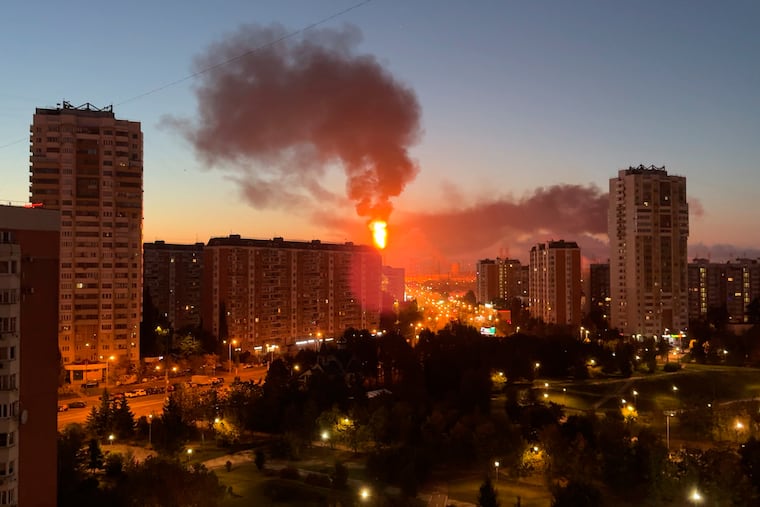
Venezuela native Gil Arends was unwinding at his South Philadelphia apartment Saturday when an X notification came through: “There’s no power in Caracas and we are hearing some explosions.” A panoramic video showed smoke rising from the capital city.
“I was immediately scared; even with all the military, I did not think Caracas was going to get bombed,” Arends, 40, said. Then, the news came through: Venezuelan President Nicolás Maduro was in custody.
A U.S.military operation ousted Maduro from power early Saturday, capturing him and his wife, Cilia Flores. The couple were extracted from their home on a military base and taken to New York, where they face prosecution for their alleged participation in a narco-terrorism conspiracy. The dramatic ground offensive capped a monthslong pressure campaign by President Donald Trump against the Venezuelan leader.
» READ MORE: Trump says U.S. has captured Venezuelan President Nicolás Maduro, will run the country
Arends, who owns Puyero Venezuelan Flavor with locations in Center City and University City, left Venezuela 15 years ago. He woke up his mother, sister, and wife when he learned the news. No one could believe it.
“Some people just began noticing the bombings in the Caribbean, but we have been living this our entire lives,” Arends said. “No one wants to see their country getting bombed, but they gave us no alternative. I am grateful for the help.”
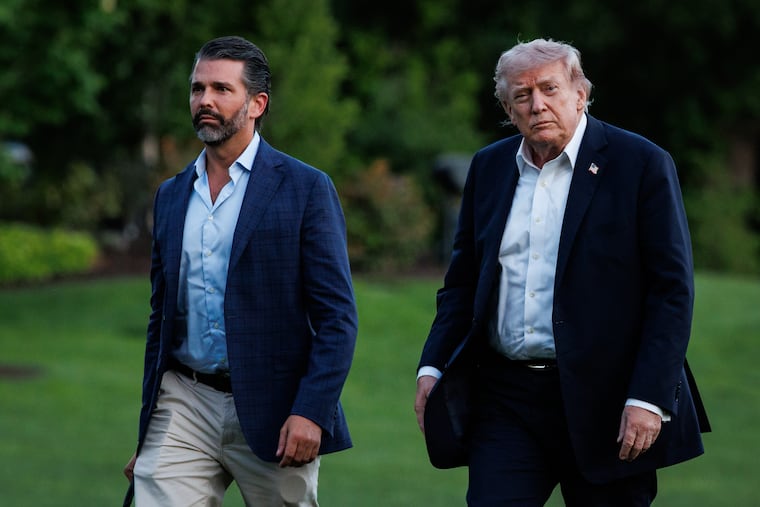
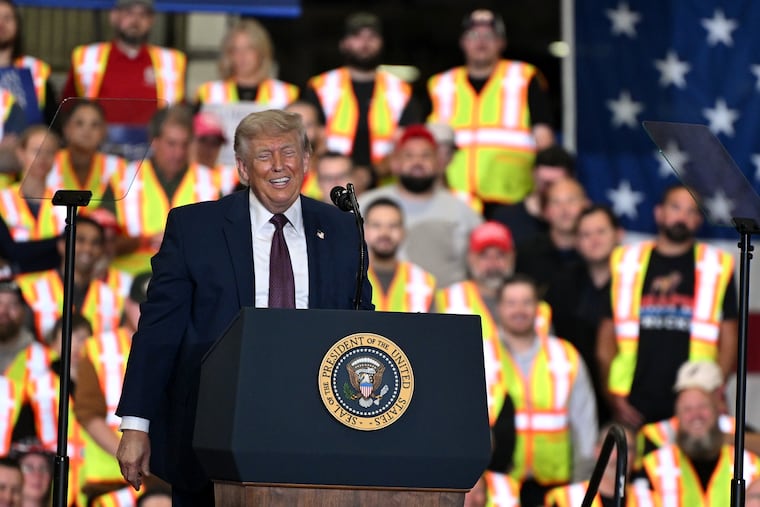
In the wake of the raid, Trump said the United States would “run Venezuela” until a transition of power could be arranged. Speaking from Mar-a-Lago, Trump offered few details on what American intervention would look like — or how long it could take — but revealed he plans to “fix” the country’s oil infrastructure and sell “large amounts” of oil to other countries.
» READ MORE: With capture of Maduro, Trump claims successful operation as he treads into uncharted territory
The military operation and takeover Saturday elicited reactions from Philadelphia’s Venezuelan community and a cohort of area politicians who denounced Trump’s plan to run the country and capitalize off its oil reserves.
Philadelphia Democrat U.S. Rep. Brendan Boyle took to X, writing, “The American people want affordable housing and health care. The last thing they want is another costly forever war.”
U.S. Rep. Brian Fitzpatrick said in a statement that Venezuela’s future “belongs to the Venezuelan people alone.”
“The only country that the United States of America should be ‘running’ is the United States of America,” the Bucks County Republican said.
The legal authority for the raid on Maduro and airstrikes in Caracas were not immediately known, but area lawmakers said Trump did not seek congressional authorization to capture Maduro. Decrying the attack, a spokesperson for U.S. Rep. Dwight Evans of Philadelphia noted that the president’s chief of staff Susie Wiles told Vanity Fair in November that ground operations in Venezuela would require the approval of Congress.
In a social media post, Sen. Andy Kim accused Secretary of State Marco Rubio and Defense Secretary Pete Hegseth of “blatantly” lying when the administration told congressional leaders its objective was not a regime change. Kim — a New Jersey Democrat and former national security official in the Obama administration — argued the raid may further isolate the U.S. from its allies.
“This strike doesn’t represent strength. It’s not sound foreign policy,” Kim wrote. “It puts Americans at risk in Venezuela and the region, and it sends a horrible and disturbing signal to other powerful leaders across the globe that targeting a head of state is an acceptable policy for the U.S. government.”
Delaware Democratic U.S. Sen. Chris Coons echoed Kim in a news release: According to Coons, senior Trump administration officials said in briefings to Congress that they were focused on combating drug trafficking.
“President Trump put American service members in harm’s way to capture Maduro, but the president lacks a clear plan for what comes next,” Coons said. “This raid risks creating more instability in the region, putting U.S. service members and civilians in the hemisphere at risk, and dividing us further from our regional partners.”
While condemning Trump, Sen. Cory Booker, a New Jersey Democrat, also upbraided the Republican-led Congress for its “ongoing abdication of its constitutional duty” and choosing “spineless complicity over its sworn responsibilities.”
» READ MORE: Trump’s Venezuela move pushes the limits of ‘America First’
“Again and again, the president has exceeded his authority, defied congressional intent, trampled the separation of powers, and broken the law — while Congress looked away in cowardice and submission,” Booker said in a news release. “Congress must act now. It must reassert its constitutional authority, restore the rule of law, and stop this president before further injury is done to our democracy and our republic.”
State Sen. Nikil Saval (D., Philadelphia) called for his federal counterparts to impeach Trump.
“Trump’s attack on Venezuela and abduction of its President are criminal acts of terror. They follow in the darkest traditions of American history: a violent, reckless flex of military power to gain control over foreign resources,” Saval posted on Instagram. “It is incumbent on every American of conscience to rise against these actions.”
Bill Burke-White, an international lawyer and law professor at the University of Pennsylvania Carey Law School, said the United States’ unsanctioned attack on another sovereign state opens the doors for other military superpowers to oust opposing heads of states.
“Many countries in the world are going to look at this and say … that the United States has fundamentally abandoned the basic principles that kept us safe for the last 70 years. We’re going to be reverting to a world that looks more like regional powers that can do whatever they want,” he said, “a world governed, not by law, but by the whims of powerful autocrats in countries with nuclear weapons.”
The U.S. government does not recognize Maduro as a legitimate leader of Venezuela, and Trump repeated rhetoric Saturday that Maduro had effectively exploited the nation for cocaine trafficking and criminal enterprises. American presence in waters off South America has swelled in recent months as the U.S. attacked boats allegedly carrying drugs.
The number of known boat strikes was 35 and the number of people killed at least 115 as of Friday, according to the Trump administration. Trump has said that the U.S. is engaged in an “armed conflict” with drug cartels and has justified the boat strikes as necessary to curb the flow of drugs.
In social media posts, Pennsylvania U.S. Sens. Dave McCormick , a Republican, and Democrat John Fetterman applauded American military personnel who carried out the mission under the cover of darkness.
“For years Maduro’s regime killed our children by flooding America’s streets with poison, threatened our borders, and undermined U.S. national security,” McCormick wrote. “I urge what’s left of the Maduro regime to honor the will of the Venezuelan people and transition peacefully to rightfully elected leadership.”
There are about 7,000 people of Venezuelan origin in the Philly metro area, according to the latest census data, out of a total metro area Latino population of 681,000. By comparison, there are 135,000 people of Mexican origin, and 74,000 people of Dominican origin in the metro area.
Three local Venezuelan organizations — Casa de Venezuela Philadelphia, Casa de Venezuela Delaware, and Gente de Venezuela Philadelphia — rallied for peace and unity among the diaspora.
“In moments of heightened emotional sensitivity and rapid information circulation, we urge our community in exile to act with serenity, caution, and a sense of collective responsibility,” a joint statement read.
A vigil for Venezuela’s future is scheduled for noon Sunday at the Cathedral Basilica of SS. Peter and Paul.
“We firmly believe that no process of change will be sustainable if built on hatred, confrontation, or suffering,” the statement said.
After the news began to sink in, Arends, the restaurateur, checked in with his employees, asking about their family members in Caracas. Overall everyone was OK, he said, although some were startled and concerned by the bombing sounds.
“There is so much uncertainty in every single level and we have been through so much; we have seen bad things become worse so it’s very difficult to just be happy without fearing what that might lead to,” Arends said. “I’m hopeful but it doesn’t feel like we are at the point where this is over.”
As the first day of a post-Maduro Venezuela came to a close, Venus Lucini, 28, said she felt like there was a difference in the air.
“There are too many emotions, too much uncertainty, but for the first time, there is possibility,” Lucini said, as she held her daughter Sofi’s hand.
For the young mother this is a chance for younger generations to recover a sense of the future.
“I already had to emigrate, but this is her chance to see a new Venezuela,” Lucini said, longing to visit with family members who have never seen her 6-year-old in person.
“Can we go to Venezuela now, Mami?” Sofi asked.
“Not yet, baby, but soon you will get to see all the places Mami grew up in,” Lucini replied.
Graphics editor John Duchneskie and the Associated Press contributed to this article.