ADVOCATE TO ADVERSARY
With a chance at freedom, they faced an unexpected obstacle: Their own lawyers.
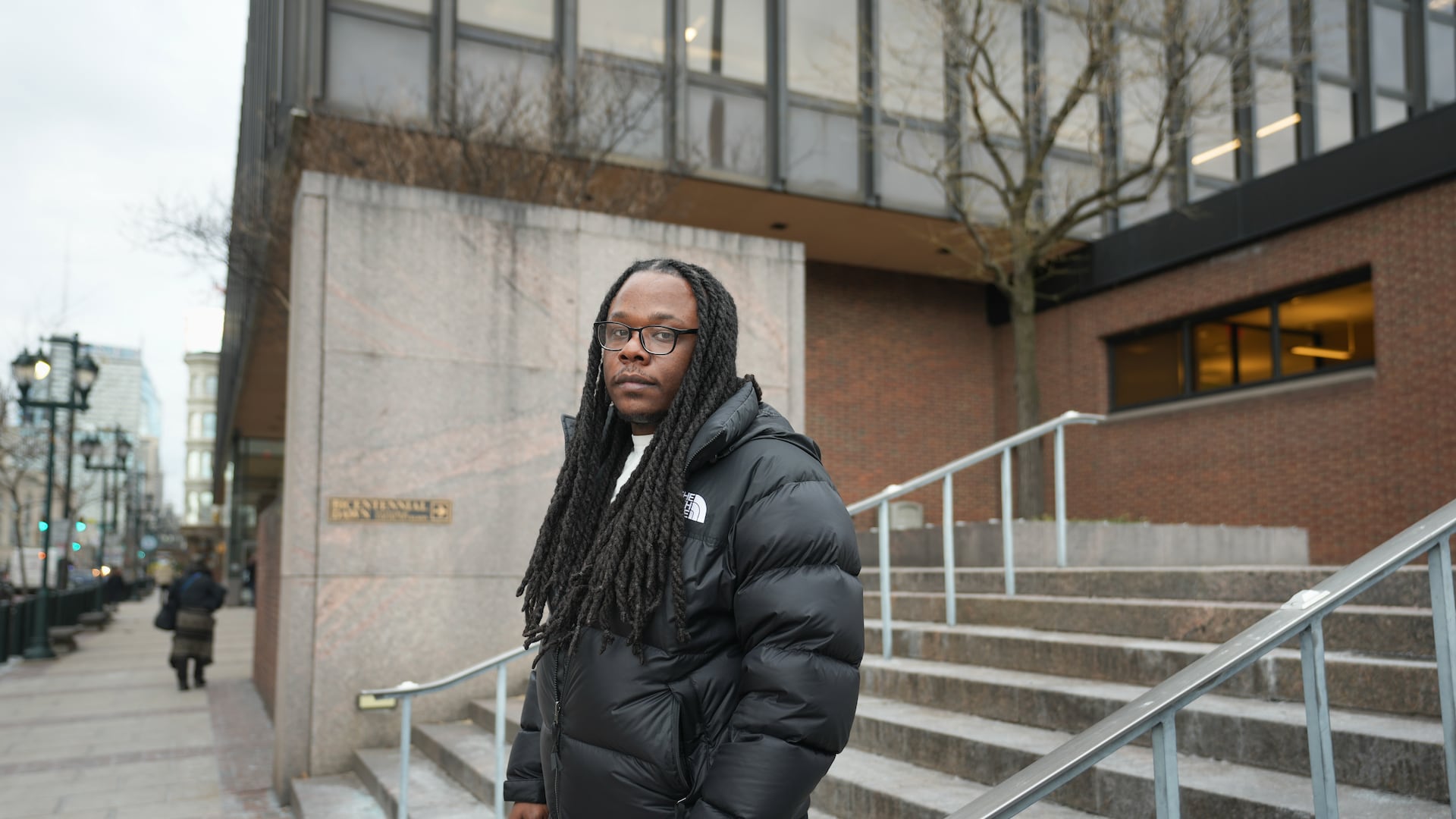
Milique Wagner always insisted that his 2013 murder conviction was built on an informant’s lie. But Wagner said he couldn’t persuade his trial lawyer to investigate that, even after the informant confessed to the murder and testified that Philadelphia police and prosecutors knew the truth.
In 2015, Wagner’s appeal failed, and he faced life in prison.
But Wagner had another chance at freedom under a state law that allowed him to get a new court-appointed lawyer to help him challenge his conviction. Court records show that the attorney never spoke with the informant or looked into the detective on the case, who made headlines after being benched for secretly paying a witness. Instead, Wagner’s lawyer urged the judge to shut down his client’s petition, writing in June 2017, “There are no meritorious issues that could be raised.”
Wagner would remain in prison for six more years before prosecutors acknowledged that police had hidden evidence suggesting that the informant had committed the murder and the detective was corrupt. Although Wagner maintains his innocence, he agreed to a plea deal for third-degree murder that allowed him to leave prison.
The opposition Wagner faced from his own lawyer is permitted under Pennsylvania’s Post Conviction Relief Act, the law that allows people in prison to raise newly discovered evidence or argue that their previous lawyer mishandled the case. The state provides a lawyer in these cases, but with a catch: The attorney can argue against the client’s claims and withdraw from the case by filing what’s known as a “no-merit” letter.
A Philadelphia Inquirer and ProPublica investigation found case after case in which court-appointed attorneys did minimal work to examine their clients’ claims and rejected what later turned out to be legitimate legal issues. The findings reveal that Philadelphia’s post-conviction system repeatedly delayed or denied justice for wrongfully convicted people who then spent years or decades behind bars.
The news organizations reviewed 250 of Philadelphia’s reversed convictions and sentences since 2018 in violent felony cases. Wagner was one of at least 50 people whose lawyers said there was no basis to challenge their cases, only for judges to later decide they deserved new trials or sentences.
While in some cases the exonerating evidence did not emerge until years after the no-merit letter was filed, a majority were tossed out based on issues the PCRA lawyers overlooked or rejected.
Three years of invoices appointed attorneys submitted to the court, covering 83 homicide PCRA cases in which the lawyers filed no-merit letters, show the extent of lawyers’ efforts.
Those attorneys did not arrange a single phone call with the client, contact the trial lawyer, or obtain the police or prosecution case files about three-quarters of the time. Those case files have been a key source of evidence in overturned convictions since Philadelphia’s district attorney began making them available to lawyers six years ago.
In some cases, records show the attorneys rejected their clients’ claims just days or weeks after being appointed and submitted filings with factual errors, including the wrong defendant’s name. They filed no-merit letters despite red flags, such as a client’s codefendant having already been exonerated or a detective who locked the client up having been arrested for assaulting witnesses or tampering with evidence.
Daniel Anders, the administrative judge who oversees Philadelphia’s court-appointed counsel system, did not respond to requests for comment.
Judge Barbara McDermott, who oversaw many PCRA cases before recently retiring from Philadelphia’s Common Pleas Court, defended the system and said it is working as intended.
“We’re never going to be a perfect system, but within the system we’ve had we’ve done the best we can,” she said, adding that no-merit letters play an important role in shutting down pointless challenges. “At some point, there has to be finality to cases.”
In Pennsylvania, a person looking to challenge their conviction starts by filing a PCRA petition, often handwritten on a state-issued form. If it’s a person’s first PCRA, a judge will assign a lawyer to amend it.
Robert Dunham, a lawyer who spent years training attorneys across the state to litigate death-penalty appeals, said appointed lawyers are too often limiting their review to the issues their clients raised. He said the job is to reinvestigate the entire case to catch things previous lawyers missed.
“[The clients are] not lawyers. In many cases they are impaired,” Dunham said. “They don’t have the ability to conduct a factual investigation because they’re in jail.”
[The clients are] not lawyers. ... They don’t have the ability to conduct a factual investigation because they’re in jail.
Stephen T. O’Hanlon, the attorney appointed to Wagner’s case, sent no-merit letters to nine clients who would later have their convictions or sentences overturned. That was more than any other attorney identified in the Inquirer and ProPublica examination, but O’Hanlon also handled among the most PCRA cases.
Five of the nine cases were later overturned in state or federal court based on issues with the trial or plea he rejected or did not raise.
O’Hanlon said the attorney code of ethics prevents him from making arguments he knows to be false or frivolous and that, in each case, the judge and prosecutor agreed with him at the time.
“Yes, it’s good that they got off on some kind of five-years-later technicality,” he said, “but it’s wrong to suggest there was any problem with” the no-merit letters.
O’Hanlon said he conducted a diligent review of Wagner’s case and exchanged numerous letters with him. According to court records, he sent an investigator to interview multiple witnesses.
Wagner provided The Inquirer and ProPublica a copy of a letter he said he wrote to O’Hanlon in 2016, asking him to look into Philip Nordo, the corrupt homicide detective who’d typed up the informant’s statement. O’Hanlon said Wagner never raised Nordo as an issue at the time. Pointing to Wagner’s eventual plea deal, he said Wagner is “factually guilty” of the murder.
Wagner said O’Hanlon seemed to be against him from the outset. He pointed to a letter O’Hanlon wrote him, six weeks after he was appointed, seemingly unaware that Wagner had been convicted by a jury. “Didn’t you eventually enter a plea on your case? I’m having a hard time understanding how your issues can get around [that].”
Wagner asked the judge for a new lawyer, arguing the letter proved O’Hanlon was not interested in advocating for him.
“I knew he wasn’t going to fight for me,” Wagner said in a recent interview.
The judge kept O’Hanlon on the case.
‘A meaningless ritual’
The roots of Pennsylvania’s no-merit letter go back to the case of Dorothy Finley, who in 1979 filed a PCRA challenging her conviction for a robbery-murder in North Philadelphia. As required in Pennsylvania, a judge appointed her a lawyer.
After Finley’s lawyer decided her conviction was sound and asked to be taken off the case, a Philadelphia judge told him to file a letter with the court explaining why there was no merit to the issues she raised.
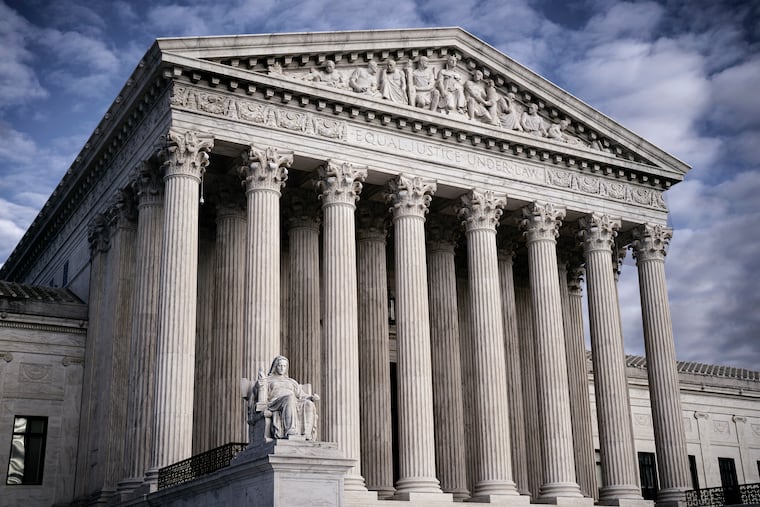
The state appeals courts agreed with Finley that her post-conviction lawyer didn’t do his job adequately. But in 1987, the U.S. Supreme Court heard the case and ruled that she did not have a constitutional right to a lawyer once her case hit the post-conviction stage. The decision left it to Pennsylvania to decide what counts as effective representation and what’s required of a lawyer who wants to drop a case.
Justice William Brennan Jr., in dissent, warned that the ruling would create a double standard in the justice system. Guaranteeing a lawyer to people who couldn’t afford one and then allowing that lawyer to oppose their client’s case turns the right to counsel into “a meaningless ritual,” he said. Meanwhile, a defendant who can afford private counsel would receive a “meaningful review” of their claims.
Finley died in prison a decade later. The no-merit letter that attorneys file in PCRA cases is now commonly known as a Finley letter.
The requirements to file a Finley letter are minimal: A lawyer only needs to describe what was done to review the case, list each claim the client wants raised, explain why the claims are bogus, and notify the client of their rights.
Nationally, few states have set standards for post-conviction representation. But appeals standards published in at least 10 other states urge lawyers to avoid filing no-merit briefs when possible. The National Legal Aid and Defender Association says there should be “extremely strict” limits on them and that they should never be filed if clients are serving life terms. In Philadelphia, court data and invoices show, appointed lawyers file them in about half of all homicide PCRA matters.
Court records are filled with examples of Philadelphia lawyers filing letters attacking clients who would eventually prevail in court, calling their claims “self-serving and unfounded,” “unfathomable,” “outrageous,” and “specious.”
“The fault lies with [my client] not the courts,” lawyer Earl Kauffman wrote in a 2021 Finley letter. Pennsylvania’s Superior Court rejected Kauffman’s determination in a 2023 opinion.
The fault lies with [my client] not the courts.
In an interview, Kauffman said he didn’t recall the case but stands behind his work.
“Whatever they decide, they decide — whether they agree with me or disagree with me,” Kauffman said of the higher court’s opinion. “I did what I did. I saw what I saw. I analyzed what I analyzed.”
O’Hanlon wrote a 2015 no-merit letter calling his client’s actions unjustifiable, in that he “emptied his gun, firing eight shots, at a fleeing car in a public street” — even though a federal judge, in ruling that he deserved a new trial, would interpret the same evidence as supporting the client’s self-defense claim. Asked about that finding, O’Hanlon said the judge’s observation had no bearing on the case.
Jennifer Merrigan, a cofounder of the nonprofit law firm Phillips Black, said Finley letters routinely contain adversarial language and often breach confidentiality to use information lawyers have uncovered against the clients. She viewed these as “some of the most egregious ethical violations I’ve seen in my career.”
“Some read like a prosecutor’s closing argument,” she said. “It puts the burden on the client, and it sets up the defense lawyer as an extra prosecutor.”
Merrigan helped analyze 100 Finley letters filed in Philadelphia homicide cases for a recent Harvard Law Review article. The authors of the study — an attorney at Merrigan’s firm and a Finley letter recipient who later got his conviction overturned — concluded that the letters revealed “entrenched routine disloyalty and incompetence, even in extremely high-stakes criminal cases.”
Clients can pay a steep price, said Dunham, the longtime appeals lawyer. “Sometimes any lawyer is better than having no lawyer — but sometimes having any lawyer is worse than having no lawyer,” he said. “What happens when you get a bad lawyer in the Finley process is you lose your rights.”
That’s because if a lawyer discards a valid issue, it is forfeited forever.
Sometimes having any lawyer is worse than having no lawyer. What happens when you get a bad lawyer in the Finley process is you lose your rights.
That’s what happened to Quahir Trice, who argued that when Philadelphia prosecutors used a statement by his codefendant to convict him, the move improperly prevented Trice’s lawyer from cross-examining the witness against him.
Trice’s new lawyer, appointed by the court to handle his PCRA, filed a Finley letter. But by the time Trice’s case made it to the U.S. Supreme Court, the justices wrote that although Trice would have had a winning claim, the issue was dead. Trice’s lawyer had missed an “obvious means” to raise it in his PCRA and was now barred from doing so.
Trice was ultimately freed in 2022 after the Philadelphia District Attorney’s Office let his lawyers access his police file, which contained long-hidden evidence that police had alternative suspects and that witnesses lied at his trial.
But five lawyers who handle court-appointed cases said the process set up by the Pennsylvania courts has made clear that their duties in PCRA cases are limited, and that digging into the police file or even speaking with the client is, in many cases, unnecessary.
George S. Yacoubian Jr., who has filed close to 100 Finley letters since 2018, said the courts have made those parameters clear. “A PCRA attorney is not supposed to be going back to the very beginning and investigating every possible thing,” he said. He added that while he has an ethical duty to his client, he has a “higher obligation to the system of law” to not present frivolous cases.
Yacoubian has written Finley letters in about 80% of his PCRA cases since 2018, court records show. He said that’s to be expected.
“If a client pleads guilty and there is nothing in the transcript to suggest the plea was coerced or forced or involuntary or unknowing, there is very little if anything that can be done for those defendants,” Yacoubian said.
However, dockets showed that a majority of his Finley letters were for clients who had gone to trial, not taken pleas.
Three Yacoubian clients, whose claims he rejected, would later be granted new trials after privately retained lawyers found valid claims to raise. Teri Himebaugh, the lawyer who won one of those PCRA cases, said it “really wasn’t all that difficult” to crack, but she said the prior lawyers had done little to investigate the case.
Pennsylvania’s Superior Court sent three other Yacoubian cases back to the lower court. Twice they determined his clients deserved a hearing on the issues Yacoubian had rejected. In the other case, the higher court said it was unclear whether he’d understood his client’s claim, because there was no indication they had ever spoken.
Yacoubian declined to discuss specific cases but said his filings were based on the issues in front of him.
“There are some claims that a petitioner makes that are completely baseless,” he said. “Sometimes Finley letters are just necessary.”
‘You’re supposed to be fighting for me’
O’Hanlon, the lawyer who handled Milique Wagner’s case, has filed more than 100 Finley letters since 2018. Half, dockets show, were filed less than a month after he was formally appointed.
That’s a tight window in which to thoroughly investigate a case, said attorney Daniel Silverman, who in 2021 won a new trial for one of O’Hanlon’s Finley letter recipients. In a court filing, Silverman wrote that O’Hanlon’s Finley letters suggest he “often performs little or no investigation in these cases and views his role more as an agent of the courts, helping to quickly dispose of cases, than as an advocate for his client.”
That case was thrown out based on a flawed jury instruction. The federal court partly blamed O’Hanlon for “overlooking obvious issues.”
In another case that was overturned, prosecutors wrote in a court filing that O’Hanlon had “failed to fully read” a PCRA by a client who said his lawyer had neglected to call a key defense witness. O’Hanlon wrote, incorrectly, that his client had not named any such witness. A federal judge agreed to toss out the conviction.
O’Hanlon said in an interview that he didn’t overlook the issues, but based his Finley letters on Pennsylvania court precedent and the factual circumstances of each case.
O’Hanlon said that Finley letters often result from clients having missed filing deadlines. And, he said, he had to work with the issues his clients raised, not manufacture new ones.
If there are negotiated guilty pleas, almost all of those should be Finleys.
“If there are negotiated guilty pleas, almost all of those should be Finleys,” he added, because those clients have stated on the record that that plea was knowing and voluntary. But in three guilty-plea cases, the Superior Court later disagreed with him and said his clients’ issues at least merited a hearing. In one, the appeals court eventually threw out the client’s sentence altogether.
O’Hanlon said he has won relief for numerous clients in PCRA cases and digs deep into each case, but sometimes he uncovers more evidence of guilt. He emphasized that even those who won new trials ended up taking pleas. “They’re still substantively guilty of murder,” he said.
In seven of the nine cases that would later be overturned, O’Hanlon’s Finley letters reflect his certainty that his clients are guilty, often describing the evidence of guilt as “overwhelming” or “compelling.”
One client O’Hanlon said had no claims that could outweigh his “overwhelming” guilt was Byshere Lawrence, who was 15 when he was arrested for murder in 2011. Court records show that his trial lawyer never met with him, which Lawrence claimed resulted in an unfair trial.
Another, Ronald Rogers, argued his lawyer should have objected when the judge overseeing his 2011 murder trial threatened a recanting witness with a perjury charge and “the maximum consecutive sentence” unless he reverted to his prior testimony accusing Rogers.
O’Hanlon sent Finley letters to both rejecting those claims. Judges would later throw out each conviction based on the ineffectiveness of each man’s trial lawyer, and both took plea deals rather than continue fighting their cases.
Rogers described that as a decision born of desperation.
“I thought, I gotta get home,” he said. “I gotta see the people I love one more time.”
He was released in December after nearly 17 years in prison. His two children had to grow up with their father behind bars.
I thought, I gotta get home. I gotta see the people I love one more time.
O’Hanlon said that he could not have raised the issues that later won the clients’ relief, either due to the clients’ instructions at the time or due to state court precedent.
“There are years and years of subsequent procedural history, with multiple courts agreeing with me and some not agreeing with me,” he said.
But former clients said the letters undermined one of their last shots at freedom.
Hakeem Moore, who received one of those letters before his family finally hired a lawyer who uncovered evidence that led to his conviction being overturned, said getting that letter in his prison legal mail was devastating.
O’Hanlon noted Moore ultimately took a guilty-plea deal, and said the evidence that freed him was not available when he handled the case.
“It’s like a betrayal. You’re supposed to be fighting for me,” Moore said. “I was scared that I was going to have to die in jail.”
Left to their own devices
For almost 40 years, the requirements created in the Finley case have set the minimum for what’s required of court-appointed PCRA lawyers in Pennsylvania. Beyond that, lawyers are largely left to decide what constitutes a meaningful review.
They are subject to some oversight: Pennsylvania courts require judges to independently review the record before accepting a Finley letter. And the whole court-appointed system is overseen by a supervising judge who has the power to review complaints and remove lawyers.
The analysis of invoices in homicide PCRA cases showed that even though most lawyers filing Finley letters did not take basic investigative steps, judges approved of the work that attorneys had done in more than 90% of the letters filed.
And even if judges take issue with lawyers’ work, that does not necessarily affect their ability to take more cases. Once on Philadelphia’s court-appointment list, lawyers can remain there indefinitely.
That’s a sharp contrast to the federal court for Pennsylvania’s Eastern District, where lawyers must reapply every three years, self-reporting everything from previous case outcomes to disciplinary actions to judicial findings that they were ineffective in court.
In Philadelphia, the supervising judge has the authority to remove lawyers from the list in response to complaints. But formal reprimands from the state disciplinary board and criticism from the state appeals court have not affected some lawyers’ eligibility to continue taking appointed cases.
One lawyer, Lee Mandell, was officially reprimanded last year for waiting six years to schedule a PCRA hearing, during which time two key witnesses died. James Lloyd was reprimanded in 2020 for failing to contact his client for 10 months after being appointed, then making up a letter to cover up that fact.
Judges still appointed both to handle cases, and Philadelphia’s court leadership in 2022 tapped Lloyd to lead a training on PCRAs for other lawyers.
Lloyd did not respond to emails or phone calls requesting an interview. Mandell declined to comment.
Also continuing to receive appointments is attorney Douglas Dolfman. The state Superior Court criticized his PCRA work six times over the last six years, finding he abandoned two clients and “deprived [another] of meaningful representation.” In one case, the Superior Court said the lower court could consider “sanctions including, but not limited to, reporting him to the disciplinary board.” The state bar directory shows no disciplinary action followed.
In an interview, Dolfman said he diligently investigates each case and fights hard for his clients.
“If the person has been in jail for 20 years, you’re pretty much not finding anything. Most likely everything has been exhausted already,” Dolfman said. He didn’t address the appellate court’s criticism.
As for Milique Wagner, after receiving the Finley letter he’d spend another nine years in prison for the murder to which the prosecution’s star witness had confessed.
But in 2022, the disgraced detective who built the case against him, Nordo, was convicted of raping informants and funneling them crime reward money.
A year later, the district attorney’s Conviction Integrity Unit agreed that the prosecutor’s failure to disclose evidence about Nordo and the informant who testified against Wagner had resulted in an unfair trial.
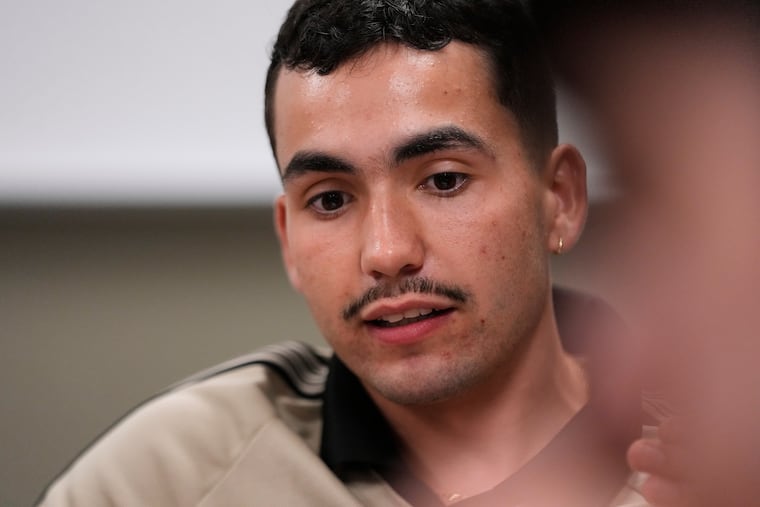
Wagner came home from prison in January. He’s starting over in life at age 37 and looking for work. He married a woman who has been taking care of his ailing grandmother.
He said he has not given up on clearing his name in court, but he’s decided to represent himself going forward. He no longer has faith that a lawyer would help him.
“It’s like a game to them,” he said. “I’m not going to gamble. I know how it turned out before.”
We are continuing to report on this issue and want to hear from anyone with insight into Pennsylvania’s post-trial system, including lawyers, judges, and people fighting to overturn wrongful convictions. We’re especially interested in tips that explain how funding levels and judicial oversight in your county are shaping how the system works. And, we’re interested in seeing your Finley letters and other court documents that can shed light on whether the system is working as intended to correct past injustices. Contact reporter Samantha Melamed at smelamed@inquirer.com or by phone at 215-854-5053.
This article was produced for ProPublica’s Local Reporting Network in partnership with The Philadelphia Inquirer. Sign up for Dispatches to get stories like this one as soon as they are published.

The Inquirer’s journalism is supported, in part, by the Lenfest Institute for Journalism and readers like you. News and editorial content are created independently of The Inquirer’s donors. Gifts to support The Inquirer’s high-impact journalism can be made at inquirer.com/donate. A list of Lenfest Institute donors can be found at lenfestinstitute.org/supporters.