A service honoring Absalom Jones took on added meaning this year for his church
This year’s celebration of African Episcopal Church of St. Thomas’ founder, the Rev. Absalom Jones, was intrinsically political after his legacy was stripped from the President's House Site.
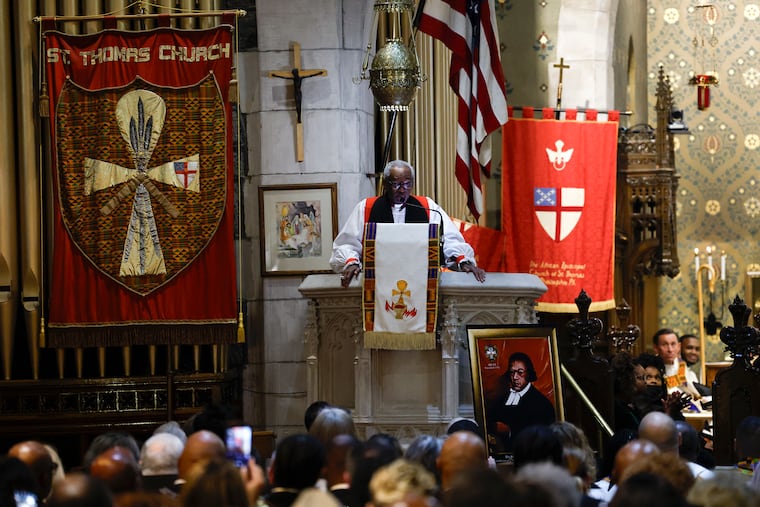
This year’s celebration of African Episcopal Church of St. Thomas’ founder, the Rev. Absalom Jones, was intrinsically political.
Parishioners on Sunday overwhelmed the pews at the Overbrook Farms church for the annual event honoring Jones, the first Black ordained Episcopal priest. But this year’s service took on new meaning after Jones’ legacy was stripped from the President’s House historical site on Independence Mall, the church’s rector said.
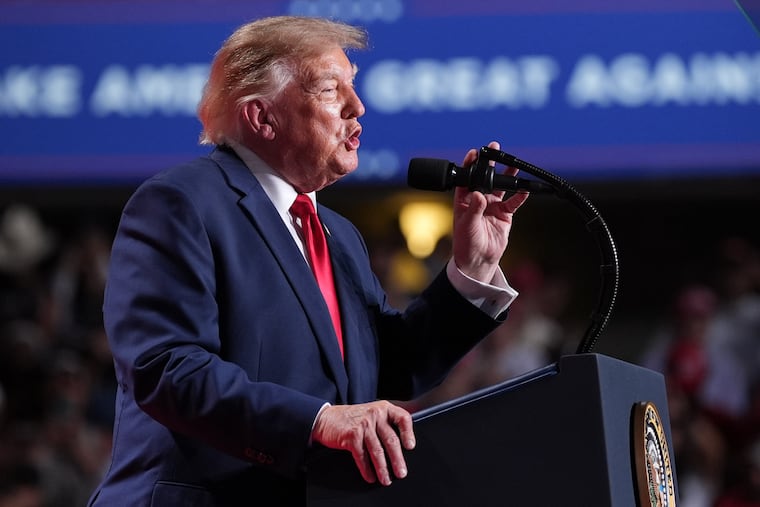
Last month, the National Park Service dismantled the exhibit memorializing the lives of nine people enslaved at the nation’s first presidential mansion. The illustrative displays chronicled the Atlantic slave trade and President George Washington’s dogged support for the institution. They also elevated early influential Black Philadelphians, like Jones and contemporary Richard Allen. The site was a casualty of President Donald Trump’s push to remove all content that “inappropriately disparages Americans past or living” from federal land — what many have called an attempt to sanitize history by omitting the brutality of slavery from the narrative.
» READ MORE: Here are the signs the Trump administration removed from Independence Park
The 35-minute sermon, delivered by the visiting Rt. Rev. Michael Curry, ran the gamut: From Bad Bunny’s Super Bowl halftime performance, to unrest in Minnesota over Trump’s immigration crackdown, the detention of 5-year-old Liam Conejo Ramos, and dysphoria spreading throughout the country.
But Curry’s prevailing message was clear: Fight through the vicissitudes. Curry, former presiding bishop and primate of the Episcopal Church, is the first African American presiding bishop in the country.
“If you want to taste freedom, if you want America to be just again,” Curry said, “if you want an America where every person is a child of God, where there is freedom and justice — not just for some — but for all … don’t you quit. Keep going, keep going.”
Curry later added: “If we love America, change America.”
The late afternoon service also featured young singers from Minnesota, faith leaders from other prominent Philadelphia institutions, and descents of the Rev. Allen.
Jones and Allen, former slaves who became lay preachers in the 18th century and together created the benevolent Free African Society, were forced out of St. George’s Methodist Church general congregation and forced to worship in segregated pews. Jones went on to form St. Thomas, while Allen built Mother Bethel A.M.E. Church.
The men’s names and history were invoked throughout the President’s House Site. A panel titled “How Did Enslaved People Become Free?” discussed Jones’ and Allen’s experience at St. George’s, their respective parishes, and how they organized against slavery.
» READ MORE: Local leaders and activists demand the return of slavery exhibits to the President’s House Site
The erasure of the site — which captured the somber paradox of a young America that exalted freedom for some but deprived others — comes ahead of the country’s Semiquincentennial celebrations putting Philadelphia in the national spotlight.
The city has filed lawsuits intervening, arguing that the removal of the exhibits is unlawful. A federal judge ordered that the exhibits be kept safe while the court proceedings are ongoing.
“It brings a totally different emphasis and focus on the celebration this year at the church,” the Rev. Martini Shaw, St. Thomas’ rector, told Episcopal News Service. “But while some want to erase history, we in the church are prepared to celebrate history.”