Judge chastises Trump administration attorney in hearing over dismantled President’s House exhibits
The city wants the judge to order that no more exhibits be removed and that the already-removed exhibits be protected as the litigation continues.
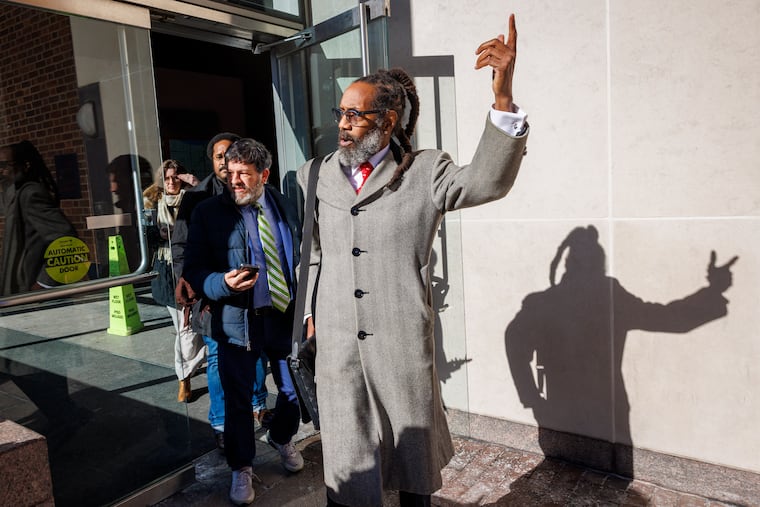
Attorneys for the City of Philadelphia and President Donald Trump’s administration sparred in federal court Friday over the abrupt removal of slavery-related exhibits from the President’s House on Independence Mall.
The hearing centered on the city’s request that the judge order that no more exhibits be removed from the President’s House and that the already-removed exhibits be protected as the effort to return them is litigated.
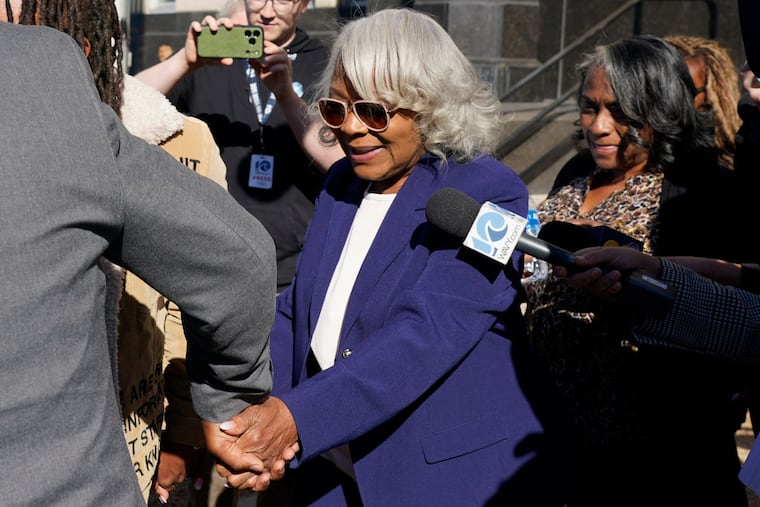
Mayor Cherelle L. Parker’s administration is “fighting” to restore the panels, City Solicitor Renee Garcia told reporters after the hearing.
“I want to be very clear that we want those panels back up, but we also do not want anything else to come down,“ Garcia said.
Judge Cynthia M. Rufe wasn’t ready to issue a ruling after the daylong hearing in the courthouse across the street from the historic site. On Monday, she wants to visit the President’s House and ensure that the removed exhibits being stored in a National Park Service storage facility adjacent to the Constitution Center are not damaged. She asked the federal government to maintain the status quo until she makes her decision.
But with the nation’s 250th anniversary celebration being planned for the site in dispute, Rufe said she would not let the case drag into the spring or summer.
The George W. Bush-appointed judge chastised the attorney representing the government, Assistant U.S. Attorney Gregory in den Berken, for talking out of “both sides of his mouth” and making “dangerous” arguments.
The federal government argued the injunction request was invalid on procedural grounds, and that the removal was lawful because, in den Berken said, “the government gets to choose the message that it wants to convey.”
“That’s horrifying to listen to,” Rufe said. “Sorry. That’s not what we elected anybody for.”
The judge asked the assistant U.S. attorney to imagine Germany removing a monument for the American soldiers who liberated the Nazi concentration camp Dachau in an effort to erase the crimes of the Holocaust. “What are we doing here? Are we speaking truth and justice?” Rufe asked.
In another notable exchange, the judge read Trump’s posts from then-Twitter in 2017 in which he lamented the removal of statutes of confederate leaders.
“Sad to see the history and culture of our great country being ripped apart with the removal of our beautiful statues and monuments,” Trump wrote. “You can’t change history, but you can learn from it.”
Rufe asked the assistant U.S. attorney to reconcile that sentiment with Trump’s directive to remove slavery-related exhibits.
“Is this a desire to change history?” the judge asked.
In den Berken declined to respond or opine on the motivations of the president or decision-makers at the Department of Interior, and returned to procedural arguments.
A three-way collaboration
Friday’s hearing marked the first time the City of Philadelphia and Trump’s administration have gone head-to-head in court during his second term.
The city sued Interior Secretary Doug Burgum, acting National Park Service Director Jessica Bowron, and their respective agencies Jan. 22 while Park Service employees were dismantling educational exhibits about slavery at the President’s House.
The President’s House, which opened in December 2010, seeks to inform visitors about the horrors of slavery and memorialize the nine people George Washington enslaved there while he resided in Philadelphia during the early years of the United States. All information at the site is historically accurate.
The exhibits were dismantled after increased scrutiny from the Trump administration. Last year, Trump and Burgum issued orders calling for content at national parks that “inappropriately disparage Americans past or living” to be reviewed and potentially removed.
Garcia argued the removal of exhibits violated federal law and an agreement between the federal government and the city, and caused imminent harm.
“The contents of the removed panels are critical context to share the stories of the individuals enslaved at the president’s home and their fight for freedom” Garcia said.
The President’s House exhibition was the results of yearslong collaboration between the city and the federal government that spanned multiple presidential and mayoral administrations, Garcia said. Two former mayoral chiefs of staff testified to the city’s extensive work alongside the National Park Service.
“I could not imagine that anybody would decide, after all that it took, together, and that we always had each others back, that they would over night tear it down,” said Everett Gillison, chief of staff under former Mayor Michael Nutter. “It boggles my imagination.”
Valerie Gay, the city’s chief cultural officer, also testified to the historical importance of the site to Philadelphians and to visitors for the upcoming 250th anniversary celebrations.
The city’s lawsuit has been supported by Gov. Josh Shapiro and Democrats in Pennsylvania’s state Senate, who filed briefs in support of the requested injunction alongside a coalition of residents who advocated for historical acknowledgment of the enslaved people living in Washington’s house, Avenging The Ancestors Coalition, and the walking tour company The Black Journey.
The President’s House was also a partnership with the public, said Cara McClellan, the attorney representing the coalition and The Black Journey
It was advocacy by coalition leader Michael Coard in the early 2000s that kickstarted the process to recognize the nine enslaved people who lived in Washington’s house through exhibits on the site, McClellan told Rufe. The design was the result of multiple public meetings, with the participation of thousands of Philadelphians.
Yet the exhibits were removed without public input, notice, or reasoning, the attorney said.
“This is like pulling pages out of a history book with a razor,” McClellan said. ”History does not change based on who is in political office."