Philly launches real-time public air quality monitoring network
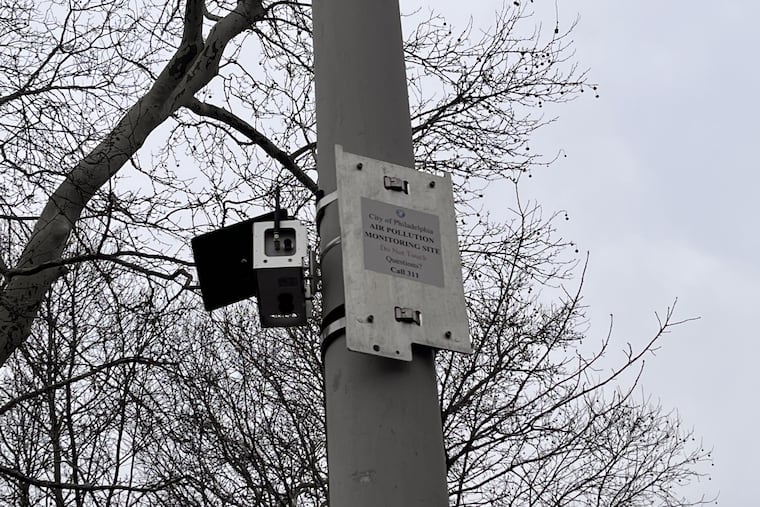
City officials unveiled a real-time air quality network that collects data from solar-powered sensors at 76 strategic locations, blanketing every neighborhood.
Philadelphia residents can now consult a new online dashboard to gauge outdoor air quality before heading out to a park, going for a run, or cycling through the city.
The city unveiled a real-time air quality network that collects data from solar-powered sensors at 76 strategic locations, blanketing every neighborhood. The system can warn residents when pollution spikes — for instance, if a junkyard fire sends particulate levels surging.
“Starting now, every resident in Philadelphia will be able to see, almost in real time, the air quality in their own neighborhood,” said Philadelphia Mayor Cherelle L. Parker.
What does the system measure?
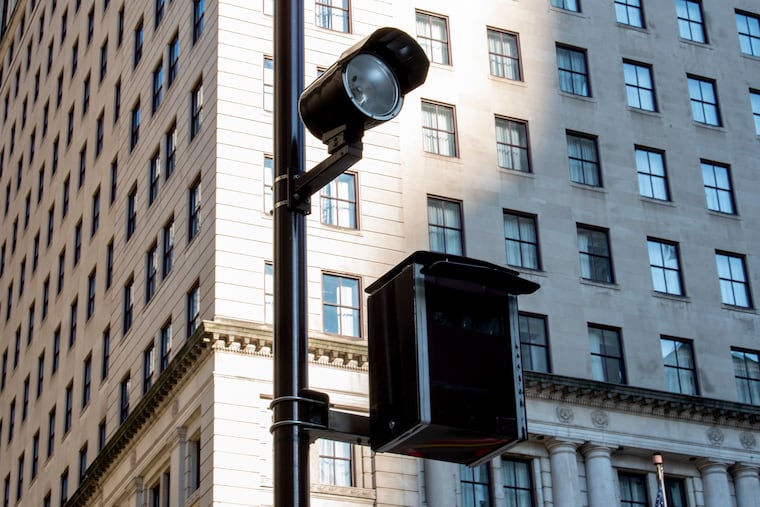
The weatherproof sensors, bolted to utility poles at 1.5-mile intervals, track two primary pollutants:
Fine particulate matter (PM2.5), tiny particles that can penetrate deep into the lungs and cause respiratory issues.
Nitrogen dioxide (NO2), a component of ozone.
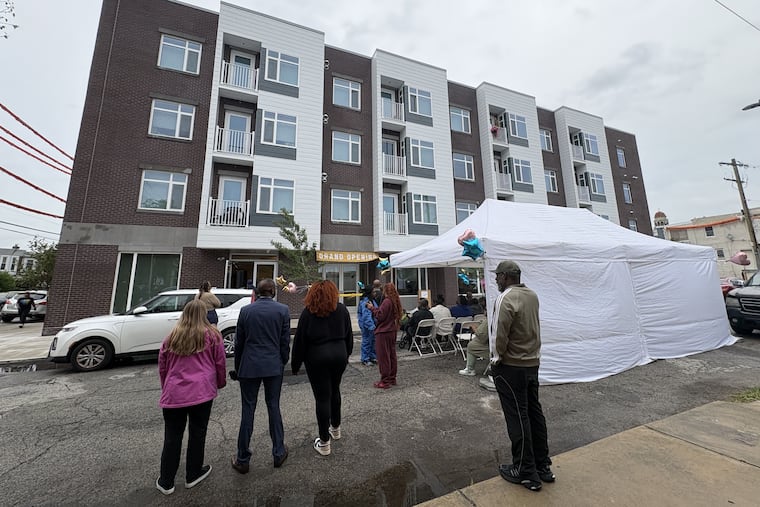
Parker, along with City Council members and officials from the Philadelphia Department of Public Health’s Air Management Services (AMS), introduced the Breathe Philly initiative Wednesday at Stinger Square Park in Grays Ferry.
The monitoring system, manufactured by Clarity Movement Co., will cost the city $90,000 annually. It is currently funded through the nonprofit Philadelphia City Fund.
The new network operates independently from the city’s existing 10‑sensor system that supplies data to the U.S. Environmental Protection Agency.
Parker said it represents a significant step toward environmental justice, especially in neighborhoods that previously lacked adequate monitoring. Some of the sensors will begin monitoring for ground-level ozone as soon as spring.
Ozone is a potent pollutant formed from chemical reactions between vehicle, power plant, and industrial emissions in the presence of sunlight.
“You can check it on your phone, your tablet, your computer,” she said. “You can access up-to-date information about the air that you and your family are breathing right where you live.”
‘We knew right away’
Palak Raval-Nelson, the city’s health commissioner, said the new air monitoring network has been in the works for years. The project is overseen by the health department’s AMS.
“It’s amazing to finally see that it’s here,” she said.
The system detected the air quality as poor during a fire last week, Raval-Nelson said.
“The monitor went off, and we knew right away that we needed to communicate information,” Raval-Nelson said.
The monitor displays colored circles and squares indicating the air quality at each monitor. Colors range from green, the best, to purple and mauve, the worst.
The sensors detect levels of particulate matter, which are tiny particles in the air that can cause health risks. PM2.5 is the result of the burning of fossil fuels, such as by vehicles or power plants. They sensors also measure NO2, a gas also emitted by burning fossil fuels.
Both chemicals can cause respiratory issues.
“It is a concrete step to help keep all of us and our loved ones safe,” Raval-Nelson said of the new sensor system.
Council President Kenyatta Johnson, who grew up in Point Breeze, said the system will help provide real-time information in the event of a disaster, such as the PES Refinery explosion and fire in 2019.
And it will help those with breathing issues like asthma decide whether it is safe to go outside for extended periods.
A new layer of safety
Alex Bomstein, executive director of the nonprofit advocacy group Clean Air Council, said the network adds a new layer of safety for city residents.
“You can’t go very far in the city without encountering a monitor, which is wonderful, because that means that everybody in the city is being protected,” Bomstein said.
He fears pollution will worsen in the future as the administration of President Donald Trump continues to roll back environmental rules and regulations, such as those governing vehicle tailpipe emissions.
Sean Wihera, a vice president with Clarity Movement Co., said the company was founded in 2014 as a start-up at the University of California, Berkley. Similar systems have been installed in Los Angeles and Chicago, he said.
The company owns the sensors and is responsible for them if they break or are stolen. The sensors are upgraded after three years for the latest technology. Wihera said it is possible that Philly’s system could monitor for benzene in the future.
“We’ve been working now in 85 different countries, hundreds of cities,” Wihera said. “But this is one of the most successful integrations that we’ve seen.”