Philadelphia judge closes the record on Ellen Greenberg death review
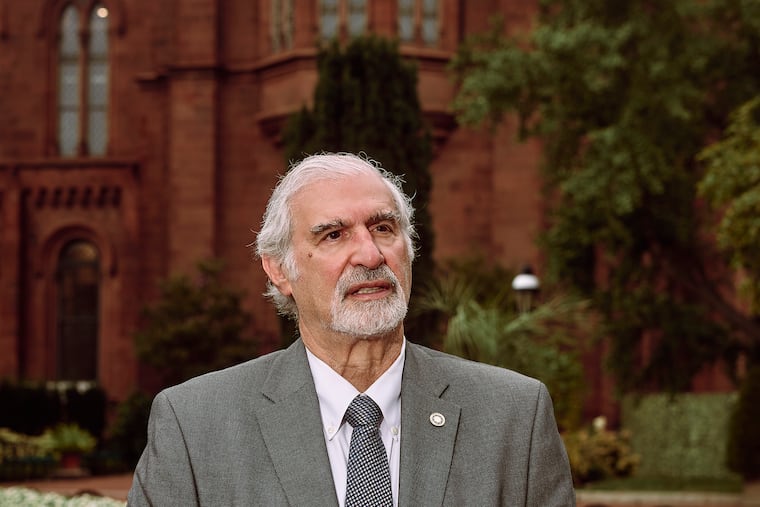
The review from Philadelphia Chief Medical Examiner Lindsay Simon, which was delivered in advance of a Tuesday hearing, maintains that Greenberg's death by 23 stab wounds was a suicide.
Philadelphia Court of Common Pleas Judge Linda Carpenter closed the record on the Ellen Greenberg case at a hearing Tuesday, after attorneys for both sides agreed that the matter at hand — the city’s review of the case — has been completed.
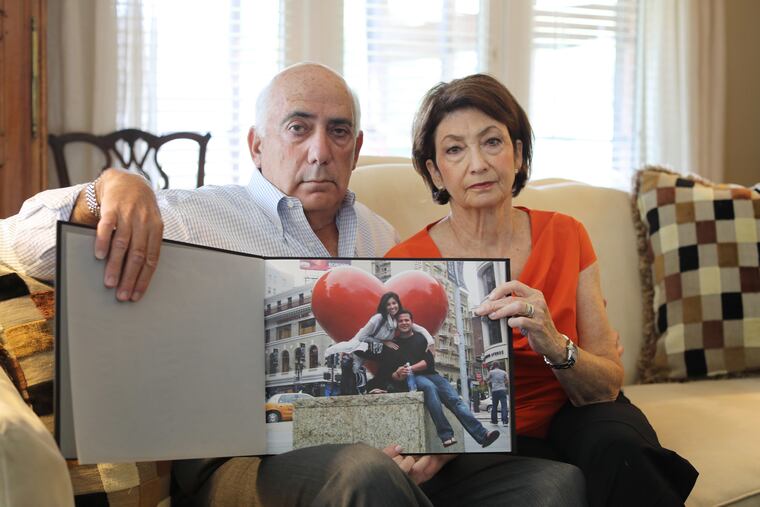
The remote hearing on Zoom resulted from a motion to compel the city to produce its promised reexamination of the case. That reexamination was part of an agreement Greenberg’s parents, Joshua and Sandra, reached with the city in February to settle two lawsuits against Philadelphia authorities for their investigations into their daughter’s death.
The Greenbergs and their attorney, Joseph Podraza Jr., expected to hear the results of that review at Tuesday’s hearing, but in a surprise move on Friday afternoon, the city delivered Chief Medical Examiner Lindsay Simon’s 32-page review to Podraza via email. It included her determination that Greenberg’s death “is best classified as ‘Suicide.’”
Greenberg died from multiple stab wounds in 2011. The initial autopsy classified her death as a homicide but was later changed to suicide.
Podraza supplied The Inquirer with Simon’s report.
The full report
The response
At the hearing, Podraza told Carpenter, “From the plaintiff’s standpoint, regardless of whether we agree or disagree [with the findings] there has been the examination and it has been completed…We are withdrawing any request for any sanctions. This concludes the litigation that involved the city and the settlement in regards to it.”
Carpenter offered no commentary or remarks from the bench on Tuesday, except to note that the record in the case was closed.
From homicide to suicide
Greenberg, 27, was found by her fiancé, Samuel Goldberg, in the kitchen of their Manayunk apartment on Jan. 26, 2011. A 10-inch knife was lodged four inches into her chest.
Investigators on scene treated her death as a suicide because Goldberg told them that the swing bar lock to their apartment was engaged from the inside and that he had to break it down to get in. There were no signs of an intruder, and Greenberg had no defensive wounds, police have said.
The next morning at autopsy, then-assistant Medical Examiner Marlon Osbourne noted a total of 20 stab wounds to Greenberg’s body, including 10 to the back of her neck, along with 11 bruises in various stages of healing, and ruled her death a homicide.
By the time homicide detectives returned to the scene to conduct their investigation, the apartment was already professionally cleaned, and electronic devices belonging to Greenberg had been removed by a member of Goldberg’s family.
Shortly after the homicide ruling, police began publicly disputing the findings from the Medical Examiner’s Office, and Osbourne later changed his ruling to suicide. The Greenbergs subsequently retained numerous independent forensic experts who have questioned authorities’ findings, as first detailed in a March 2019 Inquirer report.
The Greenbergs filed their first civil suit against the city in 2019, seeking to have the manner of their daughter’s death changed from suicide back to homicide or to undetermined. The couple filed their second suit in 2022, which alleged that the investigation into Greenberg’s death was “embarrassingly botched” and resulted in a “cover-up” by Philadelphia authorities.
Commonwealth Court judges, who heard one of the Greenbergs’ cases on appeal in 2023, called Philadelphia authorities’ investigations into the case “deeply flawed.”
Both suits were settled in February. The terms of the settlement included an “expeditious” reexamination of the manner of Greenberg’s death, a $650,000 monetary settlement (which has been paid), and an agreement from the Greenbergs never to sue the city again.
‘Admittedly unusual’
In her review upholding the suicide classification, Simon based her decision on several factors, including Greenberg’s anxiety about her work as a first-grade teacher, that there was no indication she was in an abusive relationship, no indication that a third party gained access to the apartment, no evidence of a struggle, and “no reasonable explanation for the lack of defensive wounds on Ellen’s body.”
Simon discovered 20 additional bruises and three additional “perforations in the skin” never before documented on Greenberg’s body during her review, raising the total number of bruises to 31 and stab wounds to 23, up from 20.
Simon said her opinion was that the bruises were “consistent with incidental contact sustained during activities of daily living, including her work as a first-grade teacher” and said that while “the distribution of the injuries is admittedly unusual,” all of the stab wounds could be self-inflicted.
Simon’s ruling is in opposition to a January statement signed by Osbourne, the pathologist who conducted Greenberg’s autopsy in 2011, who said he now believes her death “should be designated as something other than suicide.”