Philly judge was correctly ejected from the bench for political Facebook posts, Pa. Supreme Court says
Mark B. Cohen's Facebook posts during his time on the bench "cast him as little more than a spokesperson for the Democratic Party," Justice Kevin Dougherty said.
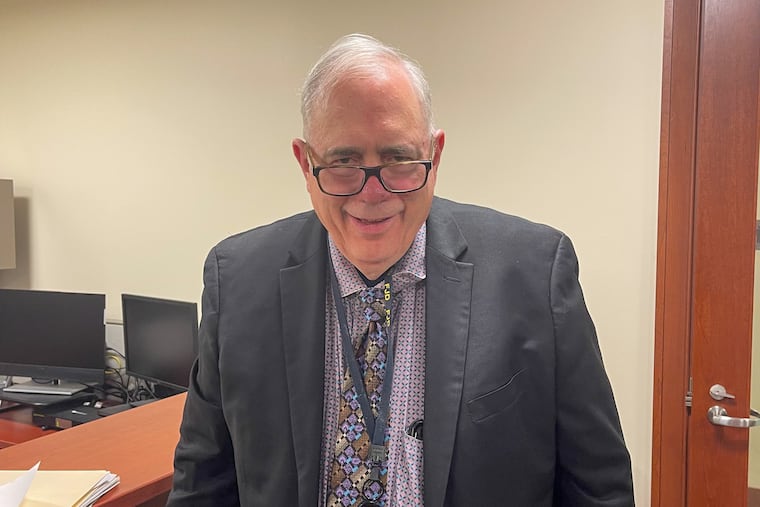
The Pennsylvania Supreme Court upheld the suspension of former Philadelphia Common Pleas Judge Mark B. Cohen, who was ejected from the bench in 2024 after refusing to stop posting political statements on Facebook.
Justice Kevin Dougherty, writing for a unanimous court, said that “protecting the efficiency of justice” including the “independence, integrity, and impartiality of the judiciary” is more important than “Cohen’s interest in posting partisan political content on Facebook where the volume and tone of his posts cast him as little more than a spokesperson for the Democratic Party.”
The former judge was suspended without pay for the remainder of his term in October 2024 by the Pennsylvania Court of Judicial Discipline. The court said Cohen violated the Code of Judicial Conduct when he posted Facebook comments that skewered Republicans and praised Democratic politicians or left-leaning causes.
The Court of Judicial Discipline’s opinion called Cohen’s behavior unprecedented, especially his refusal to stop posting after having been warned by his superiors.
“No other case in the history of the Court of Judicial Discipline has involved such defiance post decision,” the opinion reads. “Judges are not allowed to broadcast their political leanings. People appearing before judges deserve fair, unprejudiced jurists.”
Cohen, 76, is a former member of the statehouse who represented lower Northeast Philadelphia for 42 years. He was elected to the bench in 2017 and was suspended months before the end of his term. Regardless of his suspension, Cohen was ineligible to run for a second term because of Pennsylvania’s judicial mandatory retirement age, which is 75.
The Inquirer was unable to reach Cohen based on publicly available contact information.
Cohen appealed his suspension to the Pennsylvania Supreme Court, telling The Inquirer at the time, “this is a pathbreaking case seeking to severely limit freedom of speech.”
The exact limit on the First Amendment rights of sitting judges is an open question of law that neither the Pennsylvania Supreme Court nor the U.S. Supreme Court has ruled on previously.
Judges have the right to free speech, including some degree of political speech during their own elections, wrote Dougherty, who campaigned vigorously for his own retention on the state’s highest bench this fall.
The task of the Supreme Court was to balance the right of a sitting judge freedom of speech with the integrity of the courts in Pennsylvania.
Cohen “advocated for legislation,“ ”cheered on Democratic politicians,” and “criticized the policies of predominately Republican legislatures,” Dougherty wrote. The former judge made more than 60 posts that were of concern, all from a Facebook page identifying himself as a judge.
“An ordinary citizen comparing Judge Cohen’s posts with the posts of our state politicians would likely see little distinction,” Dougherty wrote.
The ruling does not intend to muzzle judges or dissuade all social media use, the opinion said. But judges should, like everyone else, make sure that their social media use “comports with the rules of the position they have voluntarily attained or the organization they have voluntarily chosen to join.”
Justice David Wecht also wrote a concurring opinion in which he said it was important to distinguish whether political speech from a judge was made during a retention campaign, in which avoiding politics completely is impossible.
“If the people of this Commonwealth wish to imagine their judiciary to be as pure as the driven snow, and if the people are under some impression that elimination of judicial elections would advance such purity, they are free to alter their Constitution,” Wecht wrote.