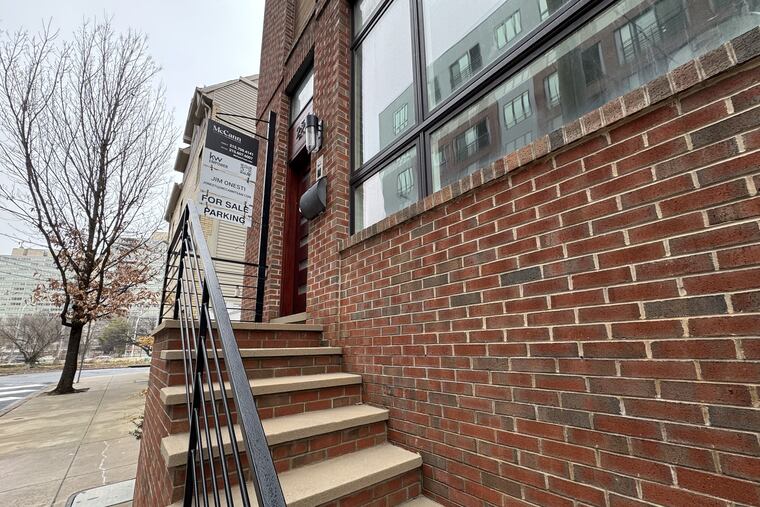
In North Philadelphia, planting seeds for the future on MLK Day
Andrea Vettori, 61, a nurse, founded Sanctuary Farm Phila to transform abandoned lots into productive agricultural spaces where staff and volunteers grow produce to distribute for free.
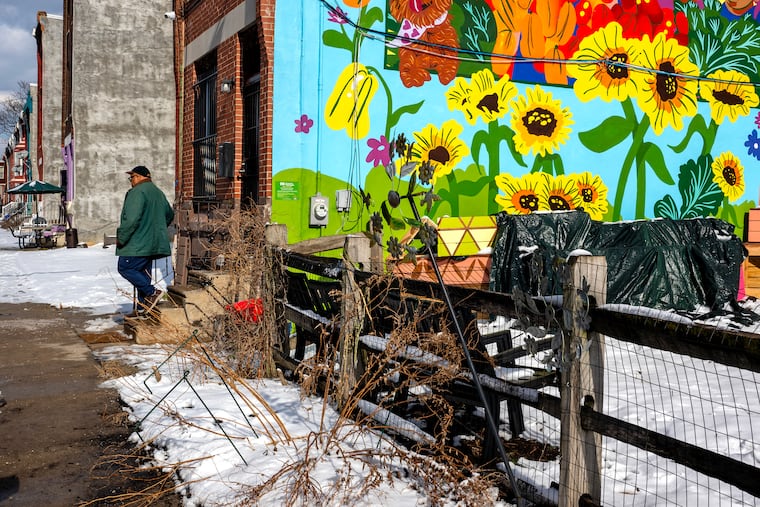
Chris Meyers, 67, was planting onion seeds Monday in the warmth of a large greenhouse near North 24th and Berks Streets for Sanctuary Farm Phila’s first ever Martin Luther King Jr. Day of Service.
The onions will be transplanted when the time is right. They’re destined to take root in one of the urban farm nonprofit’s nine lots.
Meyers, a retired city worker, came to the role by an unexpected path. Three years ago, the North Philly resident sat in the office of nurse-practitioner Andrea Vettori, his primary health care provider, determined to reduce his blood pressure and cut back on medications.
“She was the only physician — in this case a nurse-practitioner — that started talking about doing it through diet and losing weight," Meyers said. “I felt like here was someone who was truly listening to me instead of taking the stance, ‘OK, I’m the doctor. I know better. It was like we were reasoning out how we could make this possible.’”
Vettori told him about the urban farm she oversaw in North Philadelphia as executive director. Soon, Meyers enrolled in Sanctuary Farm’s therapeutic farming program, began meditating with the group he sowed seeds alongside, ate the fruits and vegetables they cultivated, shed weight, and reduced his medications.
“I can finally see light at the end of the tunnel,” said Meyers, and one of thousands of participants and volunteers in Martin Luther King days of service throughout the region.
What’s Sanctuary Farm Phila?
Vettori, 61, executive director of Sanctuary Farm Phila, is a nurse-practitioner by training and still works in the medical field one day a week.
She founded the nonprofit in 2017 with a primary mission to improve the health of the neighborhood by addressing food insecurity.
Sanctuary Farm set out to achieve that by transforming abandoned urban lots into productive agricultural spaces where staff and volunteers grow produce to distribute to neighbors for free.
The farm offers residents various programs and classes centered on nutrition and health, including gardening, beekeeping, sewing, and candle-making.
”Everything’s free to community members,“ Vettori said. “We do lots of different programming.”
Sanctuary Farm has a headquarters on North 24th Street, and currently operates nine gardening sites. Eight are located in North Philadelphia and one is in Huntingdon Valley, Montgomery County.
During the summer, the organization ramps up its operations to run two to three produce stands per week to distribute free food. The efforts are funded through a combination of private foundation grants, individual donations, and government support from state grants and the U.S. Department of Agriculture.
Vettori’s organization operates with a small staff — approximately five year-round employees, only two of whom are full-time.
Because of this small footprint, Vettori notes that they “couldn’t survive” without volunteers.
Sanctuary Farm has a core group of about 20 regular volunteers, though as many as 150 people have assisted the farm over the years. To draw members of the community, the farm uses a mix of social media, monthly meetings, and “old-fashioned” methods like handing out fliers door-to-door and using information boards, Vettori said.
In 2024, the organization harvested 9,500 pounds of produce.
Monday marked the first full scale MLK Day of Service the farm has hosted, though it has opened its doors in the past on the holiday. It was supported by a $1,000 grant for materials and food from Indego Bike Share.
‘Contribute back to the community’
Shamika Hull, of Fishtown, attended Monday’s event with her daughter, Zora Clark, 8, and husband, Mike Clark.
“I wanted to plan something together with my family to contribute back to the community, but I didn’t anticipate finding an organization that’s really this exciting,” Hull said, as she and her family began to plant onion seeds.
They had decorated planting pots earlier and also planned to bring home some seedlings.
Vettori gave a group of about a dozen people instruction in organic gardening basics, such as annuals vs. perennials, what type of seed starter to use, and what types of soils and fertilizers to avoid.
Sanctuary Farm does not use any chemical fertilizers or chemical pest control methods, she said.
“We use a lot of flowers to deter pests or to attract beneficials like wasps,” Vettori told the group. “I love wasps. I’m always trying to put in a good word for wasps, because they’re really good for the garden.”
She started Monday with onions because it’s too early to begin planting greens and tomatoes, she said. The group also planted flowers that they could bring home.
‘The last think you’d expect’
Nearby, Jose Hernandez had smoothed seed starter over a plastic seedling tray. He joined the garden as a volunteer a few years ago to help manage his PTSD through the therapeutic gardening program. Hernandez served as a U.S. Marine in Operation Desert Storm during the Gulf War in the early 1990s.
“I overheard someone at the Veterans Administration speaking about it,” said Hernandez, formerly of Olney but now living in Delaware County.
Other vets are also enrolled in the therapeutic gardening program, which is designed for people with health challenges.
Hernandez travels to Sanctuary Farm every Monday. He also takes part in meditation and the sewing class, “which is the last thing you’d expect,” he said with a smile.
“One of the things that you tend to do when you have PTSD is internalize everything. You just keep to yourself,” Hernandez said. “Coming here, you meet other veterans and realize, ‘Oh, so there are other vets like me.’ … We can speak of things that we’ve experienced.”