311 submissions can no longer be made public. The city says that’s to protect the system and staff.
Philly311 instituted the systemwide change to its portal in February.

One of Philadelphia’s tools for transparency has recently changed: Submissions to 311, the city’s department for information and reporting non-emergency problems, can no longer be made public for most users.
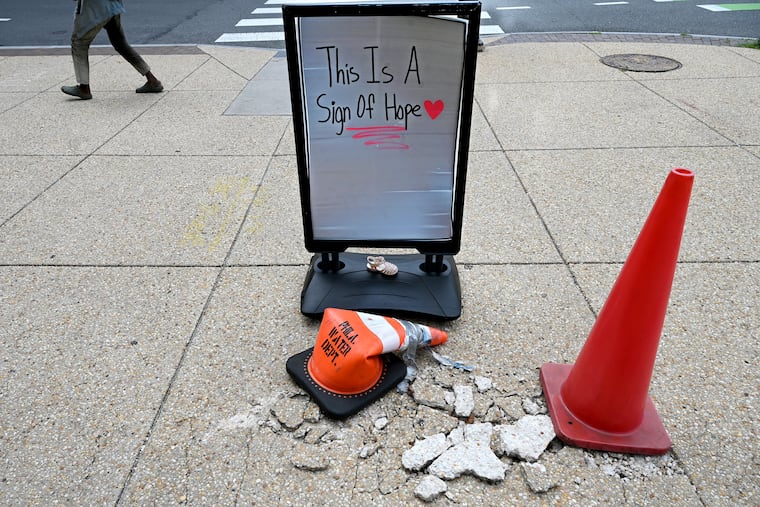
Until December, users had the option to make their submissions for reporting potholes, abandoned cars, or other nuisances public or private.
Around that time, Philly311 began receiving inappropriate images submitted alongside anonymous but seemingly legitimate service requests. Users and staff alerted 311 about the images and were concerned about their presence on a public platform, according to Philly311 community engagement manager Daniel Ramos.
Philly311 then made certain submissions private, like construction-related categories where the images were coming from, in late December. But weeks later, similar inappropriate content surfaced again, across all service request types. Philly311 made all mobile and web portal submissions private on Feb. 12 as a way of protecting staff, removing anonymous abuse, and maintaining the system’s integrity, Ramos said.
The portal contains a message to users about the change:
“We’ve seen a large number of anonymous submissions with inappropriate content. To help protect our system and our staff, requests in our mobile app and web portal will be marked as private. To see updates and follow the progress of your requests, we recommend creating an account. Thank you for your understanding as we work on a solution,” it reads. Ramos did not describe the nature of the inappropriate content.
A small group of people can still make 311 submissions others can see. Certain city employees, community organizations, and other residents who are members of the Philly311 Neighborhood Liaison Program can still access their “partner portal.” The Neighborhood Liaison Program trains residents on how to identify and report quality-of-life issues to 311 and track their submissions.
While the partner portal is not public-facing, its users can see one another’s submissions.
The shift to private submissions has led to fewer reports appearing on OpenDataPhilly, a public catalog of data sets from the city, state agencies, and other regional organizations. Philly311 said this was an unavoidable consequence of their change.
“Before making this decision, Philly311 explored multiple alternatives to avoid limiting public visibility. However, due to the volume and nature of inappropriate content, this step was necessary to protect both staff and system integrity,” Ramos said by email.
But all service requests will continue to be reported through 311’s monthly reports, which are available on Philly311’s website. In February, Philly311 handled more than 32,000 service requests and 28,000 information requests.
These changes are not meant to be permanent, Ramos said, and Philly311 is working on a long-term solution that balances transparency and safety.
Improving quality-of-life issues like those reported on 311 remains a focus for Mayor Cherelle L. Parker’s administration. At her annual budget address last week, Parker announced her proposal to create a $7.1 million “Pothole Squad” dedicated to more speedy repairs, as well as the deployment of “quality-of-life assurance officers” working under the Philadelphia Police Department.