Philly abruptly dropped its jail healthcare contractor after more than 3 decades
It signed a deal with a new provider, CFG Health.
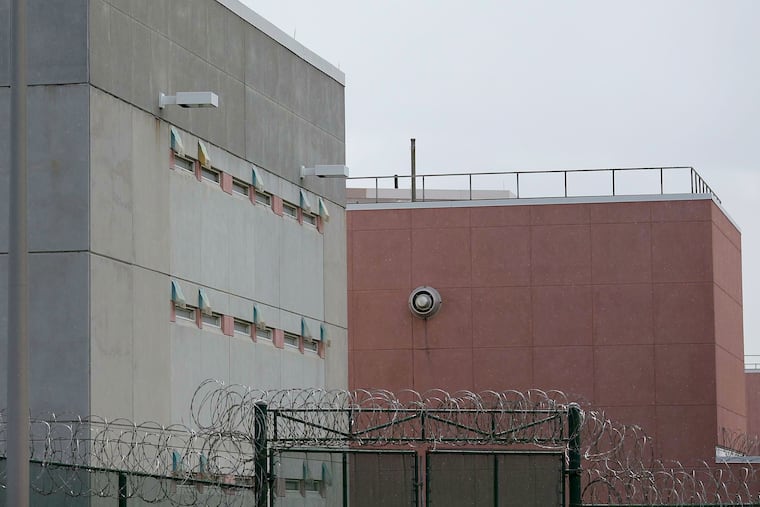
Philadelphia struck a deal with a new healthcare provider for the city’s jails, replacing a longtime contractor that went bankrupt earlier this month and left medical staff unpaid for weeks.
A federal bankruptcy judge in Florida last week granted the city’s request to terminate its contract with YesCare five weeks early and transfer local medical staff to the payroll of CFG Health, court records show.
The takeover by the South Jersey-based company marks the first time the city has changed jail healthcare providers in more than three decades — a period marked by mounting scrutiny of YesCare and its corporate predecessors, Prison Health Services and Corizon Health.
Between 3,000 and 4,000 people have been incarcerated in the city jails daily in recent years, and the Philadelphia Department of Prisons is charged with their medical care.
Philadelphia relied on YesCare for a slew of services — from primary care to dentistry and psychiatry services — at the city’s four jails and two off-site clinics.
The city’s contract with YesCare was set to expire June 31. After a bidding process that ended in February and yielded seven bids — including from YesCare — the city awarded the new one-year contract of up to $80 million to CFG Health.
CFG Health had been scheduled to take over July 1. But YesCare’s sudden financial collapse accelerated the timeline.
Court records describe medical workers failing to report for shifts amid missed paychecks and uncertainty over whether employees would be paid at all; on one overnight shift, not a single nurse reported for duty at the city’s largest detention facility.
“If the city is unable to fulfill its legal obligations, it will likely be exposed to increased litigation,” lawyers for the city wrote in court filings asking to terminate the contract.
John Mitchell, communications director for the Philadelphia Department of Prisons, said medical and behavior services transitioned to CFG Health on Monday with “no operational issues.”
CFG Health CEO Brandon De Julius said the company’s “immediate focus is continuity of care, operational stability, and supporting the employees who provide these essential services every day.”
The city also “wired funds to YesCare” to pay medical staff who continue to work inside its jails, Joe Grace, communications director for Mayor Cherelle L. Parker, said in a statement.
However, prison advocates say the crisis exposed the risks of relying on private for-profit healthcare contractors — and the lack of independent oversight surrounding a major deal involving care for incarcerated people.
YesCare’s bankruptcy followed a $308 million federal verdict in Michigan against the company in a medical negligence case and Alabama’s termination last month of a $1 billion prison healthcare contract with the company.
The company has been entangled in litigation and scandal throughout its decades-long tenure in Philadelphia.
In 2002, Mayor John Street terminated the city’s contract with YesCare’s predecessor for a few months following public outrage over deaths in the jail. In 2013, the company agreed to pay $1.85 million to settle allegations it circumvented minority-contracting rules.
Philadelphia’s response to the COVID-19 pandemic in 2020 again placed scrutiny on medical care in the jails, leading the city to enter a settlement that included a commitment to addressing a medical visit backlog.
But lawsuits over poor medical care persisted.
» READ MORE: A jury awarded $1.67 million to the sons of a diabetic man who died in a Philly jail
Last year, voters overwhelmingly approved the creation of a permanent prison oversight structure — the Philadelphia Office of Prison Oversight and a citizen-led Philadelphia Prison Community Oversight Board — following years of calls for greater transparency inside the jails. But the system is not fully in place, and the city was not required to seek outside review before signing the new contract.
City Councilmember Nicolas O’Rourke, who last year questioned the city’s reliance on YesCare, said the emergency transition offered Philadelphia an opportunity to break from a contractor he described as deeply troubled.
“I am grateful that the city has been able to exit a partnership with a failing firm,” O’Rourke said in a statement. “Our incarcerated constituents, entirely in our city’s care and too often at our city’s mercy, must have the care they need, because we already know substandard care is fatal.”