Philly stores routinely violate the plastic and paper bag law, environmental group says
PennEnvironment sent members to purchase items in 80 stores across the city and in neighborhoods with varying demographics and found many violations of the plastic bag ordinance.
A sampling of retailers, takeout businesses, pharmacies, convenience stores, and food stores shows half are violating Philadelphia’s ordinance that bans plastic bags and requires a fee on paper bags.
That’s according to the PennEnvironment Research & Policy Center, which sent members to purchase items in 80 stores across the city and in neighborhoods with varying demographics.
The nonprofit advocacy group’s survey found:
55% of businesses violated at least one key provision of the law.
50% of businesses failed to charge a 10-cent fee on paper or reusable bags.
20% of businesses provided plastic bags that have been illegal for years.
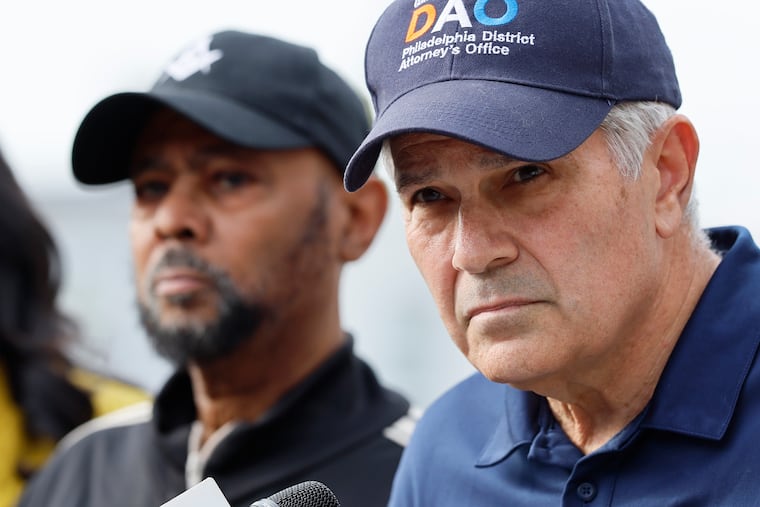
Faran Savitz, a zero-waste advocate for PennEnvironment, said during a news conference Thursday outside City Hall that the group didn’t just scrutinize chain stores like Wawa, although those larger operations were generally compliant.
He said the 80 stores surveyed were chosen to represent multiple types in all neighborhoods, although they amount to only a fraction of businesses in the city,
“We wanted to look at as many different types of businesses and hit as many different neighborhoods in the city as possible, so we could get a sense of is this concentrated on one neighborhood or is it spread geographically everywhere,” Savitz said. “We found that this is a pretty widespread problem.”
Savitz said that chain stores tend to know the law and its requirements. Many small businesses remain unaware.
However, the survey did highlight some positive momentum. Currently, three-quarters of surveyed businesses no longer distribute plastic bags. That’s a significant improvement from the group’s previous investigations that caught half of all stores providing them.
The city’s updated bag ordinance
Philadelphia’s original plastic bag law, introduced by Councilmember Mark Squilla, was passed in 2019 but was phased in slowly. It went into full effect in 2021.
After that, paper bag usage skyrocketed, said Squilla, who represents the 1st District, including parts of South Philadelphia, Center City, and the River Wards. Although paper bags are biodegradable, they require more energy to produce and the cutting down of trees.
Squilla introduced an updated bag ordinance last year, which was approved by City Council, and went into effect in January. It required a 10-cent fee on paper bags.
» READ MORE: Philadelphia shoppers will soon have to pay 10 cents for a paper bag
The goal of the fee, Squilla said, is to change shoppers’ behavior and get them to bring reusable bags to the store.
Squilla called the violations found by PennEnvironment “disappointing,” but said he knew compliance would be a challenge.
“Our goal is to end single-use plastic bags in our waste stream and in the city of Philadelphia,” Squilla said.
To close the compliance gap, PennEnvironment is urging Licenses and Inspections to improve education and enforcement, and asking residents to report noncompliant businesses to the city’s 311 system.
Plastic bags
Ryan Rabenold, environmental program coordinator at the Pennsylvania Resources Council, said the city’s law is key to reducing waste, noting that most reusable plastic bags do not get recycled.
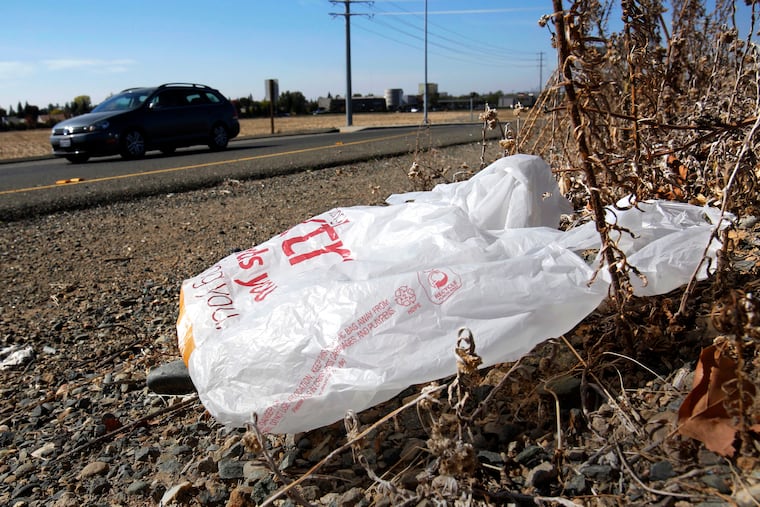
Plastic bags contribute to litter, require fossil fuels to produce, and become microplastics in the environment when they break down.
“They either get lost in the system, are contaminated with food or grease, which makes them unrecyclable, or they simply get blown away when we’re trying to collect them,” Rabenold said. “When they do end up in our recycling system … they contaminate materials that are recyclable and force them to be removed from the system.”
Rabenold noted that microplastics have been detected in human blood and tissue.
“We are feeling the impacts of something that we may not be able to see, Rabenold said.
“It’s better for our health and the environment to use one thing 1,000 times,” Rabenold said of reusable bags, “rather than use 1,000 things once.”