Moving Pride and charging for it sparked a backlash. Organizers say the Gayborhood still has a role.
Organizers say they want to meet the political moment, while critics are worried about accessibility of the annual Pride festival.
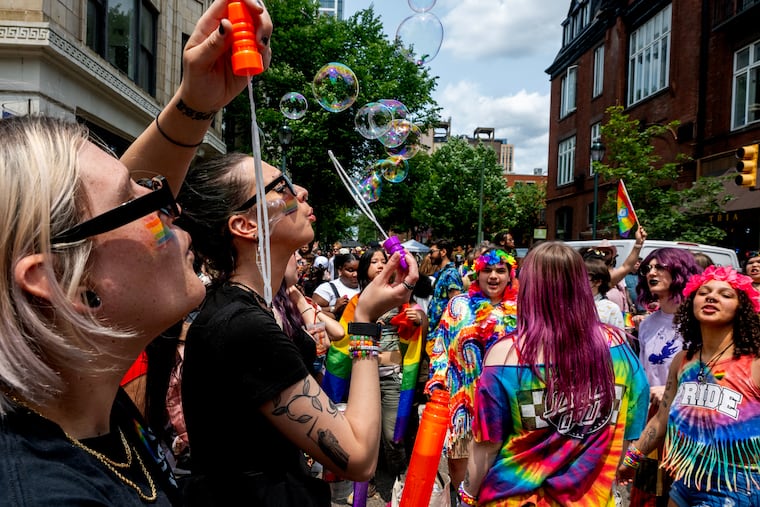
Philadelphia Pride festivities are undergoing two major changes this year: The festival will be held at Eakins Oval, not the Gayborhood, and it’s going to cost revelers $10 to get in.
The move and the admission fee for the June 7 fest have many in the LGBTQ community upset, sparking online conversations about the origins of Pride festivities, who modern celebrations are for, and whether the move will hurt economically disadvantaged members of the community and Gayborhood businesses.
Social media posts announcing the changes were flooded with comments from people denouncing them.
“I’ll be in the Gayborhood regardless,” wrote one user.
“$10 fee to get in?” wrote another. “This is just making the event more exclusive and less inclusive.”
Tyrell Brown, founder and executive director of Philly Pride 365, which has organized the festivities over the last four years, is keenly aware of the discourse regarding the changes and has tried to alleviate concerns.
The organization published a list of frequently asked questions regarding 2026 festivities on its website and Instagram, hoping to walk the public through what led to the decision. The changes stem from safety needs, growing crowds, and accessibility concerns, Brown said. But he also wants the festivities to meet the political moment and the needs of the LGBTQ community.
“It’s just not enough for Pride to kind of exist as an event on a Sunday and then Monday, you know, the streets are swept and everyone kind of goes back to their routine,” said Brown. “We need to, especially in this sociopolitical environment, be really thinking about how we mobilize that forward throughout the year.”
Though Pride is rooted in protest — the first parade was held to commemorate the Stonewall riots in New York City — paying for Pride festivities in Philadelphia is not new and has long been subject to debate.
Before moving to the Gayborhood in 2022, celebrations took place at Penn’s Landing and there was an admission fee for that, too.
Still, when Philly Pride 365 took over, moving the event to the Gayborhood as a street festival, many saw it as a revelation, especially after the previous entity tasked with producing the celebrations imploded amid accusations of racism and transphobia.
» READ MORE: Philly’s 2021 LGBTQ ‘Pride lite’ festival canceled as group dissolves after backlash
North Philly resident Donya Davis, 28, loved how there really seemed to be something for everyone and celebrations were not centered on drinking or spending money. She remembers seeing a section for family-oriented activities, a section for drag queens and other performers, and a “quiet space” where people could take a break if they were overwhelmed.
More than anything, Davis liked that members of the LGBTQ community, especially people coming out or considering it, could enjoy a safe space to find community without spending a dime, unless they wanted to.
“That’s where I think everything starts to get a little bit murky, when you start putting a price tag on Pride, I don’t know if you’re really doing this for me, or you’re doing it for the money that I can bring in,” she said, noting there’s a charm or romanticism that can only be felt in the Gayborhood.
That neighborhood charm has been a boon and a detriment for Pride celebrations. Crowd attendance more than tripled between 2022 and 2025, according to Philly Pride 365, which put crowd totals at roughly 147,000 people last year.
Attendees complained about vendors crammed on the narrow neighborhood streets and long wait times for drinks at the iconic Gayborhood bars.
The larger celebrations have also drawn attention from wrongdoers.
An 18-year-old living in West Philadelphia was arrested in 2023 after police found bomb-making materials in his trash. District Attorney Larry Krasner said Muhyyee-ud-din Abdul-Rahman considered the Pride parade as a target.
Last year, 30-year-old Derwin Darnell Joseph Matthews Jr., a chef and known figure in the LGBTQ ballroom scene, was fatally shot early June 2, after Pride festivities.
The $10 admission will go to paying private security as well as insurance, permitting, performers, staging, sanitation, and other city services like EMS, Brown said, adding the organization was trying to limit corporate sponsorships, but individual donations have not been enough to produce the festivities.
For the many supporters of the move to the Parkway, safety and smoother logistics are certainly top of mind, but the idea of being in one of the city’s most visible locations feels momentous in a time when LGBTQ rights feel uncertain.
The Parkway has hosted Wawa Welcome America festivities, a New Year’s Eve concert, and the city’s Super Bowl champions in recent memory. Supporters say a Pride takeover of the Parkway shows the LGBTQ community isn’t hiding.
Montgomery County resident Tiff Lanza, who joined the discourse through a video posted on social media, doesn’t envy the position Pride organizers find themselves in, nor do they think there is a perfect solution to address the competing needs and desires for festivities.
Still, Lanza is not sure bigger is necessarily better, despite their own issues with the crushing crowds in the Gayborhood. They’re skeptical a larger footprint can feel safe, even with added security, or that the Parkway could be easier to navigate for people with disabilities, given the location is farther away from trains and parking could be more difficult. They wish there has been more of an open discussion and opportunity for feedback.
“In general, this is just a larger issue than just Pride itself,” they said. “It’s looking at, how do we maybe get back to the roots of this protest of safety, of visibility, where people are expressing queer joy, because that is probably the biggest piece of Pride.”
Philly Pride 365’s ambitions are not that different, according to organizers who invite those larger conversations.
The weekend leading into June will feature a series of discussions about how nightlife reinvests “in the community it profits from,” faith as an expression of LGBTQ liberation, and how immigration enforcement is impacting the community. Panels and roundtables focused on the needs of transgender people, individuals living with disabilities, and people living with HIV are slated for the week leading up to the parade.
The festivities on the Parkway, meanwhile, aim to have more space so more LGBTQ entrepreneurs, especially those without brick and mortars, can spread out. Outreach groups also hope to do more STI testing and connect people to their services, said Brown. There are plans to have free ticketing available in exchange for volunteering. (The organization will also keep the three-day OURfest, which commemorates National Coming Out Day in October, in the Gayborhood with no admission fee.)
Brown said the last thing Philly Pride 365 wants to do is hurt Gayborhood businesses, which have been kept in the loop throughout the planning process.
The recently unveiled Philly Pride Visitor Center has been pulled into efforts to promote the neighborhood through special June programming, encouraging venues to offer outdoor dining. On the Sunday the Pride parade and festivities are held, the Pride Visitor Center is coordinating three Phlash buses — the purple and pink buses that loop around the city’s cultural and historical landmarks — to run express loops between 5 to 8 p.m. from the Parkway to the Gayborhood.
Pride Visitor Center supervisor Kristopher Lawrence said he’s been peppered with questions and most people are receptive to the change once they learn about the programming featuring the Gayborhood.
“I think you can sum it up by saying two things: Everybody planning the Pride festival loves the Gayborhood,” he said. “The other side of it is, if the festival keeps growing in numbers, we could have the largest festival in the world, right? But what would that have done to the Gayborhood? I don’t know if that would have been good.”
Correction: The initial version of this article incorrectly linked Pride 365 programming to a separate festival — the Philly Pride Arts Festival will feature an assortment of cabaret and drag shows, concerts, outdoor performances, and other community events throughout June.