Philly fumbles the cleanup, Delco draws the line, and savesies return | Weekly Report Card
This week’s Philly report card, grading the good, bad, and weird news coming out of our region.
Dan McQuade, and the Philly he helped us see: A+
This isn’t a typical report card item, and it shouldn’t be.
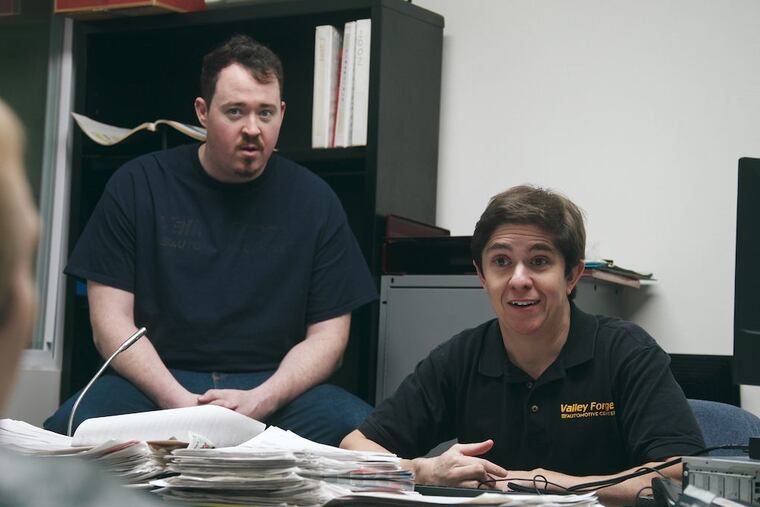
This week made it impossible not to understand who Dan McQuade was — and how deeply he mattered to Philadelphia — just by reading what people shared about the journalist and Philadelphia superfan after he died of cancer this week at age 43.
Colleagues, friends, editors, and readers kept circling the same truths: how funny he was, how kind he was, how precise his understanding of the city felt. Not in a forced or caricatured way, but in the way that comes from paying close attention, loving a place, and never taking it (or yourself) too seriously.
Dan had a gift for finding meaning in the everyday. He treated Philly’s quirks, tics, and absurdities not as punchlines to exploit, but as things worth documenting, celebrating, and occasionally poking fun at with affection. He gave people permission to laugh at the city without laughing at it. That’s harder than it sounds.
His impact was everywhere this week: in stories about Rocky runs and boardwalk T-shirts, in memories of long happy hours that turned into lifelong friendships, in anecdotes about him being the go-to fact-checker for all things Philly, in the way people described him as both brilliant and generous. A writer who made others better. A friend who showed up. A presence that made rooms, and timelines, lighter.
The tributes weren’t performative or flowery. They were specific. Personal. Grounded. Which feels fitting. McQuade’s work was never about being loud or self-important. It was about noticing things, connecting dots, and reminding people that there’s joy, and humor, in paying attention to where you live.
Philadelphia lost a journalist. But it also lost one of its clearest interpreters. Someone who understood that “Philadelphianness” isn’t a brand or a gimmick, but a way of moving through the world with skepticism, warmth, and a well-timed joke.
An A+ doesn’t feel like enough. But it feels right to say this much: Philly is better for having had Dan McQuade in it. And it won’t quite be the same without him.
The snowstorm delivered. The plowing did not: F-
Let’s be clear: The snow itself did what snow is supposed to do. Nine-plus inches, pretty at first, historic enough to brag about, disruptive enough to cancel plans and spark group-chat meteorology. Fine. That’s winter.
What came after? That’s where everything fell apart.
Days later, huge swaths of Philly side streets are still packed with snow and ice — the kind that traps cars, turns corners into slip-and-slide death traps, and makes even walking the dog feel like a trust exercise. Primary roads are mostly cleared. Secondary streets, maybe. Tertiary streets? You’re on your own.
The city promised differently. Mayor Cherelle L. Parker stood in front of cameras before the storm and said every street would get attention “as long as it takes.” That message mattered because Philadelphians have heard this story before, and expectations were deliberately raised.
Then reality hit.
Plow data show roughly a quarter of city streets got no treatment at all after the storm ended. Not plowed. Not salted. Nothing. And the longer it sat, the worse it got — snow compacting into ice, intersections blocked by frozen berms, cars effectively entombed.
This isn’t just an inconvenience. People with limited mobility are stuck. Workers can’t get out. Streets department explanations about sleet, freezing rain, and illegally parked cars may be true, but they don’t change the fact that many blocks are still uncleared a week later.
This is the part where Philly frustration kicks in hardest: The storm wasn’t unprecedented, but the response feels familiar in the worst way. The expectation has long been “don’t count on a plow,” and this week did little to change that.
New York tries to claim ‘Delco.’ Pennsylvania says absolutely not: A
Every so often, something happens that instantly unites Delco. Snowstorms. Eagles runs. Wawa shortages. And now: a county in upstate New York attempting to brand itself as “Delco.”
Absolutely not.
Stephanie Farr laid out the case perfectly: Delco isn’t just shorthand for Delaware County. It’s a culture. A personality. A way of life built on hoagie trays, Catholic school rivalries, beach flags, and a shared, deeply ingrained chip on the shoulder.
New York’s Delaware County is rural. Ours is suburban chaos packed into 184 square miles, powered by Wawa coffee, tailgating energy, and a pride so aggressive it gets tattooed on bodies and planted in Jersey Shore sand like a territorial marker.
The funniest part isn’t that there’s another Delaware County (there are several). It’s that this one thought it could simply adopt the nickname, slap it on merch, and call it authenticity. That’s not how Delco works. Delco is earned.
Center City West sidewalks are getting grimy (and it’s not your imagination): C
For nearly a decade, a lot of Center City West quietly benefited from something most people never realized existed: a privately funded sidewalk cleaning program that swooped in after city trash pickup and handled the leftover mess.
As the Fitler Focus reported, that program ended when the Center City Residents’ Association let its contract expire at the end of 2025. Not out of neglect, but necessity. The cost had ballooned to about 41% of CCRA’s projected 2026 budget, which is an unsustainable chunk for what was essentially backstopping city services.
The result has been immediate and visible. Trash bags torn open overnight. Litter lingering days after pickup. Sidewalks that used to reset themselves now just… don’t. CCRA deserves credit for being upfront about the trade-off and pivoting toward enforcement, even if it won’t bring immediate results.
The frustrating part is that the rules haven’t changed. Trash placement regulations exist. Containers are required. Enforcement is technically possible. But in reality, it’s complaint-driven, slow, and uneven. Meaning the difference between a clean block and a gross one often comes down to who has the time and energy to call 311 and wait on hold.
Eagles fans agree on almost everything — except the part that actually hurts: B
In this year’s Inquirer Stay or Go poll, Eagles fans were unusually aligned on who still feels like the future: young defensive studs, the offensive line pillars, the rookies who look like actual hits. Cooper DeJean and Quinyon Mitchell clearing 96% stay feels less like optimism and more like self-preservation. The message is clear: The defense isn’t the problem. Or at least, it’s not our problem.
Where things get interesting is offense. Not because fans are confused, but because they’re suddenly colder. Jalen Hurts is still trusted, but not untouchable. A.J. Brown’s dip is real and telling: not rage, not rejection, just disappointment, Philly’s least favorite emotion. Fans didn’t turn on him. They just stopped defending him reflexively, which in this city is its own warning sign.
And then there’s Brandon Graham, the emotional Rorschach test of the poll. A franchise legend. A locker room heartbeat. A guy people want to want back. The split vote says everything: respect battling reality. Philly loves its icons, but it hates lying to itself more.
No one landed in the mushy middle. Fans know who they’re done with. They know who they’re attached to. There’s little patience left for “maybe.”
This wasn’t a meltdown poll. It was a sorting exercise. And the conclusion fans keep circling is uncomfortable but consistent: The Eagles don’t need vibes. They need clarity — and probably a few hard goodbyes.
The Inquirer mapped Philly’s dive bars (and proved how much the city loves them): A
When The Inquirer put out a call for Philly’s favorite dive bars, the response was immediate and overwhelming. Nearly 400 submissions poured in, which tracks for a city where dive bars aren’t just places to drink. They’re personal landmarks.
What the map really shows isn’t just where to grab a cheap beer. It’s how attached people are to the bars that feel like theirs. The ones tied to first jobs, postgame rituals, bad breakups, good Tuesdays, and nights that went exactly nowhere and somehow mattered anyway. These are rooms where nobody’s performing, the prices are low on purpose, and the atmosphere is set by regulars, not a concept.
It also surfaced one of Philly’s most reliable debates: Is being called a dive bar a compliment or an insult? Some owners bristle at the label. Others embrace it. Many bars live in the gray area: cheap, unpretentious, deeply loved, and absolutely uninterested in how they’re categorized. Very Philly.
Are there bars missing? Of course. There always will be. Philly has too many neighborhood institutions, and too many people willing to argue for them, for any list to feel definitive. But that’s not a failure of the map, it’s a feature of the city.
This isn’t a checklist. It’s a snapshot of how much Philadelphians still value places that don’t try to be anything other than what they are.
Snow savesies are back, and Philly is absolutely feral about it: C+
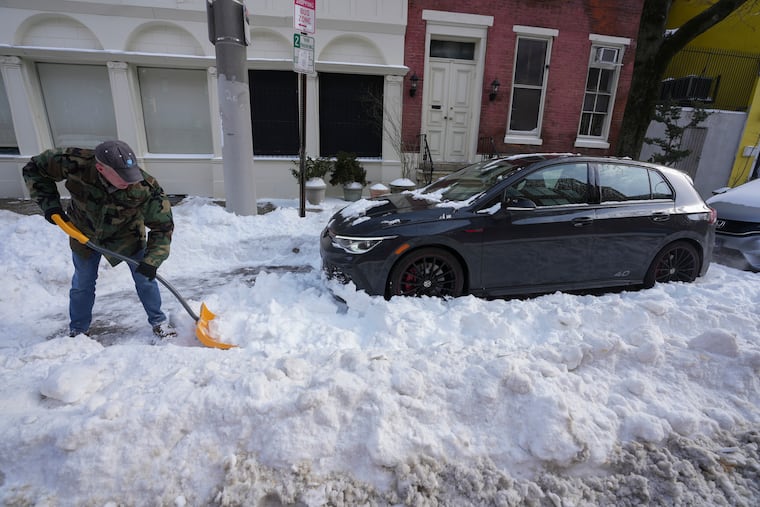
Every major snowstorm in Philly brings back the same question we never resolve: If you shovel out a spot, is it yours, or is public parking still public? This week’s viral Reddit thread, sparked by a wooden chair left in a shoveled space with a handwritten threat (“Move these chairs & I will destroy your car. Try me.”), confirms we are once again incapable of calm thought.
Some commenters were immediately in the respect the chair camp. One wrote, “After digging my s— out from snow past my knees I just want to one time come back to a spot,” while another argued, “Normally vehemently anti-savesies, but I feel like spending an hour digging out earns you a [savesie] or two.” This group is running on sore backs, wet boots, and pure principle.
Then there’s the other side: the chaos agents. “I’d move the chair and watch someone else park there,” one commenter said, which feels less like civic engagement and more like performance art. Another proudly added, “I take peoples cones all the time when I’m walking around. F— em.” (This explains so much.)
Somewhere in the middle were people admitting the quiet truth: Everyone dug out a spot. “The person who’s parked there dug out their car this morning, too,” one commenter noted, puncturing the idea that only one hero labored for the block.
So where does that leave us? With a very Philly stalemate. The chair is obnoxious. The threat is unhinged. The labor is real. The fear of retaliation is realer.

- Real estate agents from major brokerages arranged questionable property deals around Temple University
- Philly fumbles the cleanup, Delco draws the line, and savesies return | Weekly Report Card
- The best things we ate this week
- Can I take a loose sled from the bottom of the hill?
- Spotting snowy Elmo
- How to have a Perfect Philly Day, according to Provenance chef Nicholas Bazik
- Citywide Quest: Can you guess these historical sites across Philly?
- Off-season eats, arcades, and live music in Asbury Park | Field Trip
- He is house poor but happy in his Norris Square two-bedroom | How I Bought This House