Philly clerk shot during a robbery sues ‘skill games’ manufacturers for attracting crime
The lawsuit claims that the store was targeted because of the high amount of cash required to be on hand for the casino-style machines payouts.
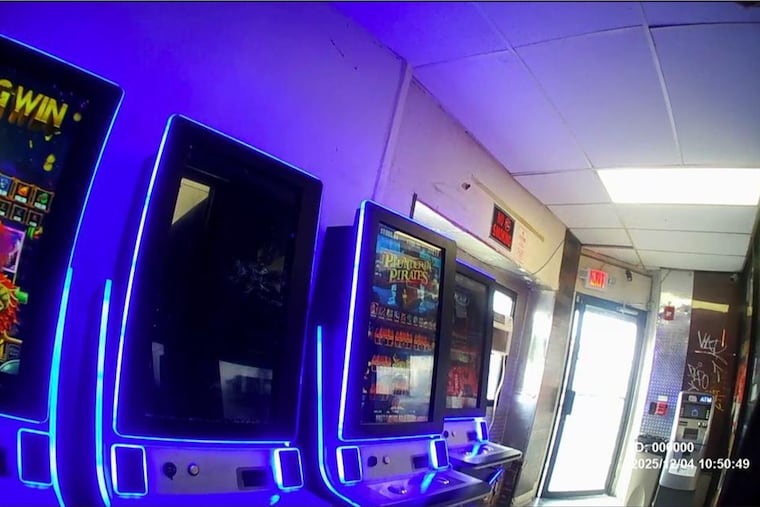
A convenience store worker shot during a September armed robbery has sued a “skill games” manufacturer, alleging the casino-style devices on the premises motivated the attack.
Ahmedine Maham, 27, was working the night shift at Philly Market in Frankford on Sept. 14, the suit says, when two armed men entered the store and shot Maham in the face, according to the complaint, which was filed Monday in the Philadelphia Court of Common Pleas.
“The robbers targeted the store because the high amount of cash required to be on hand for gambling machine payouts,” the lawsuit says.
Banilla Gaming, a North Carolina-based skills game manufacturer, is aware of the dangers associated with its “gambling devices,” the suit says.
The complaint also names Philly Market and associated businesses as defendants.
Banilla did not respond to a request for comment. The Inquirer was unable to reach Philly Market’s owners based on publicly available records.
The slot-like devices, commonly placed in bars and gas station convenience stores, have evaded Pennsylvania’s gambling regulations and exist in a gray area of the law. Manufacturers argue the games are based on skill, and are distinct from slot machines that are only legal within the walls of casinos.
Because they do not fall under gaming laws they are untaxed and unregulated. But their status has been subject to debates in Harrisburg for years.
Skill games regulations were on the table during last year’s prolonged budget negotiations but lawmakers again punted on the issue, despite bipartisan agreement that they are needed. Gov. Josh Shapiro called the matter “unfinished business,” leaving the door open for future action.
Law enforcement officials have raised concerns over skill games for years, and earlier this month the Pennsylvania District Attorneys Association sent a letter to Shapiro asking for the devices to be taxed and regulated in a way that would “ensure consumer protection, require security measures, and prevent underage gambling.”
The Supreme Court of Pennsylvania is considering a case challenging the status of the devices. In a November hearing, justices didn’t seem to view them as different from slot machines.
Philadelphia enacted a ban on “skill games” in 2024 motivated by concerns the machines attract crime to low-income neighborhoods. Philadelphia Police Department officials testified in City Council in favor of the ban.
But following an industry lawsuit, the Commonwealth Court lifted the prohibition.
Matthew Haverstick, a lawyer for Pace-O-Matic who argued in front of the Pennsylvania Supreme Court on behalf of the “skill games” company, said in 2024 that the games were “not crime magnets” but a revenue stream for “small businesses that survive on really thin profit margins.”
Maham’s lawsuit is the latest in an effort to hold skill games manufacturers, distributors, and store owners accountable for the violence the devices allegedly draw.
A Philadelphia jury awarded $15.3 million last year to the estate of Ashokkumar Patel, a Hazelton store clerk killed during a 2020 robbery. That suit similarly placed the blame for the violence at the feet of the “skill games” industry.
Robert Zimmerman, a Saltz Mongeluzzi Bendesky lawyer who represents Maham and represented the Patel’s estate, said the devices force store clerks to act as casino operators without the security measures required in gaming regulations.
Game manufacturers could improve safety without waiting for regulations, Zimmerman said, by placing terminals in stores that dispense payouts instead of relying on store clerks. But the industry has been resistant to changes that could bite into its profit stream, according to the attorney.
“This is a danger not only for low-wage workers at these convenience stores, but they are a danger to everyone in the community,” Zimmerman said.