Philly climbs a notch in nation’s parks ranking largely because of this new city open space
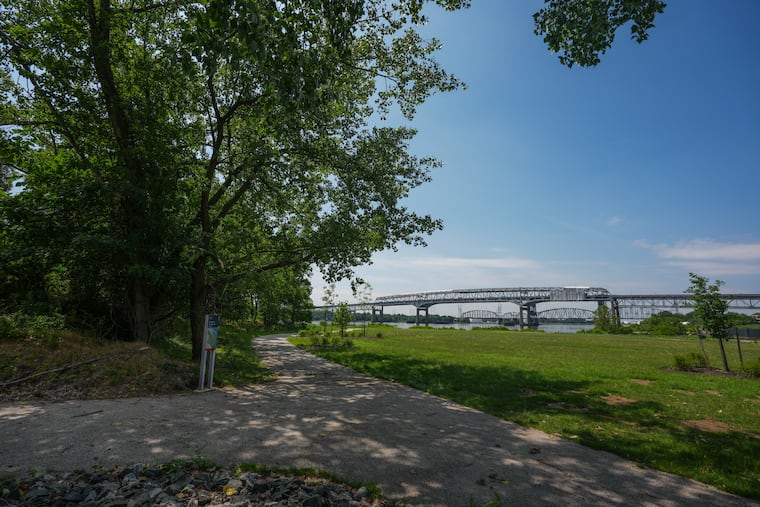
Philadelphia, although far from a leader, has risen in a national ranking of park systems over the past two years. It just moved up to 27 out of 100. A new park in Bridesburg helped.
On nice days, Elizabeth Class-Maldonado commutes about six miles by bike to her Center City office.
“I love that we have a good trail system that connects me from Germantown to all the way to Center City for work,” Class-Maldonado said. “The Schuylkill River Trail and Wissahickon Valley Park are my favorites.”
Class-Maldonado is Pennsylvania state director for the Trust for Public Land, a national nonprofit focused on outdoor space, which just moved Philly up a notch on its annual ranking of parkland and open space for the 100 most populous U.S. cities.
Philadelphia, although far from a leader, has risen in the ranks over the last two years. In 2024, it was at No. 32. It rose to No. 28 in 2025.
This year, it has moved to No. 27 — largely because of the new Borski Park in Bridesburg, a key factor in lifting the percentage of city residents (96%) who live within a 10-minute walk of a park or open space.
» READ MORE: Philly opens new 10-acre waterfront park
On park access alone, Philadelphia ranks 13th in the U.S., which is considered quite good.
The new rankings indicate the city might be on the upswing, but it still ranks below the national ParkScore average for park investment.
The Trust for Public Land determines a city’s ParkScore by assigning points across 15 measures in five categories: acreage, investment, amenities, access, and equity.
Most of the park systems with the highest scores tend to be in the Midwest or West, where land is ample, as is funding.
For example, Washington, D.C., came in first, but 90% of its park space is funded by the federal government. Irvine, Calif.; Minneapolis; Cincinnati; and St. Paul, Minn., respectively, rounded out the top five.
Philly’s park system contains about 9,200 acres of parks. That includes Fairmount and Wissahickon Valley Parks, boasting about 2,000 acres each. But most of the city’s parks are much smaller and embedded in neighborhoods. In all, Philadelphia has 400 neighborhood parks, recreation centers, and libraries.
The city’s ranking really gets dragged down by the amount it spends on its open space per resident — about $110, placing it at No. 79 in that ranking. The leader in the category, Irving, Texas, spends $587.
Class-Maldonado said that is because Philadelphia has no dedicated funding for open space. Rather, it depends on the overall budget for Philadelphia Parks and Recreation, as well as grants from private nonprofits.
Many other cities have separate taxes or fees that fund a steady stream of money set aside only for parks or open space.
Though there has been some behind-the-scenes rallying for a dedicated stream, nothing has yet materialized at Council.
“I think that Parks and Recreation, and the city, is understanding that we need to also have dedicated funding,” Class-Maldonado said. “I think the city is looking to figure out ways to make that happen because they know it’s really important for the community to have public access to parks.”
One big plus for Philadelphia in coming years should be the $329 million cap over I-95 to connect Old City with Penn’s Landing along the waterfront via a new 11.2-acre park. The project, funded by the Pennsylvania Department of Transportation, also contains a new South Street pedestrian bridge.
The new space will span Chestnut Street, Walnut Street, Front Street, and the Delaware River, and include open space for performances and festivals, a new play area, a relocated RiverRink for ice skating in the winter, and a water play area in the summer.
PennDot’s construction of the cap itself is projected to be finished in 2029, with the park installed the following year by the Delaware River Waterfront Development Corp.