Philly bill to ban waste incineration gets put on hold after failing to gain Council support
Councilmember Jamie Gauthier made a last-minute decision to pull the measure which would prevent the city from shipping its trash to be burned at a plant in Chester.
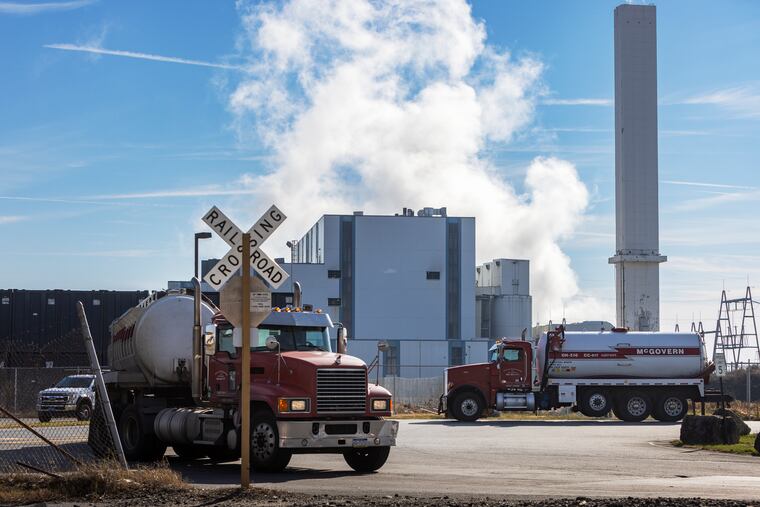
A high-profile bill to ban Philadelphia from incinerating its trash was put on hold Thursday after intense lobbying by residents, activists, and industry put its future in doubt.
The bill’s sponsor, Councilmember Jamie Gauthier, made a last-minute decision to pull the measure, which would prevent the city from shipping its trash to be burned for energy at the Reworld Delaware Valley Resource Recovery Facility in Chester.
“I made the difficult decision to hold the bill today because my colleagues have asked for more time with it,” Gauthier said, noting she had not given up on the bill.
Gauthier said the bill would prevent “dumping on cities that are more vulnerable than us.”
“This would never happen in a community that wasn’t populated mainly by Black people, and mainly by poor Black people,” she said of Chester. “The people that are lobbying otherwise — they know that they would never accept this where they live.”
The move to hold the bill came after hours of public testimony by people speaking for and against it.
However, almost all of those speaking against the bill either work for Reworld, the Chester waste-to-energy plant, or represent labor unions. Reworld employees could be seen lobbying Council members in the hallways.
» READ MORE: Philly sends a third of its trash to a Chester incinerator. Council members took a ‘Toxic Tour’ to get a closer look.
What’s in the bill?
Gauthier’s “Stop Trashing Our Air Act” would prohibit the city from contracting with companies that incinerate solid waste or recyclables. Gauthier said that 37% of the city’s trash is incinerated.
» READ MORE: For 30 years, she has fought a waste-to-energy plant in Chester City: ‘We don’t have a choice’
The bill, she has said, is designed to combat environmental injustice, contending incineration has been particularly harmful to the Chester area.
Chester Mayor Stefan Roots and local activists expressed support for the legislation on Thursday, citing health and environmental concerns.
“I’m asking you and begging you,” Roots said in asking Council to vote in favor of the bill. “We’re counting on all of you to support it.”
Roots said the Reworld plant burns more trash than all of Delaware County produces.
Multiple Chester and Philly residents say the emissions from Reworld either caused or exacerbated asthma and other health conditions.
Andrea Robinson moved to Chester three years ago, she testified to Council. But she was unaware of the Reworld facility when she moved there.
“I walk out my door and smell the stinky odor. I’m embarrassed to invite family and friends over. There are dust and dirt all over the car and windows,” she said.
Fierce lobbying
Gauthier’s bill ran up against a fierce effort to prevent its passage.
Alex Piscitelli, facility manager at Reworld, testified that the plant operates under “the strict requirements of the Clean Air Act.”
He said claims that the facility causes human health issues “are simply not supported by the data” and emissions “operate well below federal limits.”
Multiple representatives of the company spoke, including workers who lived in Chester and Philadelphia.
Ramona Jones, who lives in Chester and works at Reworld, said the job allows her to be close to her children and family. She said the company has given her ”a livable wage, a higher wage.”
Matt Toomey, a business agent for the operating engineers union, told Council that “up to 120 family-sustaining jobs” were at stake, and noted the Reworld plant is heavily regulated and located in an already industrialized area.
Political reality
Aides for Mayor Cherelle L. Parker, whose administration opposes the legislation, also worked the room.
Council members hardly ever call for votes on doomed bills. But Gauthier initially appeared to be willing to roll the dice by calling the measure up for a vote despite its uncertain fate.
As the morning progressed, however, it became clear she did not have the nine votes needed for passage and almost certainly did not have the 12 votes that would be needed to overcome a likely veto by Parker.
Insisting on the vote would mean that Gauthier was putting colleagues in the uncomfortable position of choosing between environmental advocates and trade unions, two important constituencies in Democratic primaries.
But Gauthier pledged to push for the bill.
“I am committed to this,” she said. “At the City of Philadelphia, we have to be a model for brotherly love, sisterly affection.”