Philly street festivals are shutting down over rising police overtime costs. But some groups don’t have to pay.
Philly elected officials, police-connected groups, and street festival organizers who cut special deals are exempt from tens of thousands dollars in city event fees inked to street festivals.
Want to hold a parade, festival, or block party in Philadelphia? Be prepared to pay — sometimes tens of thousands of dollars — to cover police overtime, paramedics, and other city services.
Unless you’re on the VIP list — then taxpayers foot the bill.
This year, several neighborhood groups were hit with bills as high as $40,000 for municipal services largely due to spiraling police overtime costs, forcing organizers to scale back or cancel long-held events.
Yet The Inquirer found that an unwritten city policy waives event fees for elected officials and select organizations, including those with ties to the Philadelphia Police Department.
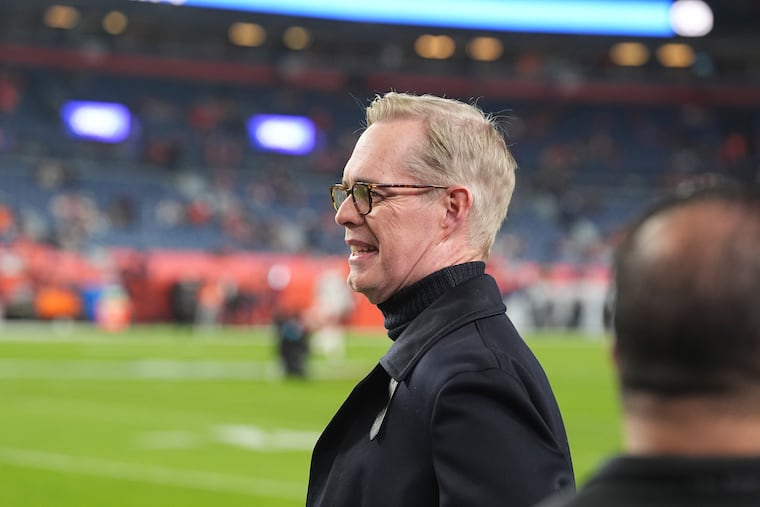
In August, City Council President Kenyatta Johnson’s summer block party in South Philly — complete with food vendors, a bounce house, and a performance by multiplatinum rapper Jadakiss — generated more than $13,000 in police overtime.
Taxpayers covered the bill.
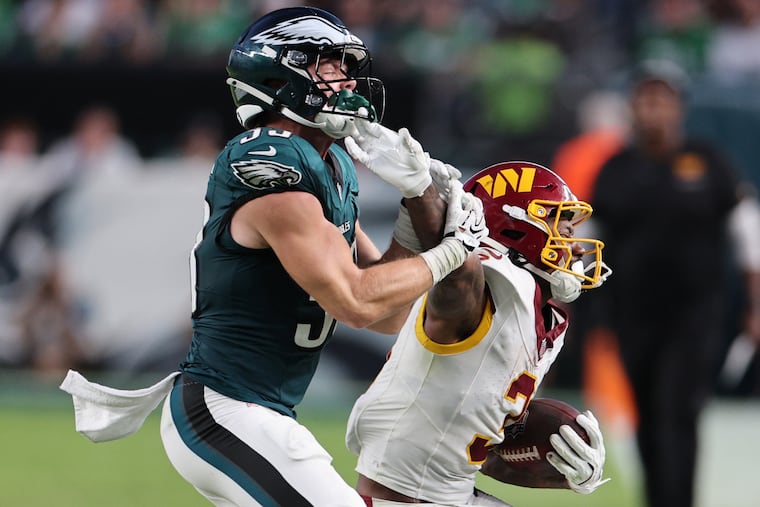
Two months later, the Philadelphia Police Foundation, a privately run nonprofit that raises funds for the police department, held its annual 5-mile “Run for Blue” race. The price tag for police alone was $67,685 — again, paid in full by taxpayers.
Johnson and a spokesperson for Mayor Cherelle L. Parker declined to comment.
Natalie Faragalli, a spokesperson for the Philadelphia Office of Special Events, acknowledged that any event hosted or sponsored by a city official was considered an in-house cost and billed to the general fund.
However, the city could not produce a written policy dictating why some groups — like the police benevolence group or certain ethnic parades — remained exempt from payment.
Many of the city’s biggest annual events — like Wawa’s July Fourth Welcome America fireworks, which resulted in a $453,440 police overtime bill — have also long been exempt from the soaring fees that smaller organizers now face.
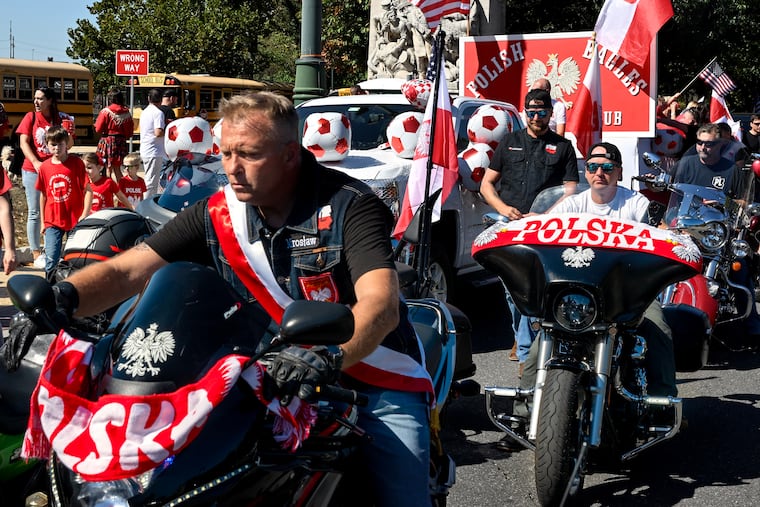
While the special events office does not keep a precise list of exempt groups, it did acknowledge that about a dozen other cultural festivals — like the Polish American Pulaski Day Parade and the Odunde Festival — are also comped because they were grandfathered in under a decades-old, informal agreement.
The city declined to release a comprehensive record of special event invoices for the last year. But a sample of overtime costs for 13 events illustrated the city’s inconsistent billing practices.
North Philly nonprofit Concilio’s annual Puerto Rican Day Parade, for example, does not have to pay for police overtime. But the police department confirmed that another Puerto Rican cultural event in the same neighborhood, Asociación Puertorriqueños en Marcha’s annual Sugarcane Festival, was billed about $5,000.
Other groups have seen their bills double over the last two years. Faragalli said everything from increased security concerns to contractually negotiated pay raises and a $14 lunch for officers had contributed to a spike in police costs.
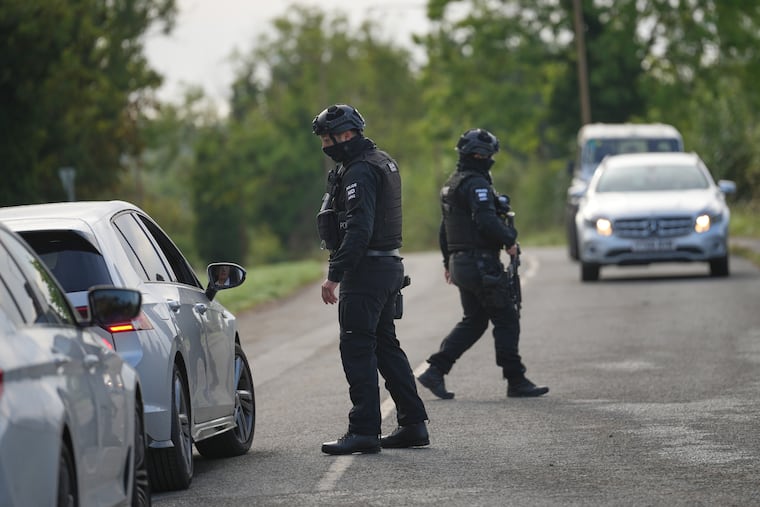
The biggest driver behind rising costs has been a citywide shortage of roughly 1,500 officers that has forced captains to increasingly rely on cops working extra hours to staff events, as opposed to on-duty cops during their scheduled shifts.
Current and former city officials said concerns over violence, mass shootings, or terror attacks at times cause the city to take a cautious approach to staffing.
But national risk factors do not always explain why some captains call for more officers than others.
Democratic Party chairman and former U.S. Rep. Bob Brady — who started a nonprofit to help offset city event costs for the raft of cultural events — said the department’s security assessments were sometimes head-scratchers.
During the last crackdown on parade costs, more than a decade ago, he recalled counting the number of cops patrolling corners at the Mummers Parade with no paradegoers in sight. Other city services appeared excessive, too
“I love the cops, they’re my friends. But they were really, really, really overcharging,” Brady said in a recent interview. “And you don’t need 30 street cleaners. We ran around counting Porta-Potties. You don’t need all that, nobody was using them.”
The groups that have had to pay say they are struggling.
The Northern Liberties Night Market, which had run for 17 years, canceled its June festival, citing a $26,000 bill from the city. The Midtown Village Festival announced it would not return, citing both a lack of sponsors and rising costs.
And it is uncertain whether the 35-year-old Manayunk Arts Festival will be back next year, after the city handed organizers a nearly $40,000 bill for the two-day event, which typically draws 40,000 people to the city over the weekend.
Gwen McCauley, executive director of the Manayunk Development Corp., called on the city to create a fairer billing system.
“I don’t mind paying, if everybody else is paying,” McCauley said. “But I shouldn’t have to pay if other people are given it for free.”
An ‘ad hoc’ system
The city had long picked up the costs of traditional cultural events, like the Mummers Parade, due to the big crowds they drew to the city. But in the 1980s, City Council faced an array of other groups seeking to have the city cover the costs of ethnic parades and other cultural events.
While the city reached a deal to pay those costs, the last four mayors have continued to reckon with the rising tab — as well as more groups seeking to get their fees waived.
The result was a series of handshake agreements rather than a comprehensive solution.
When parade costs came under scrutiny during a budget shortfall in the 1990s, then-Mayor Ed Rendell crafted an ad hoc policy where each district Council member would get an annual $1 million allotment for events, and the city would sometimes absorb what other groups could not afford.
He argued it was worth subsidizing most events, as they tended to “pay for themselves” through visitors paying taxes on food, hotels, and liquor.
“There is a cost to the city,” Rendell said in a recent interview. “But you want events to happen. It’s what makes the city vibrant.”
By 2008, facing a new budget deficit, then-Mayor Michael Nutter moved to eliminate millions for street festivals and parades once again, angering event organizers and their allies on City Council.
After years of infighting, officials appeared to reach a detente. Today, the city bills for most events, while elected officials get a pass for their own events — and some outside groups are grandfathered in.
For decades, Council members have also doled out small grants through their own taxpayer-funded recreational fund to help others pay the city back for event costs — an arrangement that some view as redundant.
McCauley, of the Manayunk Development Corp., said she won a $1,000 recreation grant to help put on the annual arts fest, which closes down four blocks of Main Street for one weekend every June.
She reasoned that the city was, in effect, paying her to defray its own costs.
“You could just make my bill $1,000 less,” she said.
Bills for thee, but not for me
Groups with ties to the police department also get a deal.
The Philadelphia Police Foundation reached an agreement with police to waive costs for its fundraisers — like the Run for Blue — which the nonprofit’s executive director, Erin Zimmerman, called a “morale booster for police officers.”
Because those events raise money for the department, funding everything from ballistic vests to scholarships for children of police to “Officer of the Month” awards, no payback is required.
“We do not typically reimburse PPD for staff costs, as the money we raise from this event and others throughout the year are for the direct benefit of the PPD,” Zimmerman said.
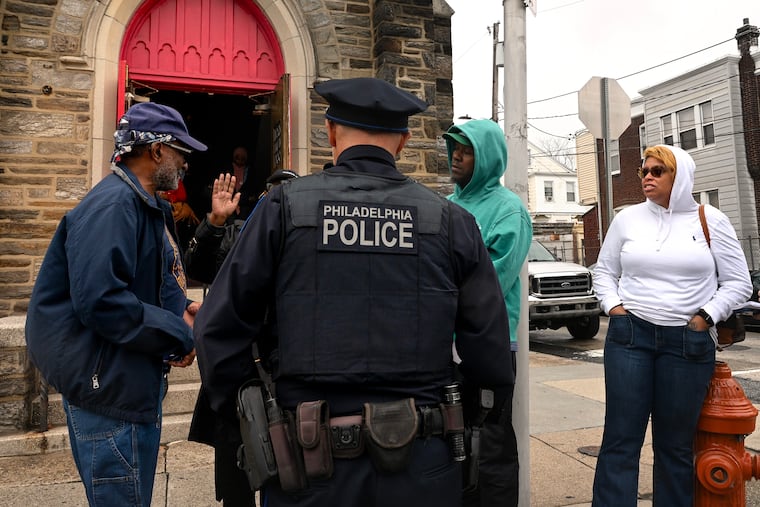
Police district captains determine how many on-duty patrols they can spare to cover a large event and how many officers need to be called upon for overtime. Captains can also veto groups seeking to hire cheaper private security guards at public events.
Jeffrey Doshna, a Temple University professor who helped author a report on street festivals in Philly, said he found little rhyme or reason to the city’s back-of-the-napkin math. He said costs vary wildly from one police district to another, seemingly based on the captain’s prerogative.
“It doesn’t seem to me that there is a citywide policy on pricing in Philadelphia at all,” Doshna said. “Other cities have more clarity on process, and a more centralized and streamlined procedure. And, as a result, they end up being less expensive.”
In Manayunk, McCauley has begun organizing new events that do not require closing down the streets. The result has been lower police costs, but more car traffic and fewer attendees.
“It brings the numbers down,” she said.
William Reed, cofounder of the Northern Liberties Arts and Commerce Alliance, which organized the night market events in that neighborhood, said he expected the problems would only worsen next year, with the Semiquincentennial celebration driving demand for even more events.
“To be just priced out of being able to do events is terrible, especially for things we have no control over,” he said. “I’m not minimizing security concerns, but you can’t put it all on a neighborhood group to pay for policing at this level.”
Staff writer Beatrice Forman contributed to this article.

The Inquirer’s journalism is supported, in part, by the Lenfest Institute for Journalism and readers like you. News and editorial content are created independently of The Inquirer’s donors. Gifts to support The Inquirer’s high-impact journalism can be made at inquirer.com/donate. A list of Lenfest Institute donors can be found at lenfestinstitute.org/supporters.