Philadelphia Councilmember Curtis Jones Jr. named interim chair of Pa.’s civil rights agency
Jones’ appointment comes amid a major reconfiguration of the Pennsylvania Human Relations Commission.
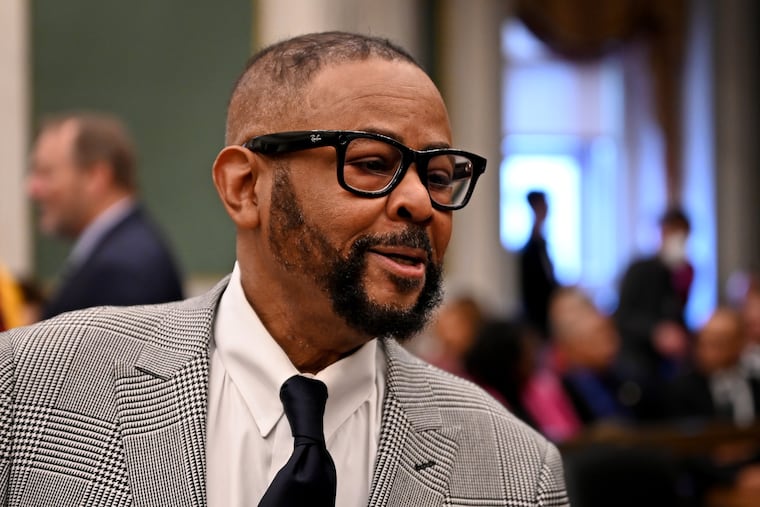
Gov. Josh Shapiro has named Philadelphia City Councilmember Curtis Jones Jr. the interim chair of Pennsylvania’s civil rights enforcement agency, as it undergoes an investigation over how it spent tax dollars and navigates a series of resignations that affect its ability to operate.
Jones, who was appointed last month and has been a member of the Pennsylvania Human Relations Commission since 2017, said in a statement that he wants to “strengthen civil rights protections across the Commonwealth and to ensure every Pennsylvanian has the right to live, work, play, and learn free from discrimination.”
Jones, a lifelong Philadelphian who has been on City Council since 2008, has long touted his efforts to bring municipal contract opportunities to businesses owned by minorities, women, and entrepreneurs with disabilities.
The types of cases the commission hears run the gamut, he said, from issues involving emotional support animals to a lack of accommodations for people with limited mobility.
The commission has always had a backlog of cases, Jones said. In the past, he said, people have waited as many as two years for their complaints to be heard. One of his main goals is to craft a 100-day turnaround plan so commissioners can more efficiently do their work and move through cases faster.
» READ MORE: Head of Pa.’s civil rights agency to resign as Gov. Shapiro launches inquiry into agency’s spending
Outgoing executive director Chad Dion Lassiter said in a statement that Jones’ “commitment to civil rights will help guide the PHRC forward.”
Still, the appointment comes amid a major reconfiguration of the agency.
Lassiter submitted his formal resignation early last month, after Shapiro asked him in February to step down. The commission’s chief of counsel and executive procurement officer announced their departures around the same time.
Then Joel Bolstein, for whom Jones is now stepping in, announced his resignation after being on the commission since 1999 and having spent a decade serving as chair. Vice chair of the commission Raquel Yiengst announced her departure less than a week later.
No public reasons were given for Bolstein’s and Yiengst’s departures, and Lassiter previously told The Inquirer the timing of the resignations were unrelated.
The commission of up to 11 members investigates and hears cases of discrimination in employment, housing, education, and public accommodations, but needs to have a majority present to have a quorum and issue guidance.
Jones said the agency can function with the four commissioners it has left, but that could easily change if two people have prior commitments and are unable to meet.
He hopes more commissioners can be appointed by the governor and approved by the Senate quickly to help manage the agency’s caseload.
“I am requesting that the legislature and the governor swiftly give us recommendations that we can start to move to the Senate for confirmation,” Jones said.
Beyond the quorum issues, a Shapiro spokesperson told The Inquirer last month that some spending by the commission has been suspended amid an Office of Administration review of recent purchases.
Lassiter, who was awarded the President’s Award by the Philadelphia NAACP in February, told The Inquirer that he was asked to resign over concerns the Pennsylvania Human Relations Commission was going to spend $20,000 on two tables for the awards ceremony. Lassiter said the payments were never made, calling the pressure to leave a “hit job.”