‘Our resistance and resilience’: Celebrating Black history at Tindley Temple
Celebrants gathered at the historic church in South Philadelphia to celebrate Black History Month.
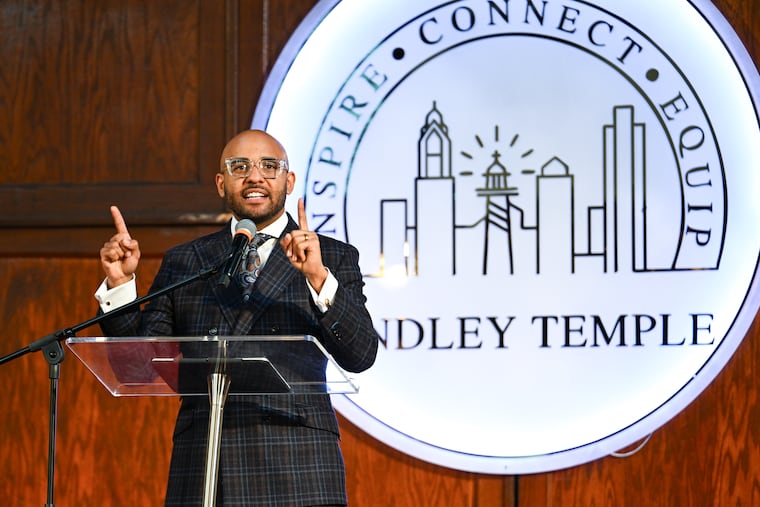
Amid the fight to maintain exhibits about enslaved people at the President’s House Site, congregants gathered Saturday at Tindley Temple United Methodist Church — a site with significant history of its own — to celebrate Black History Month.
“We are celebrating Black history because it’s not just cultural, it is protective,” said John T. Brice, lead pastor at the church in South Philadelphia. “When there is pressure to erase or water down our story, remembering becomes our resistance and resilience.”
Tindley Temple United Methodist Church was founded by the Rev. Charles Albert Tindley, writer of an early version of the civil rights anthem “We Shall Overcome.”
For Brice, the nation’s story can be told in full only if it includes the contributions, struggles, and leadership of Black Americans not only in February, but every month of the year.
“Our contributions are too often minimized or left out of textbooks, public policy, and even Fifth and Market,” the site of the President’s House slavery exhibits that were removed earlier this month, Brice said. Many of the displays have been restored while litigation continues.
» READ MORE: The slavery exhibits at the President’s House are starting to be restored by the National Park Service
Timothy Welbeck, director of the Center for Anti-Racism at Temple University, said remembering painful history is a way of honoring the contributions of ancestors.
“In the birthplace of America, it is important to acknowledge that the first family owned people,” Welbeck said. “It’s important to honor this legacy because we had to fight for our humanity to be recognized. To tell America’s story completely, you have to acknowledge that history.”
Philadelphia-born Shakara Wilson-Fernandez, 22, sees the acknowledgment of Tindley’s contributions as a way of empowering younger generations.
“It warms my heart,” Wilson-Fernandez said Saturday during the service at the church.
“There are many things going on right now, and although not all of us might be Black, we all need empowerment.”
PJ Thomas agreed. To her, celebrating Black history in 2026 feels like celebrating and honoring the diversity of the country she loves.
“Despite what’s going on, we are still the United States of America,” Thomas said.
“We are still a country that celebrates our people’s history, the people that came through immigration and the people forced to come in distress, because we are all American and we all build this country together.”