The slavery exhibits at the President’s House are starting to be restored by the National Park Service
Facing a judge’s deadline, park service workers installed nearly half of the displays that the Trump administration had ordered taken down.
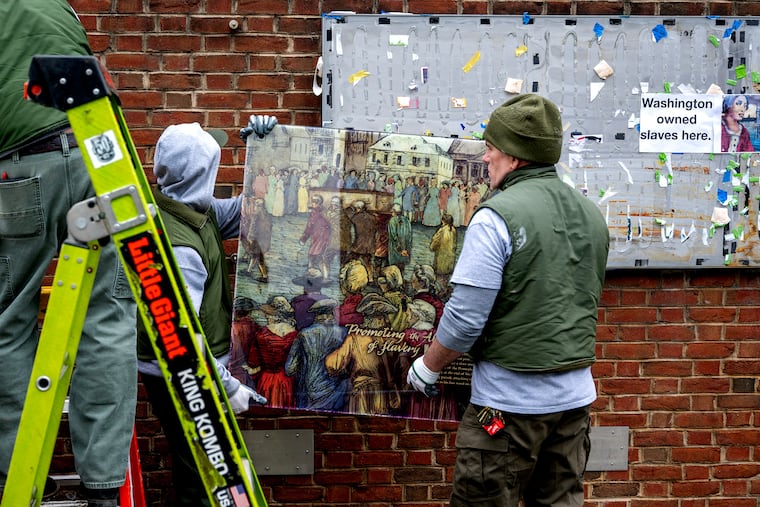
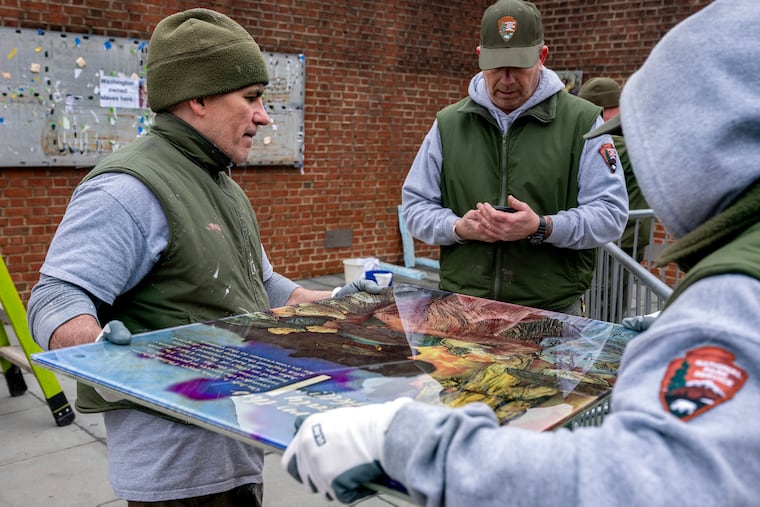
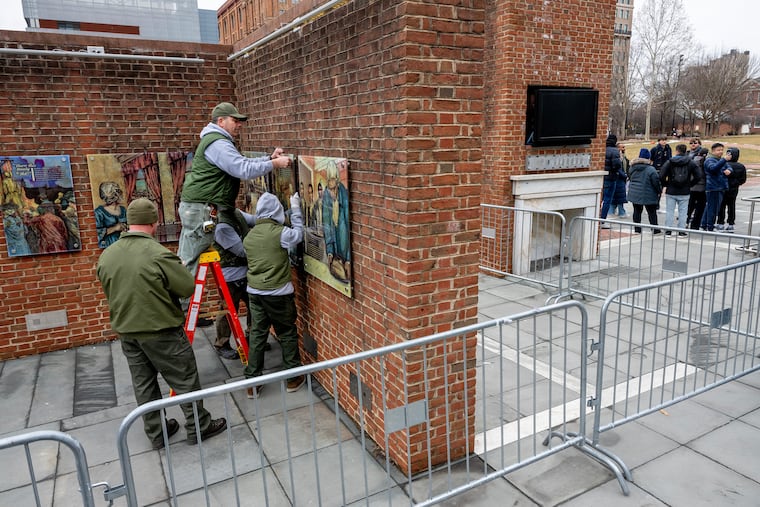
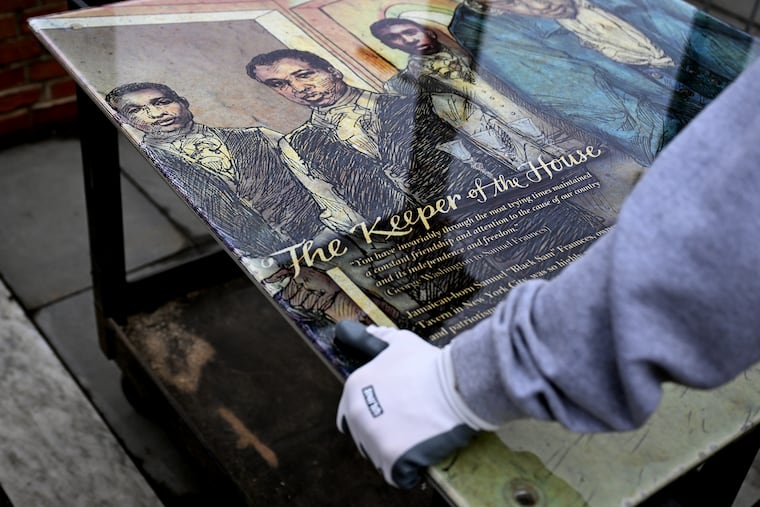
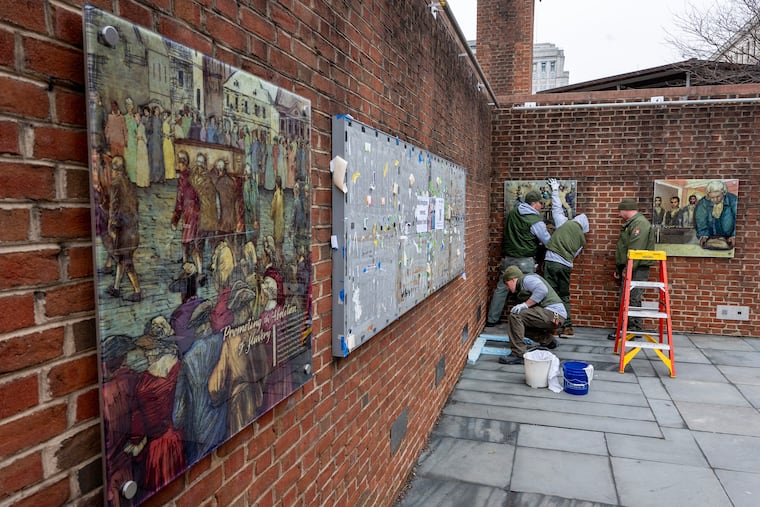
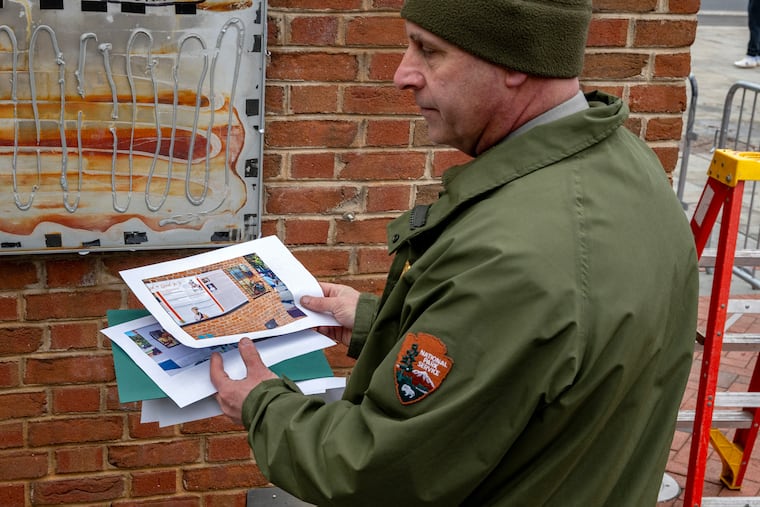
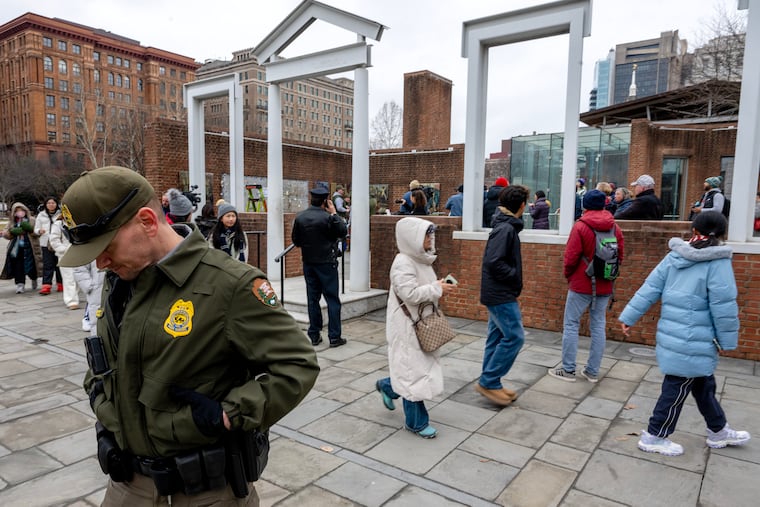
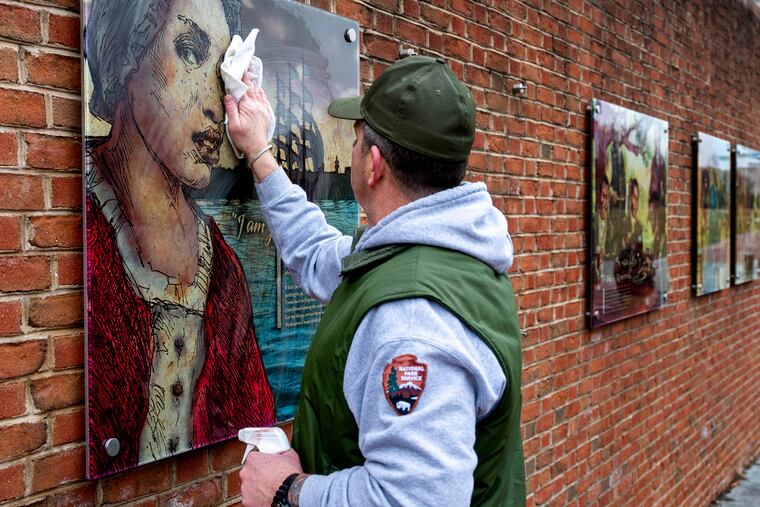
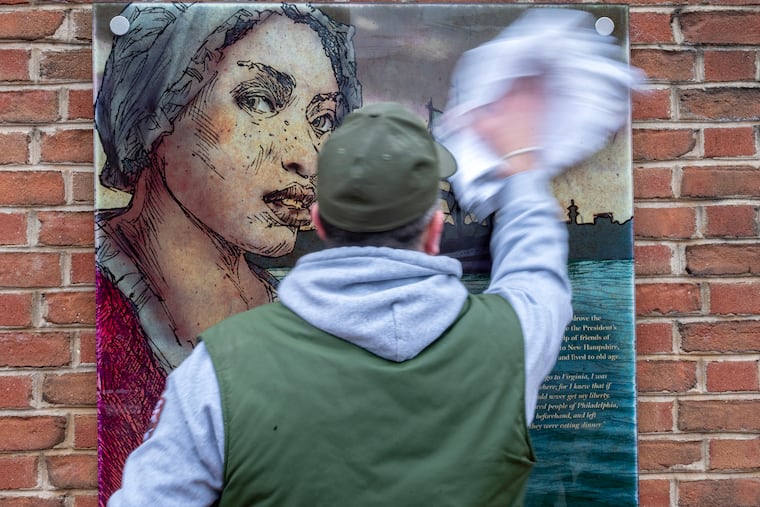
Almost a month after abruptly dismantling exhibits about slavery from the President’s House Site, National Park Service employees began reinstalling the panels late Thursday morning ahead of a court-imposed deadline.
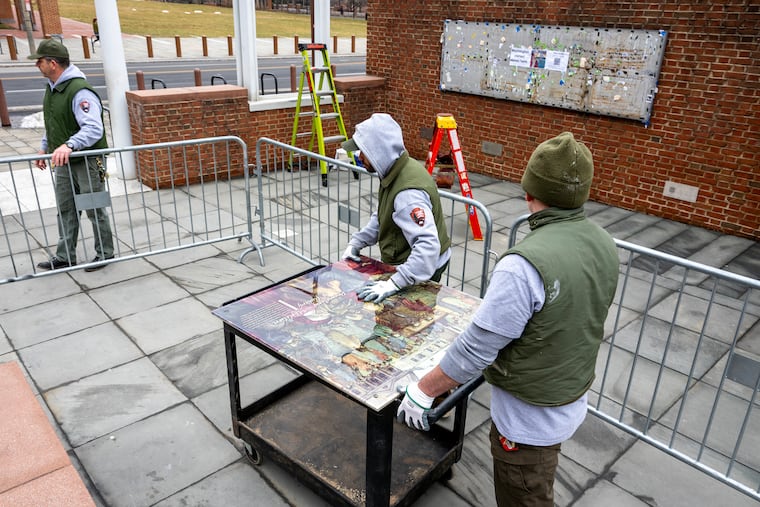
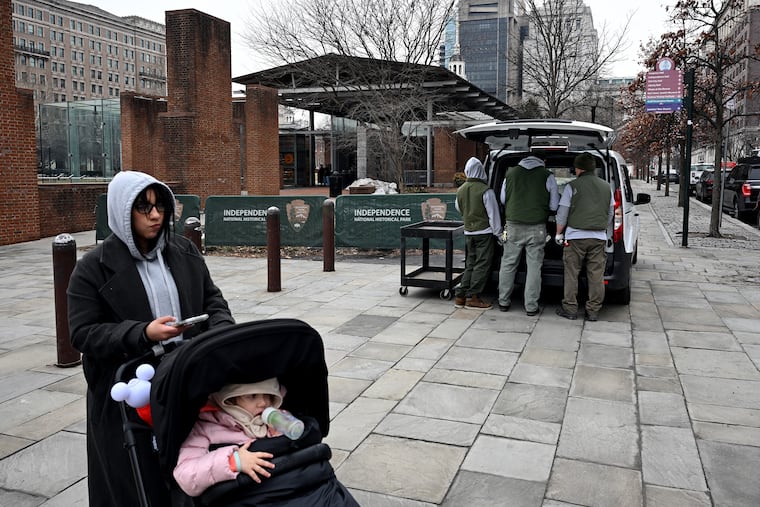
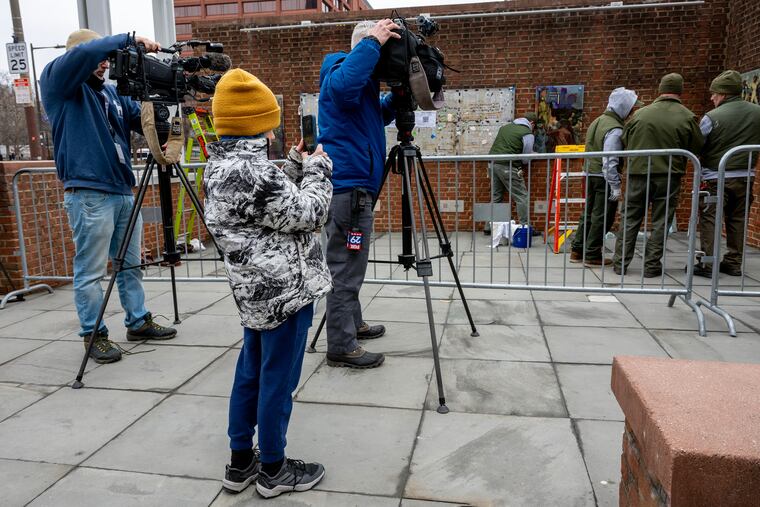
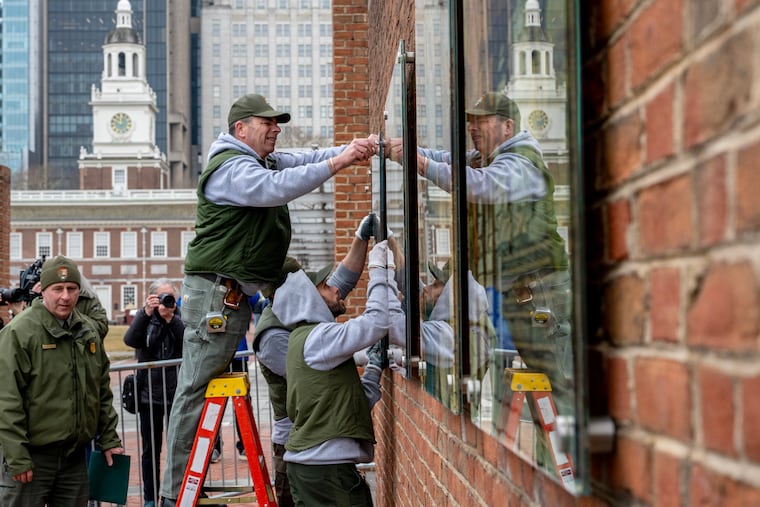
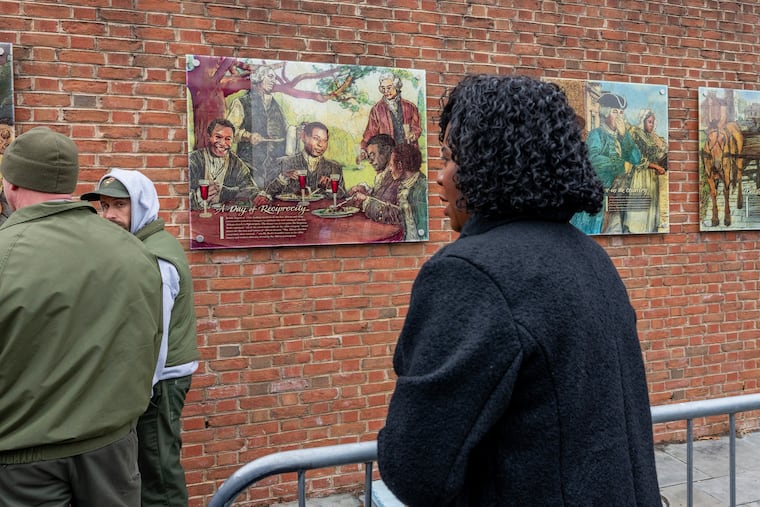
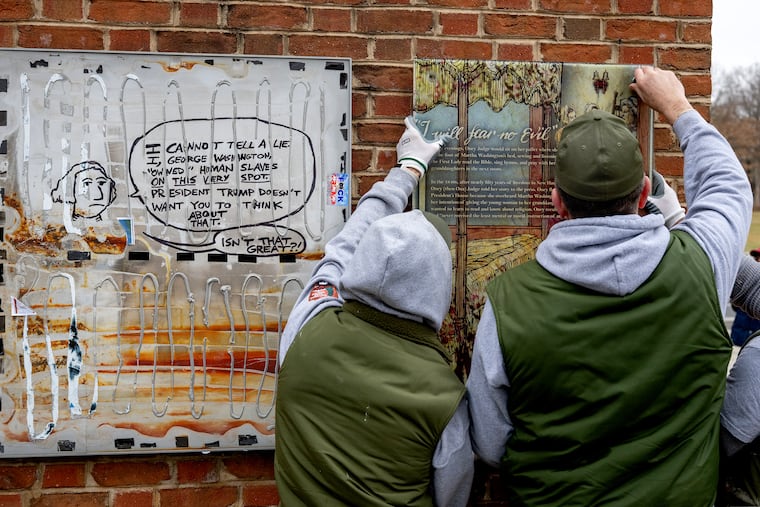
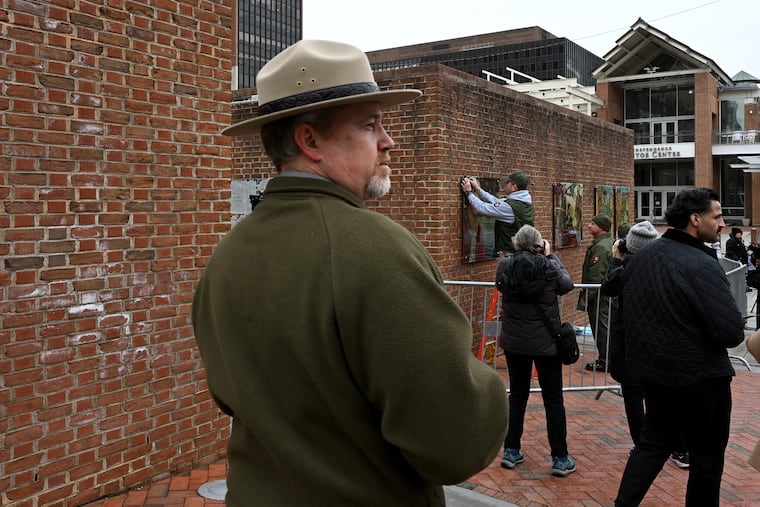
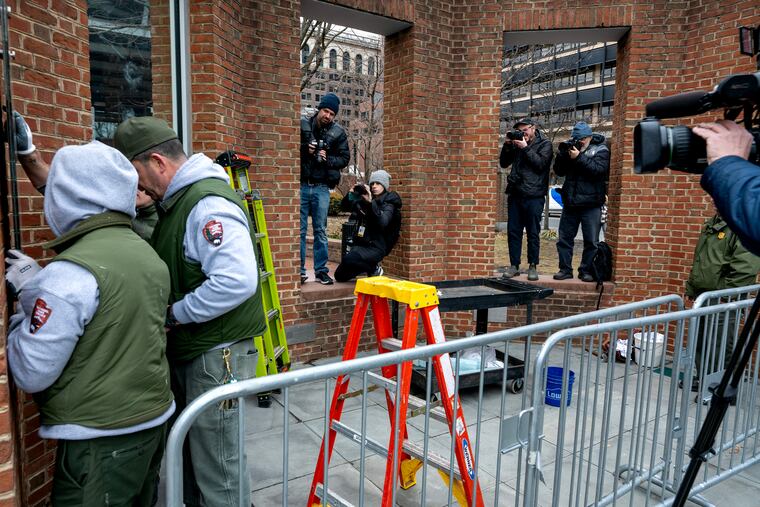
Just before 11 a.m., four park service employees carted glass panels from a white van to a barricaded area at the site. They screwed each panel back into the bricks before cleaning the glass with rags.
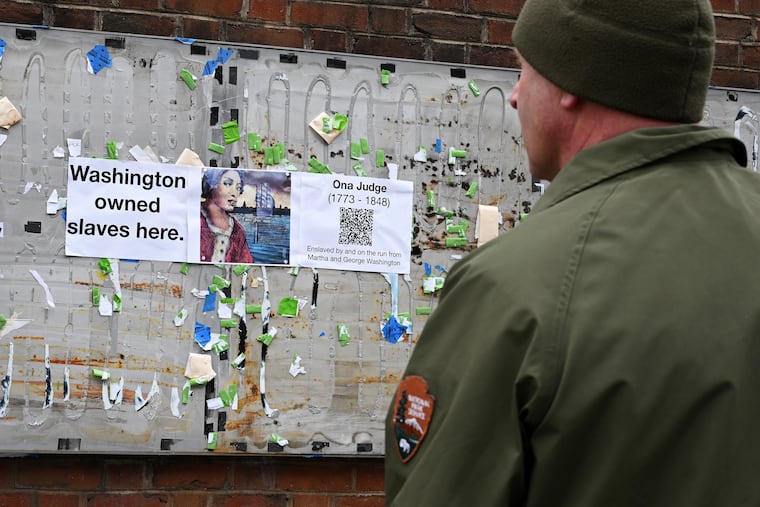
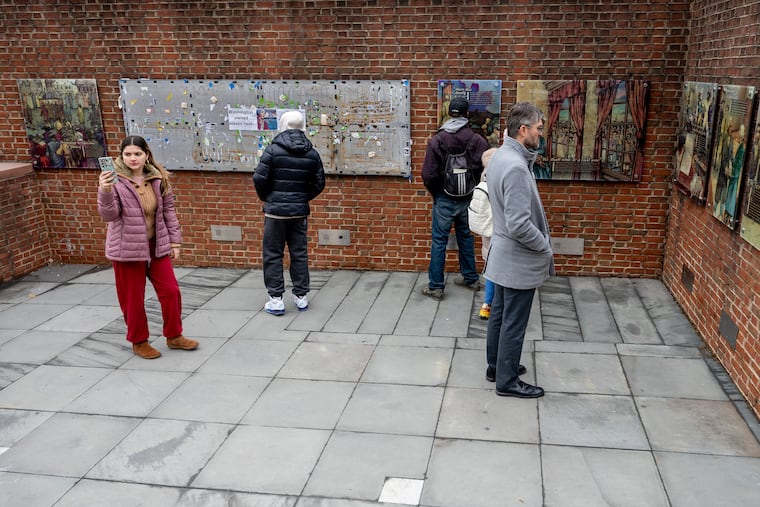
The restoration is a win for the City of Philadelphia and local stakeholders who have been fighting to preserve the President’s House after President Donald Trump’s administration ordered the removal of educational panels from the exhibit on Independence Mall last month, censoring 400 years of history. The removal sparked weeks of community activism that turned into celebrations Thursday once the reinstallation began.
U.S District Judge Cynthia M. Rufe sided with Mayor Cherelle L. Parker’s administration on Monday, issuing an injunction ordering the government to “immediately” restore the site to its normal condition. On Wednesday, she set a Friday evening deadline.
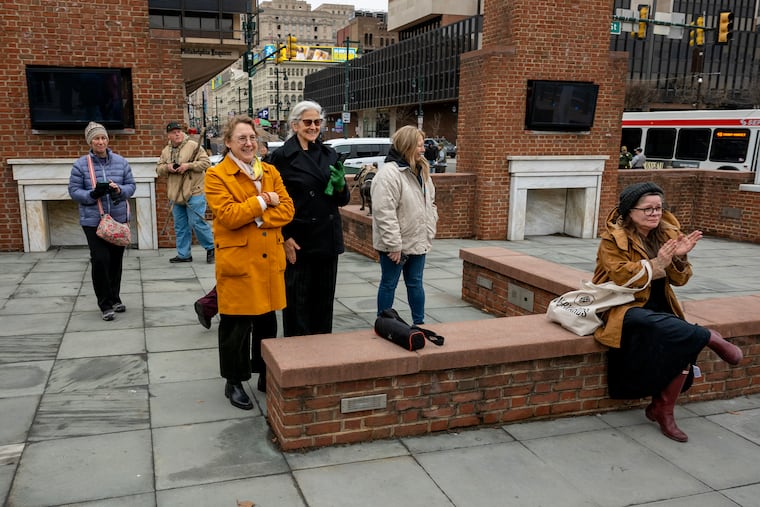
As of Thursday evening, 16 of the 34 panels had been reinstalled. A couple of bystanders clapped as the displays were put back up.
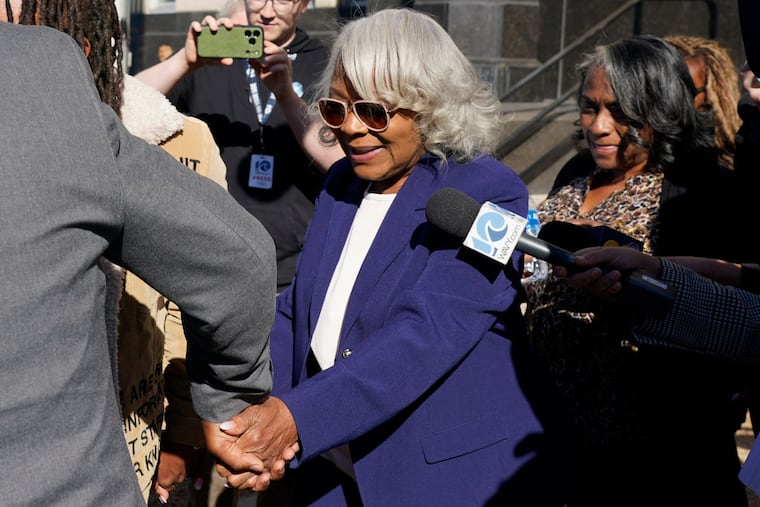
Shortly before noon, Parker arrived at the scene, taking in the newly reinstalled exhibits. She shook hands with and thanked the National Park Service employees.
“It’s our honor,” an employee told the mayor.
Parker did not take questions from the media but later issued a statement celebrating the return of the exhibits.
“We know that this is not the end of the legal road,” the mayor said. “We will handle all legal challenges that arise with the same rigor and gravity as we have done thus far.”
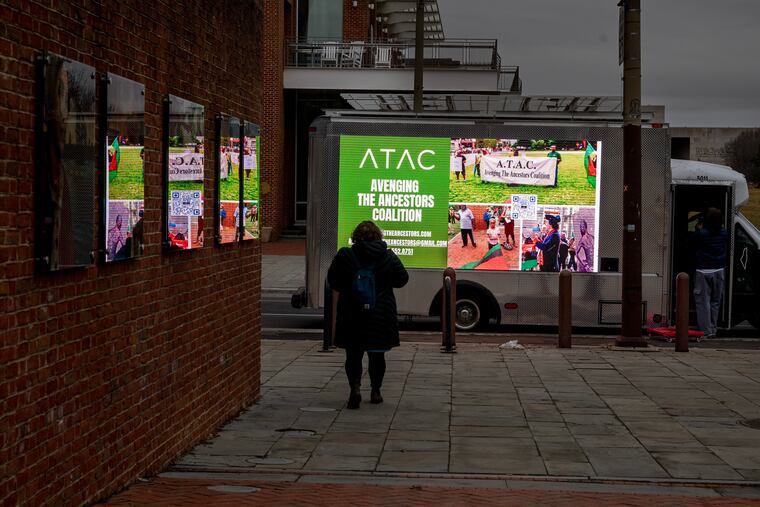
Michael Coard, an attorney and leader of Avenging the Ancestors Coalition, which helped steer efforts to preserve the President’s House, called Thursday’s reinstallation a “huge victory” after weeks of advocacy in court and around the site itself.
“We had people doing something at least every single day since the vandalism took place on Jan. 22, and we’ve had the attorneys in court, so it’s a great day, but the battle is not over,” Coard said.
On Wednesday, several employees from Independence National Historical Park placed metal barriers around the brick walls where panels had been displayed near the open-air exhibit’s Market Street entrance. One employee said the barriers were set up so employees could clean the area.
Prior to Thursday, exhibits were being stored in a National Park Service storage facility adjacent to the National Constitution Center.
The reinstallation was a moment that Philadelphians who had been tirelessly fighting to protect the President’s House had been waiting for.
On Jan. 22, after park employees took crowbars and wrenches to the President’s House, which memorializes the nine people George Washington enslaved at his Philadelphia residence, the City of Philadelphia filed suit against members of the Trump administration. Community stakeholders took action to preserve the memory of the site.
“It’s important to hang on to hope,” said Bill Rooney, 68, of Chestnut Hill. “The people who lived here — sometimes that’s all they had to hold on to. We need to do that, too, and [make] sure that the whole history is told.”
Rooney, a certified tour guide, added: “History matters. All of history matters.”
Rufe, a George W. Bush appointee, issued a blistering 40-page opinion in which she compared the federal government’s arguments justifying the removal of the interpretive panels to the dystopian Ministry of Truth from George Orwell’s novel 1984.
The opinion said it was urgent that the full exhibit be shown to the public. When the federal government did not comply 48 hours later, the judge set a deadline of 5 p.m. Friday for the Department of the Interior and the National Park Service to fulfill her order.
The Trump administration asked Rufe on Wednesday night for a stay on the injunction while its appeal is pending in the U.S. Court of Appeals for the Third Circuit.
The motion says enforcement of the order makes Philadelphia a “backseat driver holding veto power” in all decisions related to Independence National Historical Park. By forcing the government to restore the slavery panels, the court “compels the Government to convey a message that it has chosen not to convey,” the motion says.
The city filed a brief Thursday opposing the stay, saying that the federal government did not add anything new to its argument. The idea that the restoration would cause harm was undermined by the fact that the exhibits “stood for 15 years without alteration, conveying the ‘whole, complicated truth,’” the city said. The filing does not acknowledge that some panels had been reinstalled.
Rufe had not ruled on the stay as of Thursday afternoon. But neither the federal government’s appeal to a higher court nor the request for a stay pauses Rufe’s order.
Complying with the order could complicate the federal agencies’ argument that restoring the panel inflicts irreparable harm because they have “turned around and done what they said they couldn’t do,” said Marsha Levick, a visiting chair at Temple University’s Beasley School of Law.
The people behind the fight to restore the President’s House Site were lauded at a late-afternoon rally. Organizers had called the 120-person event after the barricades were installed Wednesday, which they said prevented people from visiting the memorial. Instead, the event Thursday — set to Kool & the Gang’s “Celebration” and “Fight the Power” by Public Enemy — was celebratory.
“We’re still fighting. The battle is still being fought in court,” said coalition member Mijuel Johnson. “But today — this greatest day, this day of pride — we got our panels put back up.”
Coard said Thursday’s development epitomizes the group’s name. He said his coalition’s advocacy for the President’s House stands on the shoulders of activism by ancestors during the Civil Rights Movement.
“We took that baton from them and we ran with it,” Coard said. “And the interesting thing about taking that baton is that this track was not as difficult for us. They had more obstacles on their track. We have fewer because they cleared it for us.”