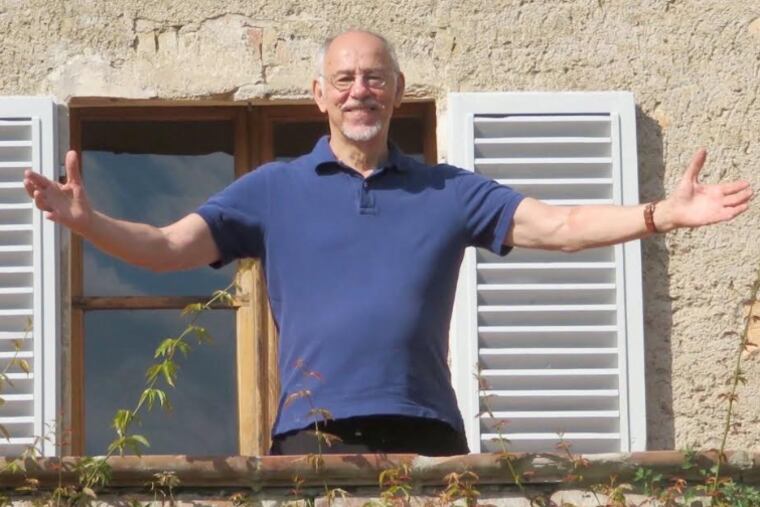
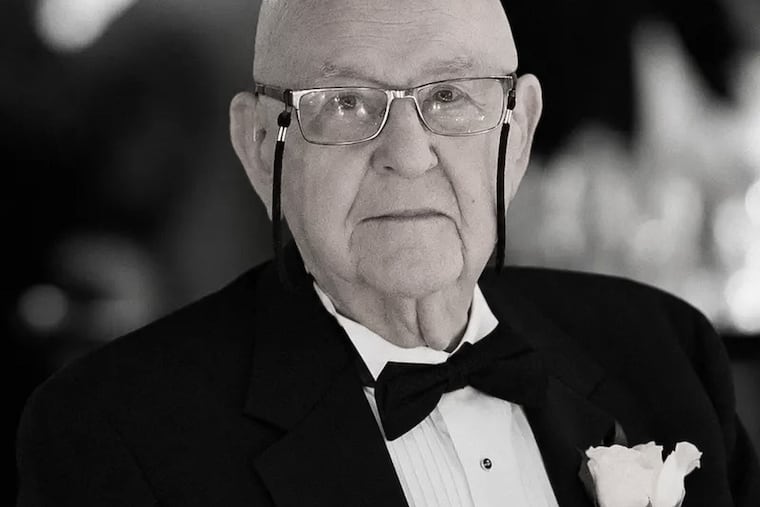
Adolph J. Yungman, pioneering aerospace engineer, pilot, and World War II Navy veteran, has died at 102
For decades during the Cold War, he engineered supersonic aircraft and intercontinental ballistic missile reentry systems for the Department of Defense.
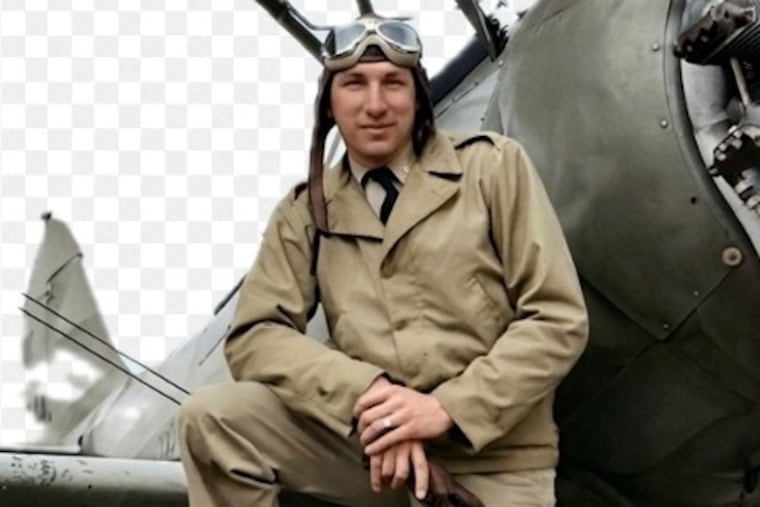
Adolph J. Yungman drew attention to himself when he learned to multiply and divide at 3 years old. He first flew in a biplane when he was 10.
By 15, he was calculating math equations, many in his head, for his father’s construction projects. He became a certified aircraft mechanic after high school, joined the Navy at 19, and earned a bachelor’s degree in aeronautical engineering at 29.
After that, for 37 years, at the height of the Cold War arms race, from 1952 to his retirement in 1989, Mr. Yungman pioneered the development of supersonic aircraft and engineered groundbreaking reentry systems for intercontinental ballistic missiles. He was an expert in math and aerodynamics — lift, weight, thrust, and drag — and he worked for North American Aviation in Columbus, Ohio, and General Electric Aerospace in Philadelphia.
At 37, he joined General Electric as a missile reentry expert, moved from Ohio to Schuylkill Township, Chester County, and spent 29 years devising top-secret calculations regarding missile mechanics, trajectory, and impact. He was also a longtime pilot and a Navy aircraft mechanic during World War II.
“Flying was one of the greatest joys of his life,” said his son, Bob. “He could almost always diagnose an engine problem by the sounds it made. His access to top secret information has kept the whole family intrigued all these years.”
At 102, on Saturday, March 14, Mr. Yungman died of age-associated decline at the Meadows at Shannondell in Audubon, Montgomery County. His son said: “His fascination and curiosity about flight was ignited, and never went out.”
» READ MORE: Survivors give advice about mourning their loved ones, as told to The Inquirer’s obit writer
At North American in Ohio, from 1952 to 1960, Mr. Yungman worked with test pilots and designed manned winged aircraft that flew faster than the speed of sound. At GE, he focused on unmanned space missiles and spent years in labs and wind tunnels at the Los Alamos National Laboratory in New Mexico and remote testing facilities in California and elsewhere.
“The easy part is entering outer space,” he often told his son and son-in-law, Vince Pompo. “The hard part is reentry without breaking apart.”
Affable and engaging, Mr. Yungman shared all kinds of fascinating stories about his travels and colleagues, his family said, but never about his secret projects. “Terrie,” he told his niece, Terrie Powell, “I have to take it to my grave.”
Many of his early advanced math calculations were made on a slide rule, and, working near computer pioneers in Philadelphia, he was one of the first scientists to use a hand-held computer. “He was solving problems that didn’t yet have answers, even creating the math as he went,” said his grandniece, Rebecca Powell.
He joined the Navy after high school in 1942, passed its aviation cadet programs, and served six years as an aircraft mechanic on ships in the Atlantic and Pacific Oceans and the Mediterranean Sea. A knee injury kept him from serving as a pilot during the war.
At 66, he retired from GE, traveled the world with his wife, Flo, and enjoyed decades with his son, son-in-law, and extended family. He volunteered at church, in the community, and for nearly 20 years as an aide at Paoli Hospital. Family and friends called him Joe.
“He touched so many lives with his kindness and concern,” his son said. “The world is indeed a better place for having had Joe Yungman in it.”
Adolph Joseph Yungman was born Sept. 15, 1923, in Binghamton, N.Y. He grew up with three younger sisters and wisely followed the advice of a teacher when she suggested he attend aviation mechanics school after high school.
He earned his bachelor’s degree at the University of St. Louis in 1952 and studied aeronautical engineering in graduate school at Ohio State University. He met Florence Mae Jones through his youngest sister, and they married in 1952 and had a son, Bob. His wife died in 2020.
Mr. Yungman enjoyed golf and tennis when he wasn’t calculating. He fished with family and friends from Florida to Quebec, and skied in Pennsylvania, Colorado, and elsewhere into his 80s.
He loved dogs, scary movies, and Christmas. He carved ducks and other objects out of wood, and led scavenger hunts for the kids at Easter.
He reassuringly shared his 12-year-old grandnephew’s first roller coaster ride, and he and his wife visited every continent except Antarctica.
“He didn’t just live a long life,” his grandniece Rebecca said, “he showed us how to live a meaningful one.” His son-in-law said: “He loved people.”
His son said: “He was a wonderful, wonderful man.”
In addition to his son, son-in-law, niece, and grandniece, Mr. Yungman is survived by other relatives. His sisters died earlier.
Visitation with the family is to start at 9:30 a.m. Saturday, May 2, at Campbell-Ennis-Klotzbach Funeral Home, 610 Main St., Phoenixville, Pa. 19460. A service is to follow at 11 a.m.
Donations in his name may be made to the Brandywine Valley SPCA, 1212 Phoenixville Pike, West Chester, Pa. 19380; and Covenant House Pennsylvania, 31 E. Armat St., Philadelphia, Pa. 19144.