Ann Harnwell Ashmead, renowned classical archaeology researcher and writer, has died at 96
She traveled to Greece, Italy, Turkey, France, and elsewhere to examine, analyze, and research all kinds of ancient ceramic collections.
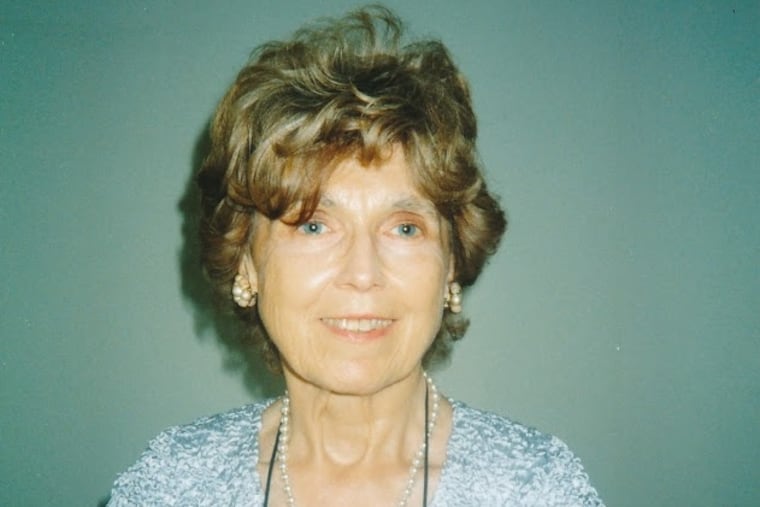
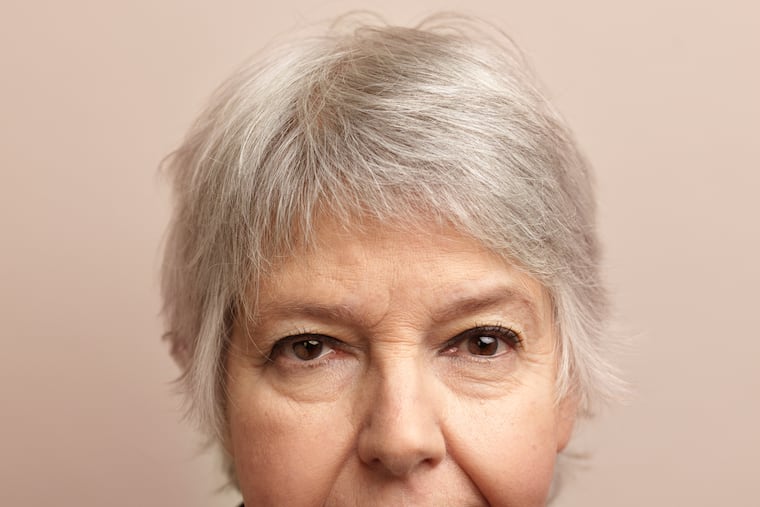
Ann Harnwell Ashmead, 96, of Haverford, renowned classical archaeology researcher, writer, museum curator, volunteer, and world traveler, died Saturday, Jan. 17, of chronic congestive heart failure at her home.
Dr. Ashmead was an archaeological specialist in Greek vase painting, the depiction of cats on classical and Near Eastern artifacts, and the history of other ancient ceramics. She traveled to Greece, Italy, Turkey, France, and elsewhere around the world to examine, analyze, and research all kinds of ceramics collections.
She consulted with hundreds of other archaeologists and curators, and wrote extensively about the ongoing international research project to document ancient ceramics and the extensive collections at Haverford and Bryn Mawr Colleges, the Penn Museum, the Rhode Island School of Design, the Louvre Museum in Paris, and other places. She did archaeological field work in Greece during her college years at Bryn Mawr and served as a classical archaeology graduate teaching assistant.
She was onetime curator of Bryn Mawr’s 6,000-piece Ella Riegel Memorial Museum and a research associate at the Penn Museum. She partnered for years with Bryn Mawr professor Kyle Meredith Phillips Jr. to research and write articles and books about ancient vases, cups, jars, pots, Etruscan images of cats, and other classical antiquities.
Some of her colleagues lovingly called her “the cat lady.”
Dr. Ashmead often reassembled broken ancient objects for curators and created visual and oral presentations to augment her printed catalogs, articles, and books. “She was indefatigable,“ her family said in a tribute.
She shared her research at conferences, meetings, and exhibitions around the globe, and most recently collaborated with Ingrid M. Edlund-Berry, professor emerita at the University of Texas at Austin, on a project that scrutinized cats as shield devices on Greek vases.
“Ann was very modest, humble, and self-deprecating about her publications and academic achievements,” her family said. Her son Graham said: “She was a role model who inspired me with her curiosity on all subjects and issues, and a love of world travel, reading, and lifelong learning.”
Dr. Ashmead was active with the Archaeological Institute of America, and her research was published by the American Journal of Archaeology, the journal of the American School of Classical Studies at Athens, and other groups.
She married Haverford College English professor John Ashmead Jr. in 1949, and they spent the next two decades traveling the world while he completed Fulbright Scholar teaching assignments. They lived in Japan, Taiwan, and India, and later in Paris, Athens, and Florida.
She spoke English, Japanese, Greek, Chinese, French, Danish, and Italian. “Her learning never stopped,” her family said.
Ann Wheeler Harnwell was born Oct. 7, 1929, in Princeton, N.J. Her family moved to Wynnewood in 1938 after her father, Gaylord P. Harnwell, became chair of the physics department at the University of Pennsylvania. He became president of Penn in 1953.
She graduated from Lower Merion High School in 1947 after spending the previous three years with her family in California. She earned bachelor’s and master’s degrees and a doctorate in classical archaeology at Bryn Mawr, and her 1959 doctoral thesis was titled: “A Study of the Style of the Cup Painter Onesimos.”
On page 2, she wrote: “Such attributions of vases to an artist are a delicate business, the outcome of a long and intricate process of observation and analysis, often of tentative nature.”
She and her husband had sons John III, Graham, and Gaylord, and daughters Louisa and Theodora. They divorced in 1976 but remained close friends until he died in 1992.
Having grown up during the stock market crisis in the 1930s, Dr. Ashmead followed the market closely as an adult, and was thrifty and frugal, her family said.
She was an avid letter writer and reader, and her personal library featured more than 5,000 books. She volunteered for years at Bryn Mawr’s old Owl Bookstore and especially enjoyed reading to her children and grandchildren.
She was on the board of the Haverford College Arboretum and a member of the Hardy Plant Society, the Henry Foundation for Botanical Research, and the Philadelphia Skating Club. She enjoyed dancing, organizing Easter egg hunts, and hosting birthday parties and family events.
A fashionista in the 1960s and ’70s, she was adept at needle crafting, quilting, and sewing. She bred cats, painted, collected antiques, and researched her genealogy.
She always made time for family no matter where in the world they were, and they said: “She was concerned if she was ever separated from a child and distraught if they were distraught.”
She lived in Denmark for a few years and finally settled for good in Haverford in 1983. “She was interesting, smart, capable, strong, articulate, and fun to be around,” her daughter Theodora said. “She was solution-oriented. She sparkled.”
In addition to her children, Dr. Ashmead is survived by six grandchildren, a sister, and other relatives. A brother died earlier.
She requested that no services be held and donated her body to the Humanity Gifts Registry through Penn’s Perelman School of Medicine.
Donations in her name may be made to the Haverford College Arboretum, 370 Lancaster Ave., Haverford, Pa. 19041.