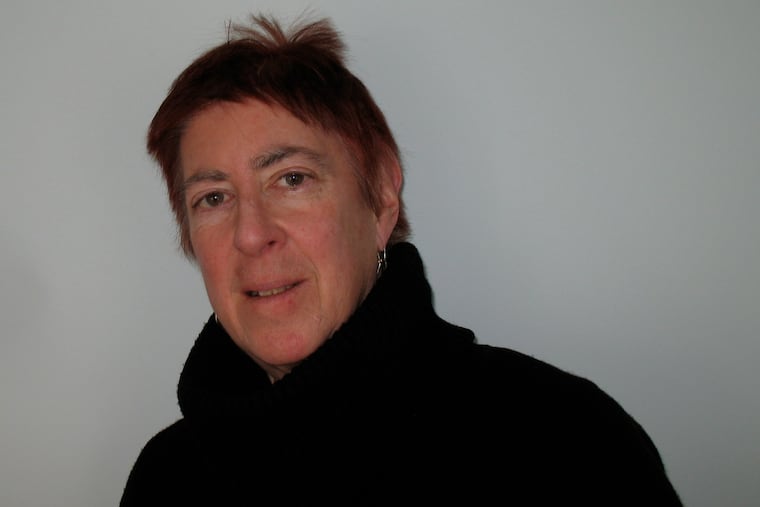
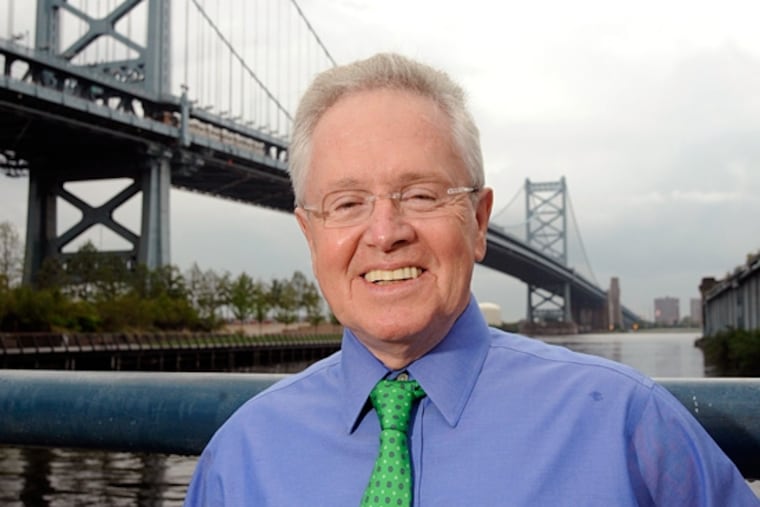
Arthur Waskow, longtime social activist, pioneering rabbi, teacher, and author, has died at 92
A colleague said: “He consistently held that Judaism is not meant to stand above and apart from ordinary life, but rather to guide our actions in this life.”
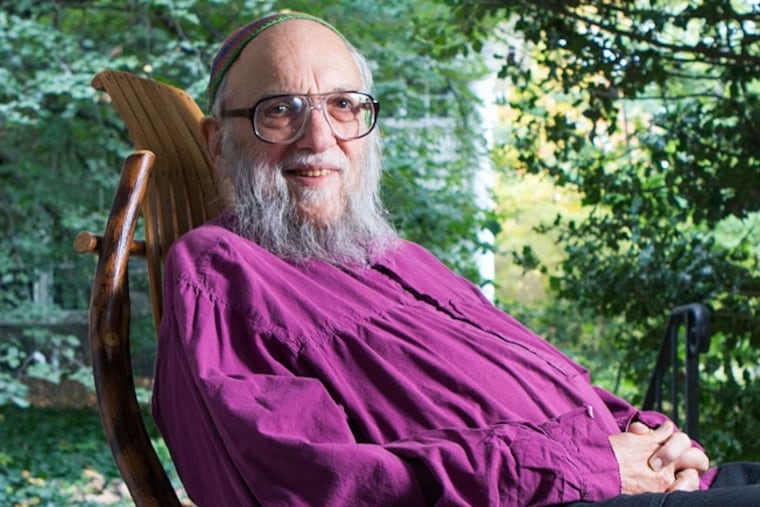
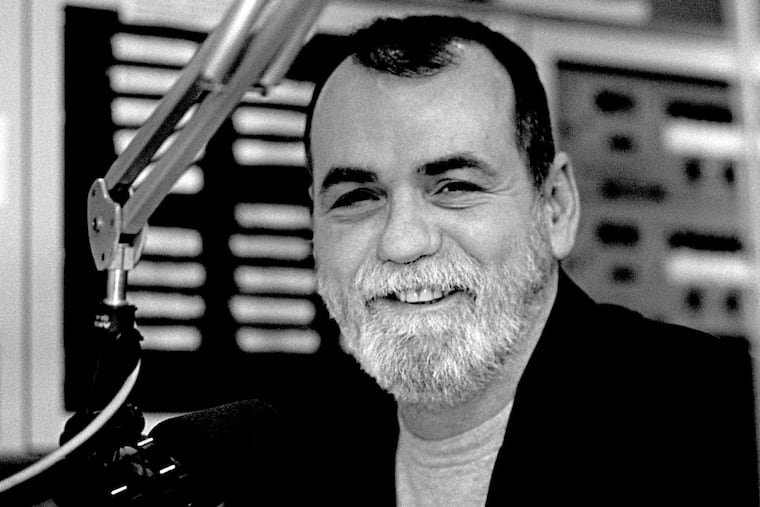
Arthur Waskow, 92, of Philadelphia, longtime social activist, pioneering Jewish scholar and rabbi, founder of the Shalom Center for public prophetic action, religion teacher, mentor, and prolific author, died Monday, Oct. 20, of chronic respiratory failure at his home in Mount Airy.
A longtime expert in Judaism, prophetic justice, and peaceful civil disobedience, Rabbi Waskow was so disturbed by the 1968 assassination of the Rev. Dr. Martin Luther King Jr. and the social unrest that followed that he protested, wrote, and lectured around the country about what he called the “overwhelming crisis” of whether humanity will “build a decent society or will poison or burn it empty.”
For more than five decades, starting in Washington and then in Philadelphia, he connected contemporary social issues with Jewish traditions and championed prophetic justice regarding peace, nuclear disarmament, feminism, LGBTQ+ rights, same-sex marriage, environmental sustainability, and interfaith collaboration. “He consistently held that Judaism is not meant to stand above and apart from ordinary life, but rather to guide our actions in this life,” Rabbi Jill Jacobs said in a tribute.
Colleagues at the Shalom Center said he dramatically “fused social justice with traditional Jewish themes and spirituality.” Jacobs praised his “legacy of non-violent protest, his prophetic writing, and his courageous leadership.”
He established the Shalom Center for prophetic Judaism in Philadelphia in 1983, cofounded the Alliance for Jewish Renewal in 1993, and helped establish the National Havurah Committee, T’ruah: the Rabbinic Call for Human Rights, and other organizations. “He’s one of the most important figures to merge spirituality and politics since the 1960s,” Rabbi Tsvi Blanchard told The Inquirer in 2001. He “transcends categories and, as a result, he’s always crossing boundaries, but for good.”
Strategic action with compassion was usually his favorite tactic. He called his many disagreements with Jewish orthodoxy “a continuous loving debate” and told The Inquirer in 1970: “Jews have a radical role and mission to join with other communities to remake American society.” In 1993, he said: “In our generation, the people of the earth at last have to learn to share the great round earth or risk ruining it.”
He worked closely on social projects with Sister Mary Scullion of Project HOME, Rabbi Leonard Gordon of the Germantown Jewish Centre, and Imam Abdul-Halim Hassan of the Masjidullah Community Center Mosque. His embrace of the Jewish Renewal movement drew critics, but he never wavered in his support.
“There’s an unpredictability to him, a drama to him, a charisma to him,” Gordon said in 2001. “That is who he is and has to be in challenging the community. We would lose too much without it.”
Rabbi Waskow was arrested dozens of times for peacefully protesting about segregation, immigration, and other issues. He wrote so many books he lost track of how many were published. “It’s either 19 or 20,” he told The Inquirer in 2007. “My wife said it’s the same number as the times I’ve been arrested.” He never retired.
He wrote and organized the first Freedom Seder in 1969 to recognize contemporary liberation efforts as well as the exodus of the ancient Israelites. He was invited to President Bill Clinton’s Middle East peace ceremony at the White House in 1993 and appeared in a TV ad in 2004 that denounced prisoner abuse in Iraq. “He found joy in reimagining Jewish holidays and prayers in ways that spoke to contemporary issues,” his family said in a tribute.
» READ MORE: Rabbi Waskow issues a new call to arms in 2019
He came to Philadelphia from Washington in 1982 as a new faculty member at the Reconstructionist Rabbinical College and went on to teach religion at Swarthmore College, Temple University, Drew University in New Jersey, Vassar College in New York, and the Hebrew Union College-Jewish Institute of Religion in New York.
He wrote articles and op-eds for The Inquirer, the Daily News, and other publications, and authored more than 25 books on all kinds of topics. His 1978 book Godwrestling and 1982’s Seasons of Our Joy are religious classics. In 1993, he wrote Becoming Brothers with his younger brother, Howard.
Rabbi Waskow won many awards and was recognized for his leadership and lifetime achievements by the Jewish Peace Fellowship, Neighborhood Interfaith Movement, and other groups. Newsweek named him one of the 50 most influential American rabbis in 2007.
Recently, he focused on describing God in traditional ways with modern insights. “Watching your kids begin to parent feels like there is a spiral to life,” he said in 2001.
Arthur Irwin Waskow was born Oct. 12, 1933, in Baltimore. He was always an avid writer and reader, especially science fiction, and fascinated by words.
His father was a high school history teacher, and, with his help, Rabbi Waskow won a newspaper history contest that paid part of his college tuition. He earned a bachelor’s degree in history from Johns Hopkins University in 1954 and a doctorate in American history from the University of Wisconsin in 1963.
He protested against the Vietnam War and other hot topics in the 1960s, and worked in Washington after college as an aide to U.S. Rep. Robert Kastenmeier (D., Wis.) and as a fellow at the Institute for Policy Studies.
He married Irene Elkin, and they had a son, David, and a daughter, Shoshana. After a divorce, he met Rabbi Phyllis Berman at a conference, and they married in 1986, and both adopted the middle name Ocean.
» READ MORE: Rabbi Waskow offers a new Freedom Seder for a divided nation in 2018
Over the last 18 months, even though he couldn’t see, Rabbi Waskow wrote two more books. “He was very determined in the fullest sense of that,” his son said. His daughter said: “He was passionate about what he was passionate about.”
His wife said: “He was playful, brilliant, creative, and fierce. He was generous in every way.”
In addition to his wife, children, and former wife, Rabbi Waskow is survived by five grandchildren and other relatives. His brother died earlier.
Services were held on Wednesday, Oct. 22.
Donations in his name may be made to the legacy fund at the Shalom Center, 6711 Lincoln Dr., Philadelphia, Pa. 19119.