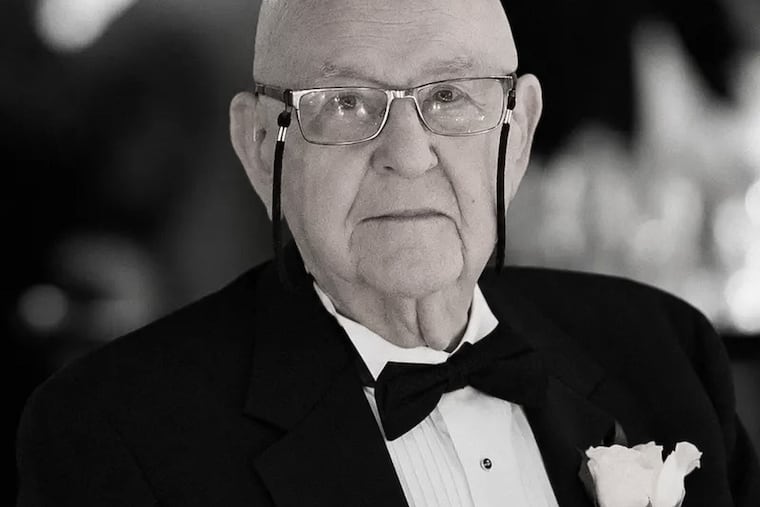
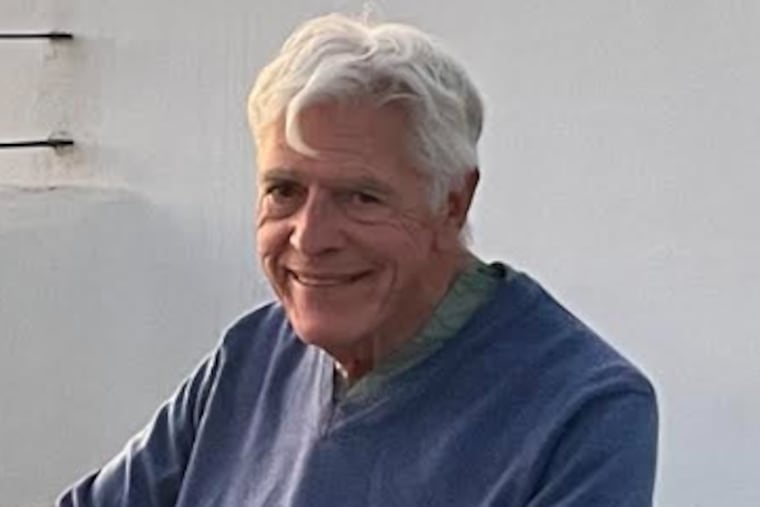
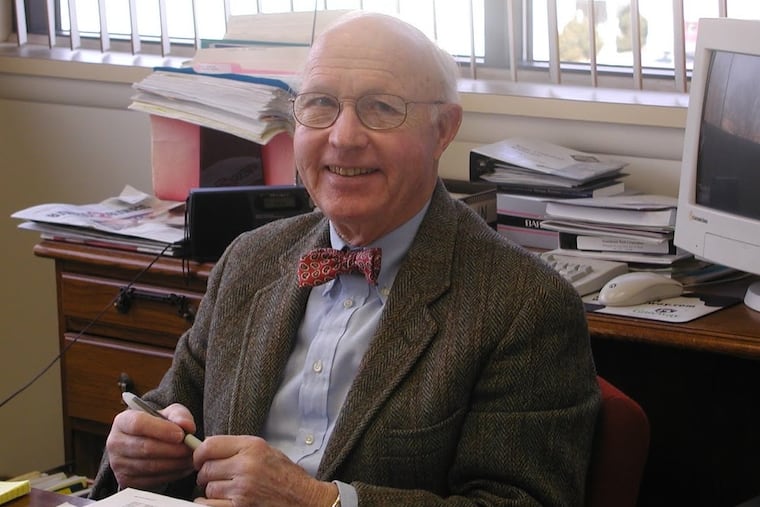
Ed Blaine, former Eagles All-Pro guard, professor emeritus of physiology, and pioneering cardiovascular researcher, has died at 86
“He was a high achiever and incredibly enthusiastic about everything,” his son, Mark, said. “He wanted to do stuff. He loved adventure, and he loved adversity.”
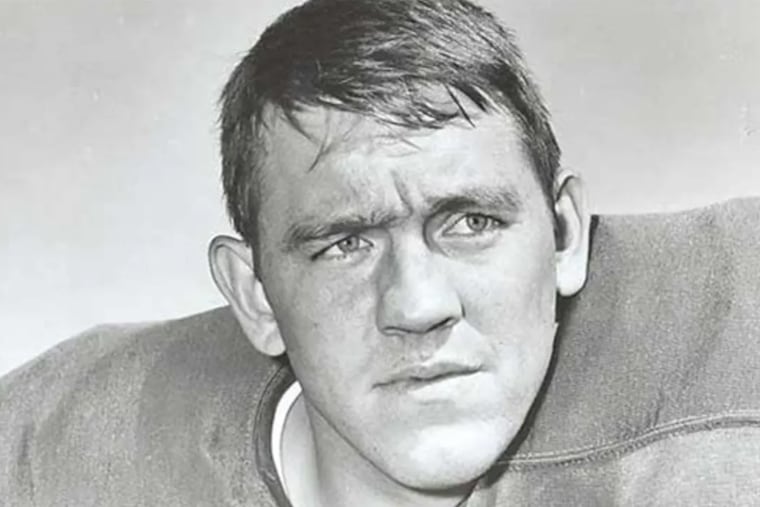
All Ed Blaine wanted from the Eagles after the 1966 NFL season was a reasonable raise and three years of job security. After all, he told The Inquirer in June 1967, he made the All-Pro team after the 1964 season and, after much research, determined he was one of football’s most underpaid guards.
“I felt I was playing for a great deal less than some guys in my position around the league and some guys on the bench,” he said. But Joe Kuharich, the team’s coach and general manager, disagreed.
So when the Eagles offered the former college all-American at the University of Missouri a contract worth much less than he wanted and no job security, he retired after just five NFL seasons to resume his education and pursue his other love: cardiovascular research.
“He was a high achiever and incredibly enthusiastic about everything,” said Dr. Blaine’s son, Mark. “He wanted to do stuff. He loved adventure, and he loved adversity.”
After leaving the Eagles, Dr. Blaine got both. He earned a doctorate in physiology at the University of Missouri in 1970, became a professor of medical pharmacology and physiology, and studied mice in state-of-the-art labs at major universities and kangaroos in the wilds of Australia.
Over 45 years, from 1970 to his retirement in 2015, he did pioneering research on how kidney function affects cardiovascular disease and how hormonal systems regulate blood pressure. He focused on drug development and holds six patents for groundbreaking discoveries.
In the 1970s, ’80s, and early ’90s, he was a senior director of research for the Merck Institute for Therapeutic Research in West Point, Montgomery County, and G.D. Searle & Co. pharmaceuticals in Missouri. A former colleague said his scientific contributions were “profound and enduring” and called him “an inspiring leader, a candid colleague, a reliable friend, and a deeply charitable person.”
He earned a football scholarship to Missouri, was named all-American after his senior season, and was drafted into the NFL by legendary Green Bay Packers coach Vince Lombardi. Mizzou football colleagues called him “one of the greatest offensive linemen in Missouri history.”
On Sunday, March 22, Dr. Blaine died of complications from an infection at the Dolan House memory care center in St. Louis. He was 86. A former colleague said: “He loves life, science, and football.”
In 1962, Dr. Blaine, at 6-foot-1 and 240 pounds, was undersized for an NFL lineman. He was surefooted and mobile but concerned about those 6-5, 280-pound defensive tackles. So he heeded the advice of his college mentor, scientist Clint Conaway, and returned to Missouri during all five off-seasons to work toward his graduate degrees.
But his talent, toughness, and persistence were enough, and Dr. Blaine played on the Packers 1962 NFL championship team and blossomed into a star with the Eagles from 1963 through 1966. Inquirer sportswriter Bill Shefsky called him an “impassable” blocker and said that when the Eagles ran a sweep play, he “cleared off more corners than a juvenile aid detective.”
Still, the lack of a bigger pay raise and the lure of science enticed Dr. Blaine to quit football and head for the lab. He earned a master’s degree in zoology at Missouri in 1967 and worked at first as an assistant professor at the University of Pittsburgh in the 1970s.
After his work at Merck and Searle in the ’70s and ’80s, he was director of the Dalton Cardiovascular Research Center at Missouri from 1992 until his retirement. He also earned grants and fellowships, served on boards, wrote papers, and lectured at symposia, workshops, and conferences around the world.
He was active with many professional societies and won research awards from the Public Health Service, the American Medical Association, and other groups. He taught at Temple University when he worked for Merck and at Washington University in St. Louis when he worked for Searle.
From 1971 to 1973, he did research on the effects of salt on kangaroos at the University of Melbourne in Australia. Former students and colleagues called him “a force for change,” a “demanding leader,” and “a joy to work alongside” in online tributes.
In a 2015 interview on the Eagles website, Dr. Blaine said: “When you discover a drug or you’re involved with that kind of discovery, you actually see the benefit of people taking it and people doing much better, getting well, healing.”
He flirted briefly with rejoining the Eagles for a few years in the late 1960s and was inducted into the Missouri and the University of Missouri athletic Halls of Fame. He volunteered as an assistant football coach at Washington in the 1980s and was popular at fundraising campaigns at Missouri.
A former coaching colleague called him “a great mentor as well as a storyteller.”
» READ MORE: Survivors give advice about mourning their loved ones, as told to The Inquirer’s obit writer
Edward Homer Blaine was born Jan. 30, 1940, in Farmington, Mo. He was a standout student and Distinguished Eagle Scout, and he lettered in football, basketball, and track in high school.
He played guard and linebacker for Missouri’s 1961 national championship team, earned a bachelor’s degree in zoology in 1962, and met fellow student Susan Cring. They married in 1963 and had a daughter, Jennifer, and a son, Mark.
After a divorce, Dr. Blaine lived with longtime partner Marilyn Starwalt. She died in 2025.
Dr. Blaine lived in King of Prussia, Willow Grove, and elsewhere in the area during the Eagles season, and mostly in Missouri during the offseason and after he stopped playing. He studied carpentry and refurbished an old farmhouse when he worked for Merck and lived in Chalfont, Bucks County.
He grew up roaming around Farmington, about 70 miles south of St. Louis, and never lost his zeal for hiking, biking, skiing, paddling, rock climbing, and just knocking around in the woods and fields. He liked to sing and play the guitar.
He ran nearly every day for 30 years and donated his brain to the continuing study of the brain disease chronic traumatic encephalopathy at Boston University. “He loved the day-to-day science on the bench,” his son said. “But he was good at leadership, too.”
A friend said online: “Ed Blaine — a lovely, remarkable, wonderful man. I feel blessed to have known him.”
In addition to his children, Dr. Blaine is survived by three grandchildren, his former wife, a brother, and other relatives. A brother and a sister died earlier.
A celebration of his life is to be held later.
Donations in his name may be made to the Mizzou Athletics Fund, University of Missouri, 407 Reynolds Alumni Center, Columbia, Mo. 65211.