Frank G. Matero, celebrated historic preservationist and longtime professor of architecture at Penn, has died at 72
He advocated preservation through what he called “original sustainability,” using modern synthetic materials to augment cherished traditional building components.
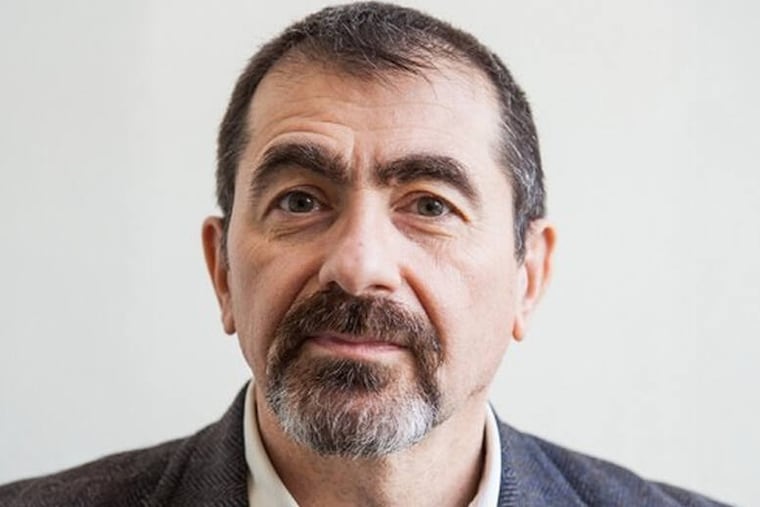
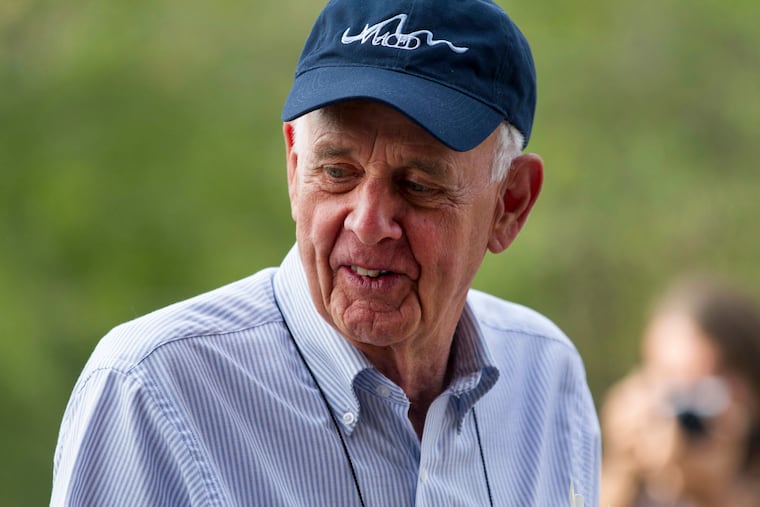
Frank G. Matero, 72, of Philadelphia, renowned historic preservationist, celebrated professor of architecture and former chair of the Department of Historic Preservation at the University of Pennsylvania, researcher, writer, and mentor, died Friday, Dec. 19, of cancer at ChristianaCare medical center in Wilmington.
Professor Matero was an innovative expert in the interpretation and conservation of built heritage, and he advocated preservation through what he called “original sustainability,” using modern synthetic materials to augment cherished traditional building components.
He told WHYY in a 2017 interview that his primary goal in preserving historic sites was to “build bridges between the past and the present through contemporary interpretation.”
Over five decades, from the 1970s until recently, he directed Penn’s Architectural Conservation Laboratory, which he had founded, and worked on preserving the Lincoln and Jefferson Memorials in Washington, Native American ancestral grounds in Colorado’s Mesa Verde National Park, and other projects across the country and in Puerto Rico, Turkey, Italy, Poland, Egypt, and elsewhere.
He told Taylor & Francis in 2025 that John L. Cotter’s 1974 book, Above Ground Archaeology, inspired him, and he told WHYY that he especially relished jobs at Mesa Verde and New Mexico’s Chaco Culture National Historical Park. He also embraced digital preservation, in which images, not actual paint and plaster, are projected onto a surface.
He told WHYY that Philadelphia’s mix of colonial buildings and modern fill-in was “an embarrassment of riches,” and that Philadelphians need “to view preservation not as a hindrance but as a tool of development, without compromising its basic principles.”
He unsuccessfully lobbied for the preservation of the old Boyd Theater on Chestnut Street in 2002 and told The Inquirer: “It is time for citizens to demand better representation in determining the fate of our historic buildings and the quality of our urban environment.”
In an online tribute, colleagues at Rome’s International Centre for the Study of the Preservation and Restoration of Cultural Property said: “His work consistently reminded the profession that conservation is not simply a technical exercise but a disciplined practice rooted in responsibility towards both heritage and society.”
Professor Matero left Columbia University in New York to join Penn in 1990 and became a professor of architecture, research associate for the Museum of Archaeology and Anthropology, and chair of historic preservation. He raised funds, founded Penn’s Department of Historic Preservation, and taught classes such as Theories of Historic Preservation and Architectural Surface Finishes.
Paul Steinke, executive director of the Preservation Alliance for Greater Philadelphia, told WHYY that Professor Matero was “a beloved instructor who has had tremendous influence on an entire generation of preservationists.”
Before Penn, Professor Matero was the first architectural conservator for the National Park Service and lecturer, assistant professor of architecture, and director of the Center for Preservation Research at Columbia’s graduate school of architecture, planning, and preservation. He was also a visiting professor in Rome, Puerto Rico, and elsewhere.
He wrote books, technical reports, articles, essays, and book chapters on archaeological ethics, site vulnerabilities, and other conservation topics. He spoke at conferences and forums around the world.
In online tributes, colleagues said he “elevated our profession immeasurably” and called him “a brilliant professional, talented teacher, and warm human being.” Friends at the United Nations Educational, Scientific and Cultural Organization said: “His legacy endures in the institutions he strengthened, the professionals he trained, and the countless historic places whose care was informed by his insight and dedication.”
Professor Matero sat on boards and committees, was a member of many institutes, associations, and councils, and founded the journal Change Over Time at Penn. He received fellowships and awards for design and distinguished teaching from Penn, Columbia, the American Institute of Architects, and other groups.
He earned a bachelor’s degree in anthropology and art history at Stony Brook University in 1975 and a master’s degree in architecture and historic preservation at Columbia in 1978. He also studied art conservation for three years at the Institute of Fine Arts at New York University.
“He was,” said Fritz Steiner, dean of Penn’s Weitzman School of Design, “without peer.”
Frank Gerard Matero was born June 27, 1953, to Italian immigrants in Brooklyn. He grew up in Long Island and was interested in oceanography, the cello, and art as a boy.
He worked in a pet store when he was young and was always interested in the history and culture of the American West. He met Brian Moser in 2016, and they married in 2020 and lived in Philadelphia, Delaware, and Colorado.
Professor Matero was a fashionista and a foodie, and his artichoke lasagna never failed to impress. He collected taxidermy animals, gemstones, and rare shells. He liked antiques, auctions, Western movies, and Hank Williams music.
“Frank was a mentor to so many and a generous host and cook,” said his sister Elena. His niece Amanda said: “He had a twinkle in his eye and an excitement for many of life’s adventures and treasures.”
His niece Nicole said: “He was a remarkable man, not just as a leader in his field, but as a member of our family.” His husband said: “He loved his work. He was mischievous. He was one of the most generous people I ever knew.”
In addition to his husband, sister, and nieces, Professor Matero is survived by other relatives.
» READ MORE: Survivors give advice about mourning their loved ones, as told to The Inquirer’s obit writer
A celebration of his life is to be held at 1 p.m. Saturday, March 21, at the Wagner Free Institute of Science, 1700 W. Montgomery Ave., Philadelphia, Pa. 19121. RSVP is required.
Donations in his name may be made to Mancos Common Press, 135 W. Grand Ave., Box 223, Mancos, Colo. 81328; SAGE, 305 Seventh Ave., Sixth Floor, New York, N.Y. 10001; and the Fisher Fine Arts Library of the University of Pennsylvania, 220 S. 34th St., Philadelphia, Pa. 19104.