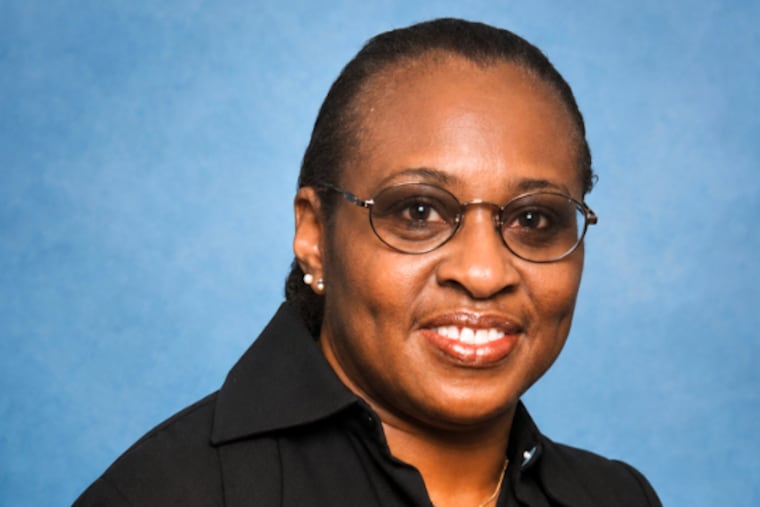
Frederica Massiah-Jackson, trailblazing former Philadelphia judge, has died at 74
She was the first Black woman to preside over civil trials in the city, and then the first Black president judge. Her nomination to the federal bench was derailed by opposition from local prosecutors.
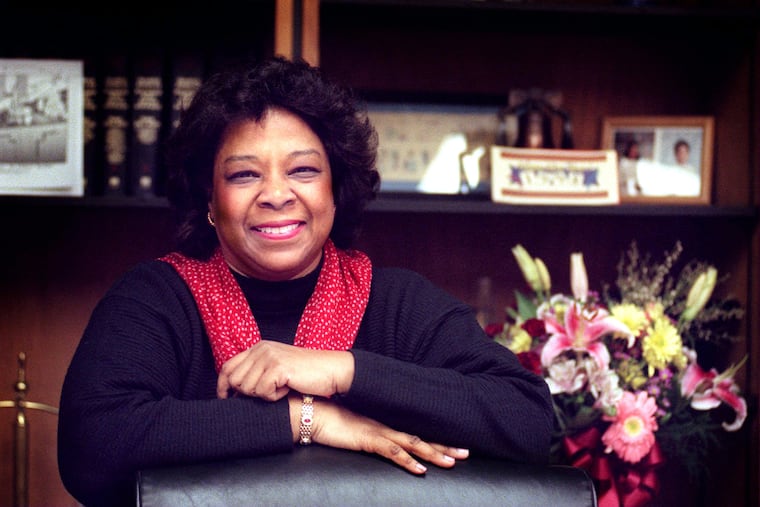
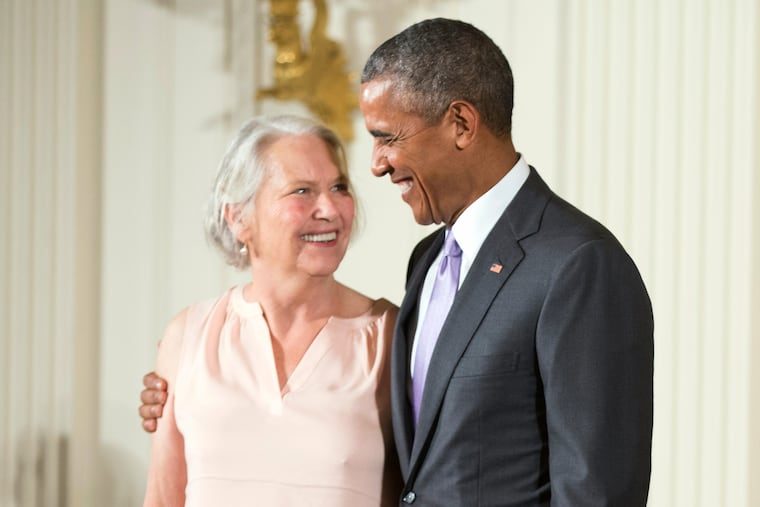
Frederica Massiah-Jackson, 74, a pioneering former Philadelphia judge who was the first Black woman to preside over civil trials in the city, and who was later elected president judge of the city’s Court of Common Pleas — making her the first Black judge to serve in that role anywhere in Pennsylvania — died on Wednesday, Aug. 27, at her daughter’s home in Virginia. The cause of her death has not been disclosed.
Judge Massiah-Jackson spent nearly four decades on the city’s bench, including six years as president judge after winning a contested leadership election in 2000.
In the 1990s, she nearly became a federal judge after then-President Bill Clinton nominated her to fill a vacancy in the Eastern District of Pennsylvania. But her candidacy was derailed by fierce opposition from conservatives and local prosecutors — including the city’s district attorney at the time, Lynne M. Abraham, who criticized Judge Massiah-Jackson as soft on crime and provided information to the Senate Judiciary Committee opposing her candidacy.
The bitter confirmation battle drew national attention due to the controversy, which was heightened by questions of ideology and accusations of racism, and Judge Massiah-Jackson ultimately withdrew from consideration.
Afterward, the Philadelphia Daily News published notes she kept throughout the process, during which she expressed a mix of disbelief that she had become so controversial, and anguish that her record was being picked apart in ways she viewed as unfair.
“I never thought that little old me could cause so much controversy,” she wrote at one point, later adding: “I don’t want my critics saying they won. I don’t think they have won. But I don’t want to feel like I lost.”
Thomas Jackson, Judge Massiah-Jackson’s son, said he recalled his mother being upset over that episode, but said she didn’t let the rough-and-tumble world of politics stop her from continuing to be thoughtful, deliberate, and intentional in her personal or professional lives.
“She didn’t stop,” Jackson said. “That might’ve been a bump in the road, but she found other ways to keep moving forward.”
U.S. District Judge Mia Roberts Perez — who was mentored by Judge Massiah-Jackson while both served on the Common Pleas Court bench about a decade ago — said Judge Massiah-Jackson was patient, kind, and always willing to provide career advice or help answer questions about the law.
Perez said Judge Massiah-Jackson even helped convince her to become a lawyer in the first place. Early in her career, Perez said, she had doubts about her place in the profession while interning at a big law firm. But after visiting Judge Massiah-Jackson’s City Hall courtroom, Perez said, the judge encouraged her to stay the course.
“She spent time talking to me about how the profession needed women like us, and the amount of good we could do,” Perez said. “She said it was completely worth it.”
Common Pleas Court Judge Sheila Woods-Skipper said Judge Massiah-Jackson swore her into the Pennsylvania Bar out of law school, and continued to serve as a mentor throughout her career, including when Woods-Skipper was president judge from 2013 to 2018.
“When she took the bench, she really didn’t have a lot of role models for herself,” Woods-Skipper said. “And so [later in her career], I think she felt she really had to be there to help.”
Frederica Anne Massiah-Jackson was born in Philadelphia on Nov. 10, 1950, and grew up in North Philadelphia near 16th and Jefferson Streets, her son said.
She graduated from the storied Philadelphia High School for Girls, and then from Chestnut Hill College in 1971. She earned a law degree from the University of Pennsylvania’s Carey Law School in 1974.
After graduating, she clerked for Pennsylvania Supreme Court Justice Robert N.C. Nix Jr., then joined the firm Blank Rome Comisky & McCauley.
In 1983, she was elected to Philadelphia’s Court of Common Pleas, and she remained on the bench for the next 37 years.
During her tenure, she primarily handled medical malpractice cases, the Philadelphia Bar Association said. Her son said her early-career experience as a corporate litigator helped her broker complex settlements in civil cases.
She oversaw a number of matters that drew headlines — including in 1999, when she found SEPTA in contempt of court and fined the transit agency $1 million for failing to disclose evidence in a lawsuit filed on behalf of a boy whose foot was torn off by a SEPTA escalator.
Still, nothing she presided over in court attracted the spotlight quite like her federal confirmation battle.
For six months after Clinton announced her nomination in late 1998, Judge Massiah-Jackson’s candidacy — which would have made her the first Black woman on Philadelphia’s federal bench — became the subject of intense public debate. Abraham, Philadelphia’s top prosecutor, was a leading critic, as was Northampton County District Attorney John Morganelli.
Abraham accused Judge Massiah-Jackson of being lenient to defendants and hostile to law enforcement officials and crime victims. Her office released an analysis of 50 cases Judge Massiah-Jackson handled, saying they demonstrated she was unfit for the role. Abraham at one point even traveled to Washington, sitting in the front row of a Judiciary Committee hearing while Judge Massiah-Jackson testified.
The campaign made waves in the closely divided chamber, throwing into question the ability of Judge Massiah-Jackson to receive enough votes to be confirmed. Supporters defended her, including the Philadelphia Bar Association and local City Council members, U.S. Sen. Arlen Specter, and a host of Black civil rights, religious and political leaders, some of whom accused Abraham of racism.
Judge Massiah-Jackson said throughout the ordeal her record had been “wildly distorted.” At one point she told senators: “I have read misinformation and mischaracterizations of my judicial career that are so extreme that I hardly recognize myself in them.”
In the end, however, it became clear she would not receive enough votes to be confirmed, and she withdrew, deciding to remain in her post as a city judge.
“I withdraw not in defeat,” she said at a news conference announcing the decision. “I will continue to do the job I was elected to do.”
Two years later, Judge Massiah-Jackson was elected president judge of Philadelphia’s Common Pleas Court. The Philadelphia Bar Association said she was the first Black woman to be a president judge of any Pennsylvania county.
Judge Massiah-Jackson served in that role until 2006, and she remained on the bench until retiring in 2021. She received numerous awards and honors during her career, and also lectured on legal studies and business law at Penn’s Wharton School.
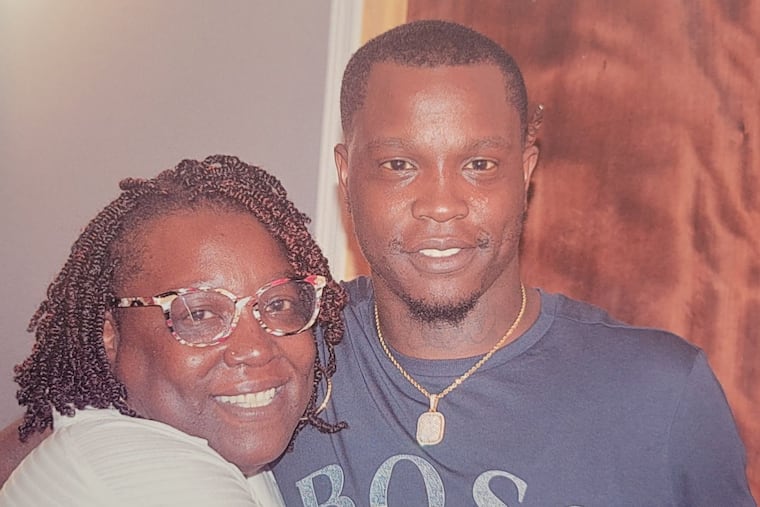
Outside of work, her son said, Judge Massiah-Jackson was an avid writer and reader who was particularly fond of murder mystery novels. And she was known within her family as a caring and loving matriarch, someone who liked to remind relatives about the virtues of planning and being thoughtful toward others, her son said.
In addition to her son, Judge Massiah-Jackson is survived by a daughter, Julia Jackson Duffus, three grandchildren, two brothers, and other relatives.
Visitation is to be from 10 to 11 a.m. Wednesday, Sept. 10, at St. Malachy’s Church, 1429 N. 11th St., Philadelphia, Pa. 19122. A service is to follow. Interment will be at Westminster Cemetery.