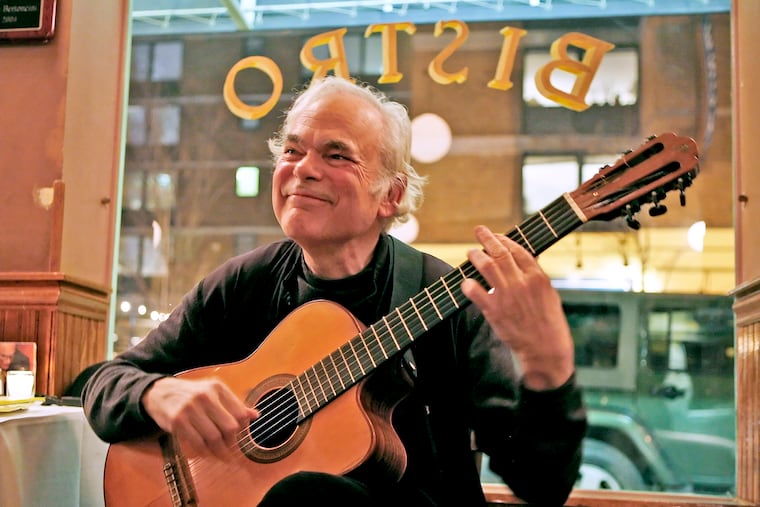
Hal Sirowitz, acclaimed performance poet, longtime teacher, and passionate Parkinson’s disease advocate, has died at 76
He found that poignant poems, dark yet amusing, about his larger-than-life overprotective mother resonated with people.
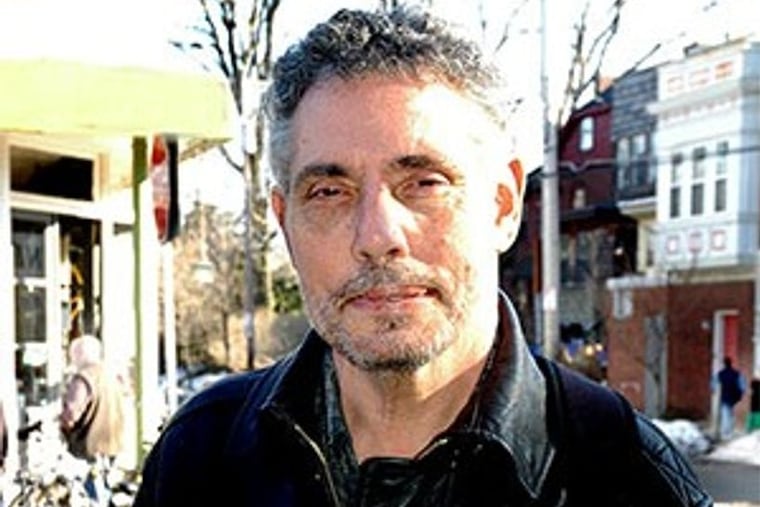
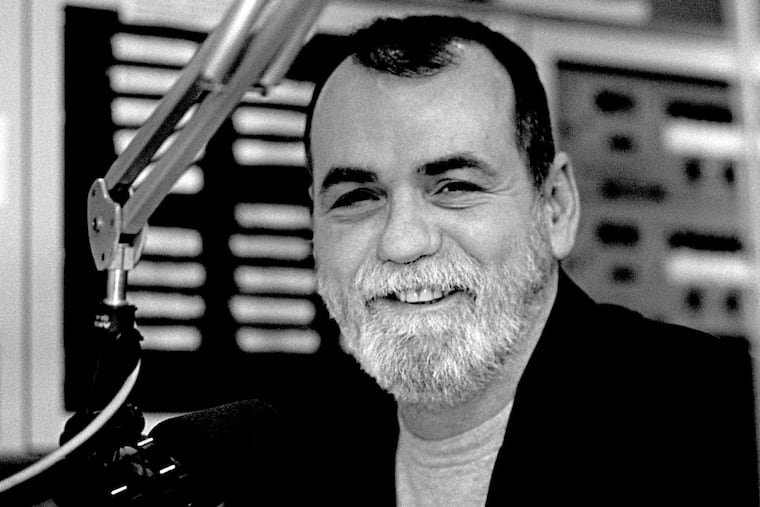
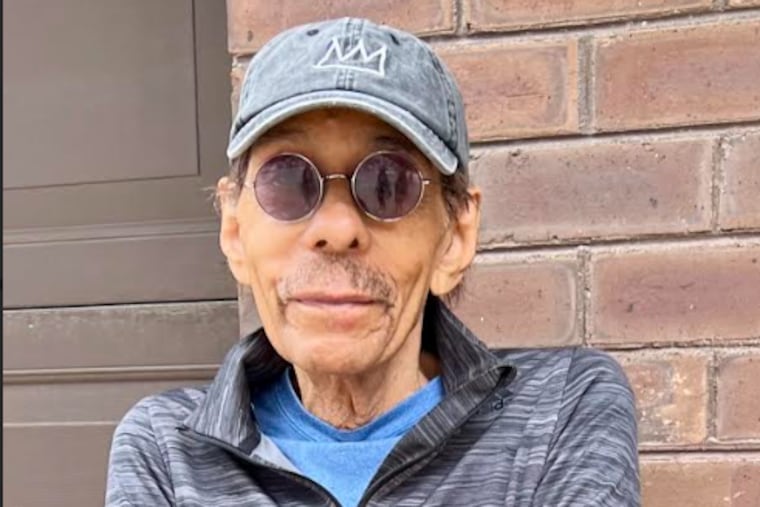
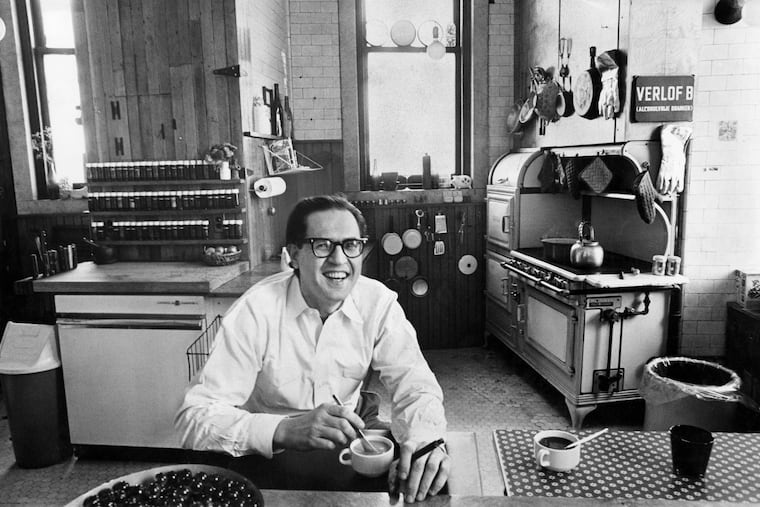
Hal Sirowitz, 76, of Philadelphia, internationally acclaimed performance poet, former poet laureate of Queens, N.Y., author, mentor, retired special education elementary school teacher, and passionate Parkinson’s disease advocate, died Friday, Oct. 17, of complications from Parkinson’s at KeystoneCare Hospice in Wyndmoor.
Born in Manhattan to an expressive and overprotective mother, Mr. Sirowitz moved to Queens after college and, motivated by his early work with an inspirational young student, spent 23 years, until his retirement in 2003, as a special education elementary school teacher in New York.
“He saw the impact he had on that student and realized the impact he could have,” said his wife, Minter Krotzer.
He was a good listener and a lifelong reader and writer, and, in 1979, at 30, he started reciting his own writing in poetry events at New York cafes and theaters. He found that poignant poems, dark yet amusing, about his larger-than-life mother, Estelle, resonated with people.
“Everyone either has a mother or is a mother, and they identify right away,” he told Newsday in 1998. By 1993, he was a favorite on the local poetry circuit and traveling to regional and national competitions.
On Mother’s Day in 1996, his first book, Mother Said, was published to great acclaim. He went on to write four more books and to serve as poet laureate of Queens from 2001 to 2004.
Until recently, when Parkinson’s made it impossible, Mr. Sirowitz performed his poems in his signature deadpan delivery, with perfect pauses and pacing, and his engaging New York accent. He spoke at colleges and conferences, bookstores and libraries, museums and workshops.
He guested on national radio and TV shows, and read during visits to Israel, Finland, Iceland, and elsewhere around the world. Many of his poems, such as “Chopped Off Arm” and “Crumbs,” are about the angst and guilt he felt as a boy under the thumb of his always-worried mother. Later, he wrote about Parkinson’s, too.
In “Crumbs,” he said: “Don’t eat any more food in your room,/Mother said. You’ll get more bugs./They depend on people like you./ Otherwise, they would starve./But who do you want to make happy,/your mother or a bunch of ants?/What have they done for you?/Nothing. They have no feelings./They’ll eat your candy. Yet/you treat them better than you treat me./You keep feeding them./But you never offer me anything.”
He and his poems were featured in The Inquirer, the New York Times, Newsday, and other publications. Mother Said was celebrated in the United States and became a bestseller in Norway. He followed it up with My Therapist Said in 1998, Before, During, and After in 2003, Father Said in 2004, and Stray Cat Blues in 2012.
“There must be a need for people to read funny sad poems about parents,” he told the Schuylkill Valley Journal. He told the New York Times in 1996: “I feel almost like I’m a conduit for my mother. I’m giving her her voice.”
His poems inspired music composers and filmmakers, and were read in public by other literary notables. They appeared in anthologies, magazines, and journals, and were translated into 13 languages.
He earned fellowships from the National Endowment for the Arts and the New York Foundation for the Arts, and he won the 2013 Nebraska Book Award for poetry. Colleagues called him “legendary,” an “icon,” and the “Maestro from Flushing.”
One colleague said in a tribute: “Hal was a true inspiration. I relished his humor and perseverance.” Another said: “I often felt his poems were one-minute telescopes of therapy sessions.”
He told the Schuylkill Valley Journal: “To me, one purpose of being a writer is to show others that it’s good to express yourself. You create your own personal history by the poems and stories you write.”
» READ MORE: Schuylkill Valley Journal interviews Mr. Sirowitz
Mr. Sirowitz was diagnosed with Parkinson’s in 1997 and, with his wife, became a vocal advocate and activist for others dealing with the disease. He spoke at medical centers and to support groups about having Parkinson’s. His wife talked of being his caregiver.
In 2015, she wrote in The Inquirer: “Through poetry he had been able to forge a way through the illness and make art from the experience. … Keeping on with the writing of poetry is a way of saying ‘so there’ to the Parkinson’s. ‘I’m still at it.’”
Mr. Sirowitz told the Schuylkill Valley Journal: “My life has been a struggle against limitations, like the Parkinson’s. But it also provided me definitions. I know who I am.”
Harold Sirowitz was born March 6, 1949. He grew up between two sisters, Lauren and Iris, on Long Island, N.Y., and confronted a stutter and other speech issues when he was young.
He was a soccer star in high school and earned a bachelor’s degree in English literature at New York University in 1972 and a master’s degree in education at Hofstra University.
He met fellow writer Minter Krotzer at a book party in 2000, and they married in 2002. They lived in Brooklyn before moving to West Mount Airy in 2007, and she was his longtime editor, collaborator, and caregiver.
“He had this childlike wonder about things,” his wife said. “He had a real sweetness and a connection with people.”
Mr. Sirowitz was a runner and a hiker, and he quit his beloved New York sports teams to follow the 76ers, Eagles, Phillies, and Flyers. He especially enjoyed reading and spent one summer digesting the entire works of William Shakespeare.
» READ MORE: Survivors give advice about mourning their loved ones, as told to The Inquirer’s obit writer
“He was a fighter, and people called him the ‘ultimate mensch,’” his wife said. “He said he had no regrets and did what he set out to do in life. It was amazing to witness someone so heroic.”
In addition to his wife and sister Lauren, Mr. Sirowitz is survived by other relatives. His sister Iris died earlier.
A private service was held in October. A public celebration of his life is to be held later.
Donations in his name may be made to the Parkinson Council, 520 Carpenter Lane-COMM, Philadelphia, Pa. 19119; and KeystoneCare Hospice, 8765 Stenton Ave., Wyndmoor, Pa. 19038.