Joseph J. Jordan, celebrated architect and retired Drexel professor, has died at 102
He designed the Philadelphia Senior Center on Broad Street, the Nicetown Urban Renewal Project, Temple Shalom in Broomall, and other structures and landscapes.
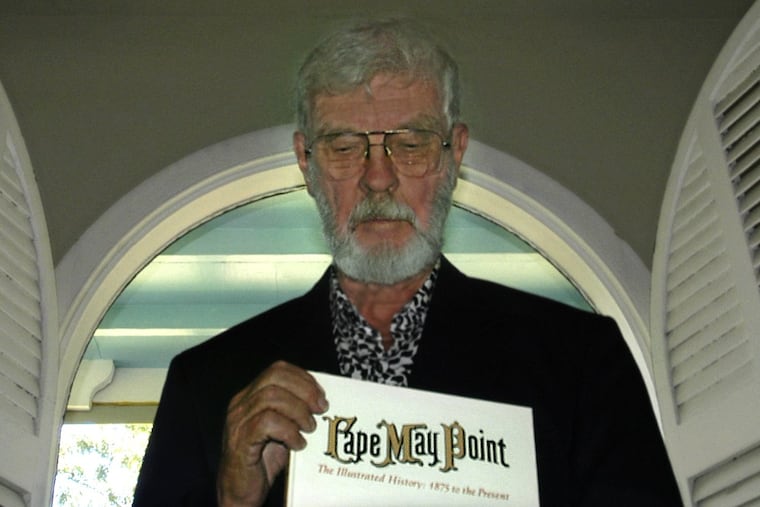
Joseph J. Jordan, 102, of Philadelphia, celebrated architect, retired professor, former head of Architecture Studies at Drexel University, author, veteran, and volunteer, died Saturday, Feb. 28, of age-associated decline at Rittenhouse Post Acute Center.
Known largely for his pioneering work on senior centers and assisted-living spaces for the elderly, Professor Jordan designed the Philadelphia Senior Center on Broad Street, the Reno Street Public Housing, the Nicetown Urban Renewal Project, Temple Shalom in Broomall, and other structures and landscapes.
He said in a 2020 autobiographical profile that he had been inspired as a boy by carpenters building vacation cottages in Cape May Point.
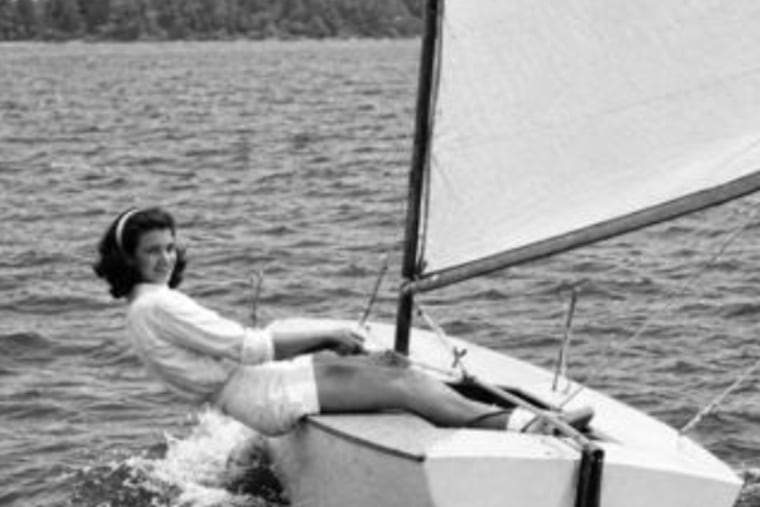
So he designed and constructed his own 8-foot-long kayak when he was 13. “With clothes prop mast and a bed sheet mainsail, he would cruise leisurely around local Lake Lily in Cape May Point,” he said in his profile.
He went on to establish his own architecture firms in Philadelphia and become a consultant to the Virginia-based National Council on Aging and a member of the Philadelphia Mayor’s Committee on Housing, the Pennsylvania Governor‘s Task Force on Multi-Service Senior Centers, the Citizens Council on City Planning, and the New Jersey Assisted Living Task Force.
“He was very visual, very creative,” said his wife, Sarah.
He worked with longtime colleague Gene Dichter for architect Vincent Kling in the 1950s and founded his own firm in 1958 on Spruce Street. He joined two other architects to form the Delta Group for three years in the 1970s and collaborated with fellow professor James Mitchell for six years in the 1980s as Jordan Mitchell Inc.
He retired for good in 1996 and said in his profile: “After 40 years of practice, I had had enough.”
He joined Drexel in 1953 as an architecture instructor, became a professor and head of the program in 1958, and retired in 1977. He also studied city planning at the Royal College of Fine Arts in Denmark on a Fulbright Grant in the 1950s and used a two-year United Nations grant to serve as lecturer and associate dean of architecture at the Middle East Technical University in Turkey.
He was elected to the American Institute of Architects and served as chair of the technical advisory and education committees at Community College of Philadelphia. In 1949, after three years in the Army during World War II, he placed first in his class and earned a bachelor’s degree in architecture at the University of Illinois.
Professor Jordan wrote books, articles, and papers about elder care housing and other architectural topics. He authored two regional history books, 2003’s Cape May Point, The Illustrated History and 2004’s Cape May Point, Three Walking Tours of Historic Cottages, and his first book was featured in The Inquirer.
“I’m an architect by training, but I didn’t want the book to be an architectural history,” he said. “I wanted to write something that would appeal to both general readers and historians.”
He won awards for his designs in international competitions, including an honorable mention for his design of the fountain plaza at the Seattle Civic Center. The plaza was designed by Kazuyuki Matsushita and Hideki Shimizu.
He was drafted into the Army in 1943, coordinated entertainment activities for U.S.-based troops, and discharged in 1946.
“I have always respected and admired Joe,” a colleague said in an online tribute, “as a person, an architect, and a friend.”
Joseph Jungkurth Jordan was born May 5, 1923, in Philadelphia. He grew up with his older brother on Keyser Street in Germantown, spent countless summer days in Cape May Point when he was young, and graduated from Germantown High School in 1941.
“He was a beach bum and body surfer from childhood through his 60s,” he said in his 2020 profile.
He married Bayly Hendricksen in 1951, and they divorced in 1965. In 1973, he met Sarah Connolly at a party, and they married in 1974. “I was now ready to give up my bachelorhood for this fantastic woman,” he said in his profile.
Professor Jordan and his wife lived in Center City and Cape May Point, and traveled to China, France, and elsewhere around the world. He liked to write humorous travelogues about their many adventures and share them with colleagues and friends.
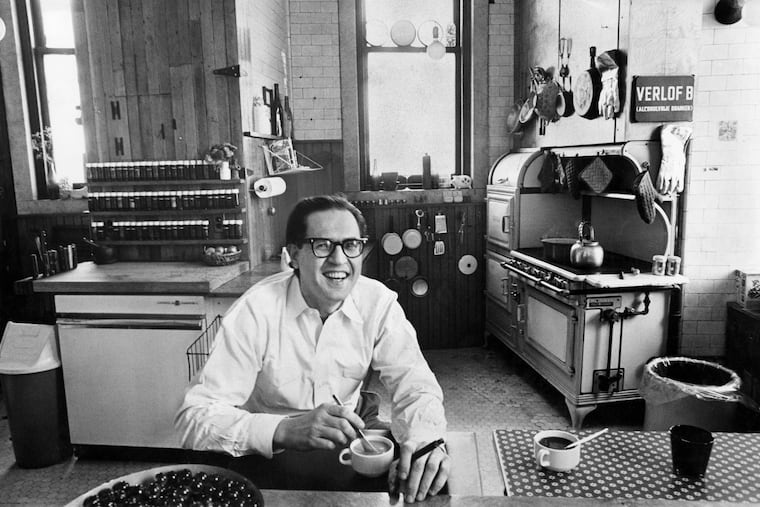
He was a passionate foodie who liked to cook and a cinephile who especially enjoyed Italian movies from the 1940s. “He looked at cooking as a creative art and was usually the cook at home,” he said in his profile.
» READ MORE: Survivors give advice about mourning their loved ones, as told to The Inquirer’s obit writer
He played tennis regularly for decades at the Cape May Tennis Club and later took up golf. He was an avid reader and played bridge in college and poker more recently.
He served as president of the Cape May Tennis Club, vice president of the Philadelphia Senior Center and Cape May Historical Society, and board member of the Franklin Inn Club. His wife threw him a big bash on his 100th birthday in 2023.
“He was strong, steady, and sometimes stubborn,” his wife said. “I called him my rock.”
In addition to his wife, Professor Jordan is survived by other relatives. His brother and former wife died earlier.
Donations in his name may be made to the American Civil Liberties Union, 125 Broad St., 18th Floor, New York, N.Y. 10004; and WRTI Radio, 1509 Cecil B. Moore Ave., 3rd Floor, Philadelphia, Pa. 19121.