Leonard Swidler, longtime Catholic theologian at Temple and a ‘father of interreligious dialogue,’ has died at 97
He promoted global religious ethics and diplomacy, and urged leaders to engage in what he called “deep dialogue.”
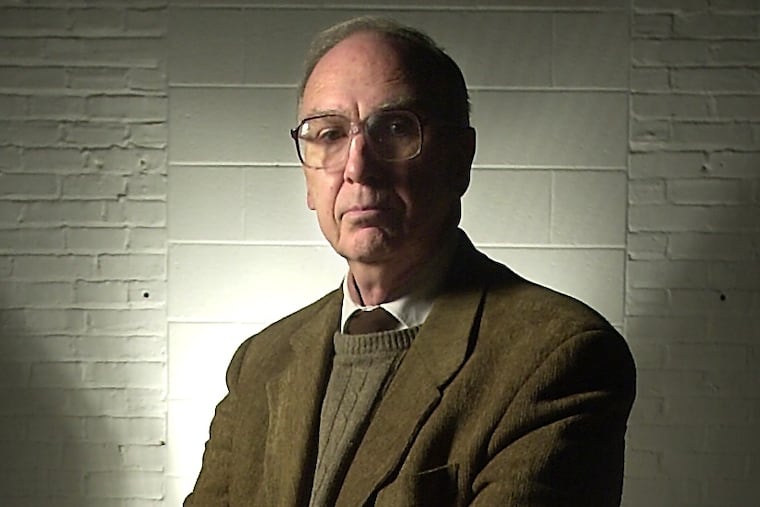
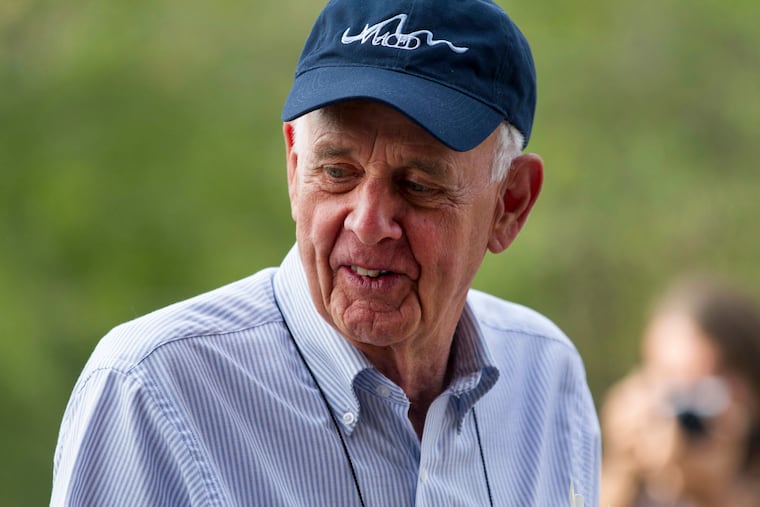
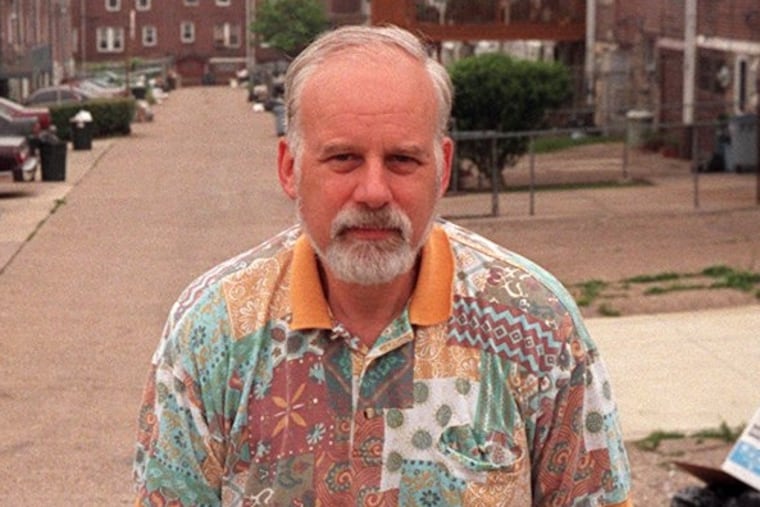
Leonard Swidler, 97, of Philadelphia, world renowned Roman Catholic theologian, professor emeritus of Catholic thought and interreligious dialogue at Temple University, prolific writer, author, lecturer, and mentor, died Monday, March 23, of complications from pneumonia at Lankenau Medical Center.
Called a “father of interreligious dialogue” by colleagues, Dr. Swidler was recruited to Temple’s new Religion Department in 1966 from Duquesne University in Pittsburgh. Over the next 56 years, inspired by his own mentors, Dr. Swidler promoted global religious ethics and diplomacy, engaged with thousands of students and religious intellectuals around the world, and urged leaders to engage in what he called “deep dialogue.”
“No one knows everything,” he told the Kurdistan Chronicle in February. “Therefore, there is an urgent need for dialogue to expand our knowledge and understanding of life and others.”
He almost became a priest after college. But he was so empathetic, gregarious, and adept at critical thinking that he returned to academia and earned a doctorate in modern history and philosophy at the University of Wisconsin in 1961.
Dr. Swidler’s interests were broad, and he championed social responsibility, higher education, environmental protection, and attention to human dignity. He taught and lectured at universities in China, Europe, Japan, and elsewhere, and organized retreats and global conferences at which Christians, Jews, Muslims, and others talked about the benefits of talking.
He rejected the idea of the negative “other” and, regarding religious reforms, told The Associated Press in 1980: “We would like to see a redistribution so that adults in the Catholic Church play the role of adults and not children.”
He especially supported women’s rights and taught a class at Temple about women’s roles in society and religion. He spent the last few years in Iraq, Egypt, and Lebanon, and continued to verbally nudge those he thought needed to improve.
“He was not afraid to challenge institutions,” longtime colleague Huner Anwar said. “At the core of everything he did was his belief that nobody knows everything about anything, therefore dialogue.”
Dr. Swidler lived in Overbrook Park for five decades and left Temple in 2022, when he was 93. But he didn’t retire.
His longtime dialogue with colleagues at the University of Sulaimani in Iraqi Kurdistan led to faculty and student exchange programs between Temple and Sulaimani, and he became the first non-Muslim professor of world religion in Sulaimani’s Department of Religion.
Earlier, he cofounded the Journal of Ecumenical Studies in 1964, the Dialogue Institute at Temple in 1978, the Association for the Rights of Catholics in the Church in 1980, and the Global Dialogue Institute in 1997. Before Temple, he taught at Duquesne from 1961 to 1966.
In an online tribute, colleagues at the Dialogue Institue said Dr. Swidler “mentored hundreds, taught thousands, and inspired countless more to engage the world with curiosity and compassion. He modeled a life committed to dialogue and to advancing understanding across differences.”
Dr. Swidler wrote or cowrote hundreds of books, articles, papers, and blog posts. His Dialogue Decalogue in 1994 detailed his 10 rules for effective dialogue, and the first sentence is: “Dialogue is a conversation on a common subject between two or more persons with differing views, the primary purpose of which is for each participant to learn from the other so that he or she can change and grow.”
He cofounded iPub Global Connection publishing in 2011, and his biography, There Must be You, by author River Adams was published in 2014. He was active with the National Conference of Christians and Jews, the American Catholic Council, the Foundation for Religious Diplomacy, and other groups.
» READ MORE: Survivors give advice about mourning their loved ones, as told to The Inquirer’s obit writer
He earned honorary doctorates and awards from the City of Philadelphia and the Academic Society for the Research of Religions and Ideologies in Romania. He did in-depth interviews with all kinds of publications and told The Inquirer in 2001: “Part of being human really ought to have, at it’s heart, a dialogic mentality. To the extent we don’t do that, we really truncate our humanity.”
Leonard Joseph Swidler was born Jan. 6, 1929, in Sioux City, Iowa. He graduated from high school in Green Bay, Wis., and earned a bachelor’s degree in philosophy at St. Norbert’s College in Wisconsin and a master’s degree in history at Marquette University in Milwaukee.
He spent two years at seminaries after college and taught English, history, philosophy, and theology briefly at the University of Wisconsin and elsewhere. He met Arlene Anderson at graduate school in Wisconsin, and they married in 1957, and had daughters Carmel and Eva. His wife died in 2008.
Dr. Swidler was a swimmer and a runner. He knew the former president of Iraq and opened his home in Philadelphia to more than 20 international students over the years.
“He was always game for anything,” said his daughter Eva. “He would say, ‘Let’s do it.’”
In addition to his daughters, Dr. Swidler is survived by a granddaughter, a sister, and other relatives. A brother died earlier.
Memorial services are to be held at 2 p.m., Thursday, April 16, at Old St. Joseph’s Catholic Church, 321 Willings Alley, Philadelphia, Pa. 19106.