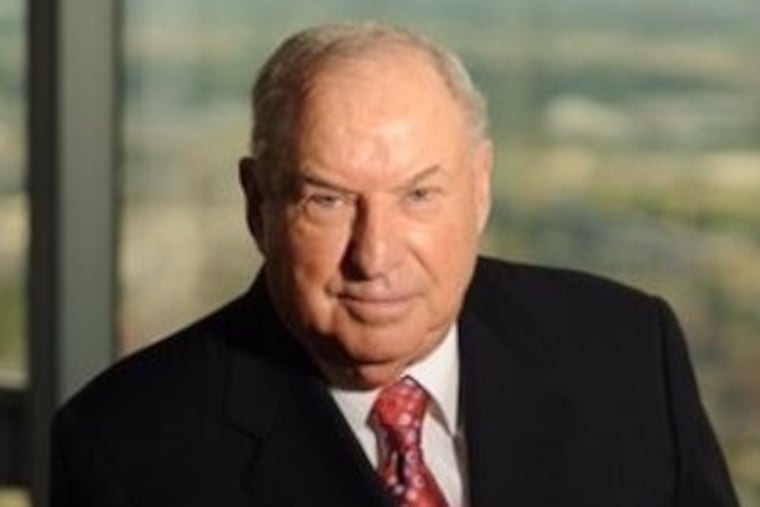
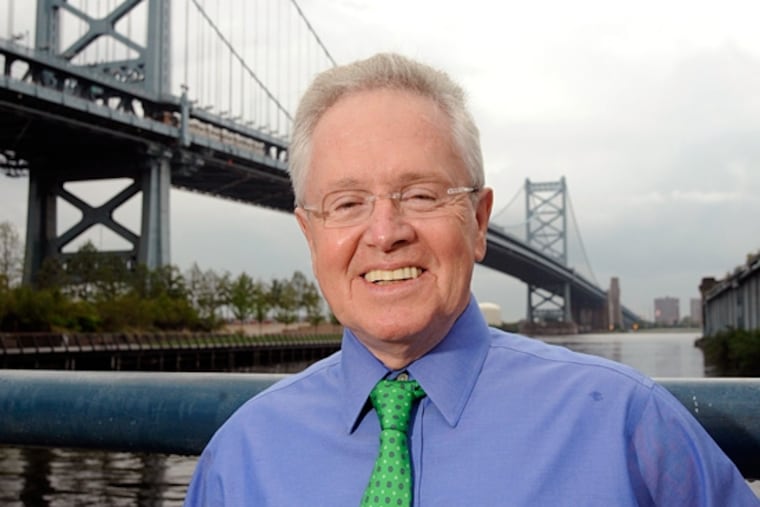
C. Richard Cox, civil rights activist, Methodist minister, and retired vice president for programs at the William Penn Foundation, has died at 91
He spent most of his adult life striving for civil rights, preaching and serving in Methodist churches, and administering a wide array of social, faith, and educational programs.
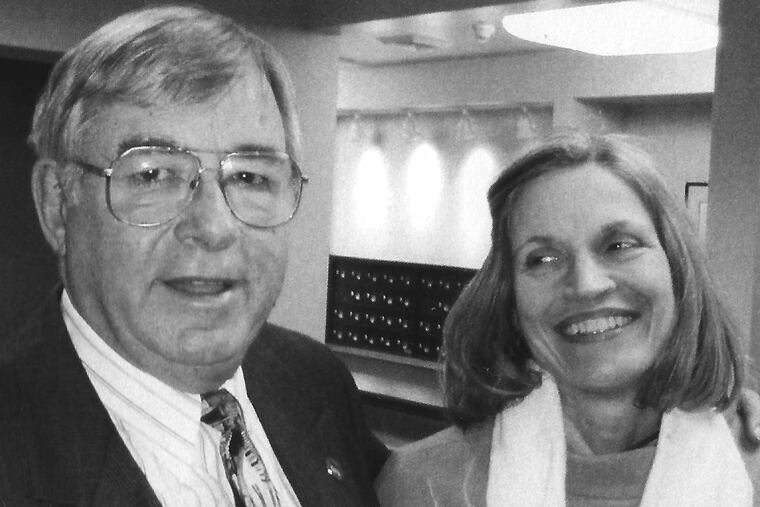
C. Richard Cox, 91, formerly of Wyndmoor, retired vice president for programs at the William Penn Foundation, civil rights activist, Methodist minister, mentor, and volunteer, died Friday, July 25, of complications from Parkinson’s disease at Foulkeways at Gwynedd senior living community.
The Rev. Cox spent most of his adult life, beginning in the late 1950s, striving for civil rights, preaching and serving in Methodist churches, and administering a wide array of social, faith, and educational programs that benefit underserved children, students, families, neighborhoods, and others around the world.
He joined the William Penn Foundation as a program manager in 1980 and rose to senior program officer for human development and, in 1995, vice president for programs. Before retiring in 1998, he oversaw projects that, among other things, provided daycare services to parents and free smoke detectors to businesses and homeowners, connected urban young people with summer jobs, prevented child abuse and crime, and addressed all kinds of community tensions.
“We want to support people who are looking for solutions to problems in neighborhoods,” the Rev. Cox told The Inquirer in 1984. “There are always human relations tensions in a city of this size, or of any size.”
He came to Philadelphia in the late 1960s to join the new Model Cities program and worked later for the Crime Prevention Association, South Philadelphia Community Center, and other organizations. Later, before the William Penn Foundation, he was program director for Community College of Philadelphia’s new job readiness project.
He earned a master of divinity degree at Drew University Theological School in New Jersey in the late 1950s and ministered at Methodist churches in Long Island, Harlem, and Brooklyn, N.Y. Later, he joined the First United Methodist Church of Germantown and was active for years with its public sanctuary movement, after-school program for high school students, and other initiatives.
In the 1950s and ’60s, he worked alongside the Rev. Dr. Martin Luther King Jr., John Lewis, Fred Shuttlesworth, and other civil rights leaders in Alabama, Mississippi, and elsewhere as they registered voters, marched, and protested. He was part of the notable 1963 Children’s March in Birmingham, Ala., and told stories later of being jailed and beaten by police.
Later, he and his wife, Julie, hosted educational tours to the civil rights landmarks. They also worked for two years on the Navajo Nation in Arizona, and he documented human rights violations in Haiti and led a contingent of 1994 election observers in South Africa.
The Rev. Cox earned service and faith awards from the New York NAACP, Philadelphia Commission on Human Relations, Family Planning Council, and other groups. He wrote grants, hosted leadership workshops for community organizers, mentored young people in all kinds of things, and wrote heartfelt letters about politics and current events to the editor of The Inquirer.
He was on boards at the Seybert and Greentree Foundations, and he and his wife established the Children’s Justice Fund at the Philadelphia Foundation.
“He was fiercely strong and incredibly kind and compassionate,” said longtime friend and colleague Celeste Zappala. “He found significant ways to further the long arc of justice and make a difference in individual lives.”
Charles Richard Cox was born March 28, 1934, in Kane, Pa., 87 miles east-southeast of Erie. He earned a bachelor’s degree in sociology at Grove City College in Western Pennsylvania in 1956 and a master’s degree in urban sociology at the University of Pittsburgh.
He also studied in New York at the Union Theological Seminary and Jewish Theological Seminary, and at the University of Pennsylvania and Temple University. He met Julie Gibson at a dance, and they married in 1972 and reared their daughter, Yolanda, in Mount Airy before moving to Wyndmoor in 2004.
The Rev. Cox played football at Grove City and, as a passionate Eagles fan, proudly wore his Fletcher Cox shirt to games and around town. No relation, though. He also followed the Phillies and 76ers.
He had a friendly sense of humor, his wife said. He liked to swim and organize competitive poker games with friends.
He and his wife traveled together to Israel, Canada, Ecuador, Switzerland, and elsewhere. He doted on his daughter and her family. “Dick’s love for his family was powerful and boundless,” his wife said.
Longtime friend Donna Miller said he was naturally inspiring. “When you felt his support,” she said, “you would attempt the most madcap actions, and your heart would grow.”
In addition to his wife and daughter, the Rev. Cox is survived by a grandson and other relatives.
Services are to be at 10:30 a.m. Saturday, Sept. 27, at the First United Methodist Church of Germantown, 6001 Germantown Ave., Philadelphia, 19144. Live online here.
Donations in his name may be made to the Children’s Justice Fund at the Philadelphia Foundation, Box 826728, Philadelphia, Pa. 19182; and the First United Methodist Church of Germantown, 6001 Germantown Ave., Philadelphia, Pa. 19144.