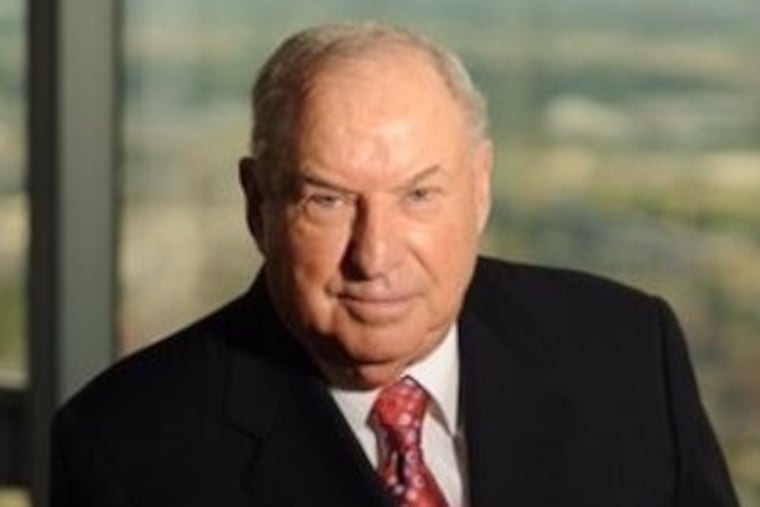
Sydney E. Pulver, prominent Philadelphia psychiatrist and longtime Penn professor, has died at 98
His patients confronted anxiety, grief, addiction, and other health issues, and he promoted psychoanalysis, self-understanding, and self-compassion.
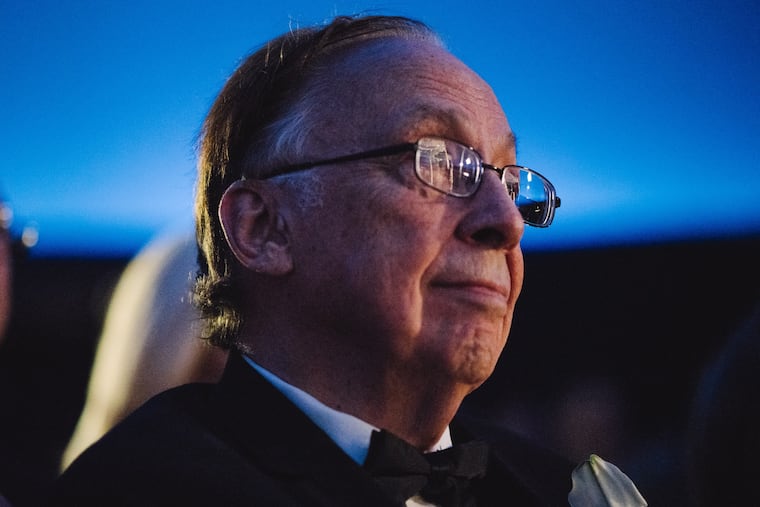
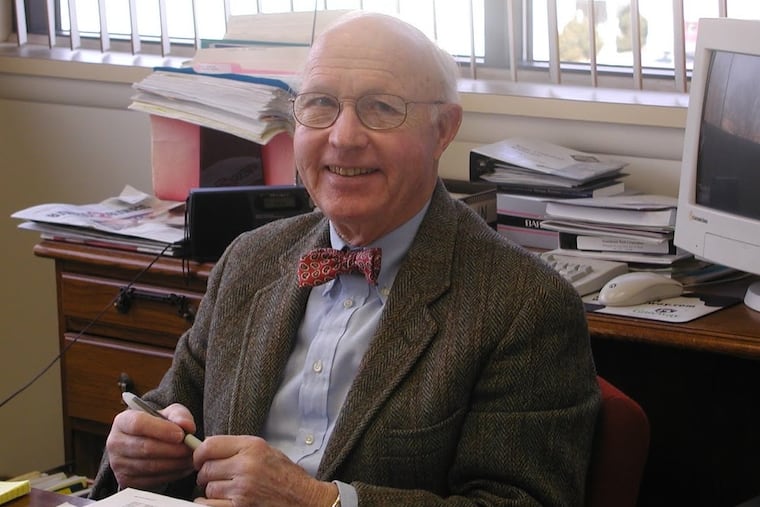
Sydney E. Pulver, 98, of Philadelphia, former medical director and senior attending staff psychiatrist at the old Institute of Pennsylvania Hospital, former chief of psychiatry at now-closed Philadelphia Hospital, longtime clinical professor in the Department of Psychiatry at the University of Pennsylvania, writer, researcher, mentor, volunteer, and Army veteran, died Monday, March 23, of tachydysrhythmia at Thomas Jefferson University Hospital.
An expert on medical hypnosis and somatic therapy, Dr. Pulver served his psychiatric residency at the now-closed Institute of Pennsylvania Hospital from 1954 to 1957. He joined the staff in 1957, became senior attending physician in 1964, and served as medical director from 1981 to 1983.
His patients confronted anxiety, grief, addiction, and other health issues, and he promoted psychoanalysis, self-understanding, and self-compassion. Longtime colleague and former patient Anthony Rostain praised Dr. Pulver’s “steady presence and his genuine concern.”
Colleague Richard Summers called him “devoted, articulate, thorough, and almost always entertaining.” Colleague Lawrence Blum said: “He may have taught psychoanalytic ideas to more trainees in Philadelphia than anyone else in the history of Philadelphia.”
Dr. Pulver was named assistant chief of psychiatry at Philadelphia Hospital in 1957 and chief of psychiatry in 1962. He earned his medical degree at Penn in 1953, joined the medical school’s Department of Psychiatry in 1960, and became clinical professor in 1982.
He taught mostly graduate students and psychiatry residents, and his most popular classes at Penn were called the Mind in Conflict, Freud’s Papers, and the History of Psychoanalysis. He lectured at seminars and conferences. He spoke on local radio shows. He never retired.
“He was always thinking, always learning, and always interested in the people around him,” said his granddaughter Shaina Mardinly.
Dr. Pulver was featured often in The Inquirer and Daily News. In 1962, a story about his work appeared in Inquirer magazine under the headline: Hypnosis as a medical tool. In 1960, he told The Inquirer: “As psychosomatic medicine has unfolded during the past 25 years, the importance of the psychic aspects of medical practice has become manifest.”
In 1983, the Daily News featured Dr. Pulver in a story about a high school basketball player whose anxiety attacks left him unable to play. The player met with Dr. Pulver four times, returned to the team after a month, and told the Daily News: “I kept thinking during the game about what the doctor had told me. … And I haven’t had one problem since. … I had a phobia I had to conquer. … Now I feel I have conquered it.”
Dr. Pulver also reviewed books, was an editorial consultant to several journals, and wrote dozens of papers on shame, guilt, and other mental health topics.
He was active with the Psychoanalytic Center of Philadelphia, the Philadelphia Psychoanalytic Institute, the International and American Psychoanalytic Associations, the American and Philadelphia Psychiatric Societies, the Horsham Clinic, and other professional groups.
He won a lifetime achievement award from the Philadelphia Psychoanalytic Society and teaching awards from Penn, the Institute of Pennsylvania Hospital, and others. Colleagues at Penn praised his “scholarship, clinical acumen, warmth, and abounding enthusiasm.”
Dr. Pulver served in the Army from 1945 to 1947, made second lieutenant, and was stationed in Japan for a time. “He was the most captivating person you’ve ever met,” his granddaughter said. “He made everyone he crossed paths with feel important.”
Sydney Earl Pulver was born Nov. 21, 1927, in Scranton, Pa. He grew up in Wilkes-Barre, studied pre-med at Pennsylvania State University, and earned a bachelor’s degree in 1949.
He met Phyllis Kane on a blind date at Penn State, and they married in 1951. They had sons Mitchell and Bradley and a daughter, Susan, and lived in Rose Tree Media, Merion, and Center City Philadelphia. His wife died in 2023.
» READ MORE: Survivors give advice about mourning their loved ones, as told to The Inquirer’s obit writer
Adventurous and mischievous, Dr. Pulver enjoyed skiing, flying, and cooking. He sometimes took the difficult trails on the ski slopes, so he always wore an orange hat and blue coat so his family could see him.
He liked to read Shakespeare aloud, sing Gilbert and Sullivan compositions, ride his motorcycle, and drive his Porsche. He followed the Eagles closely and mastered AI technology like a 20-year-old.
He traveled the world with his wife and family, and doted on his dogs. As his wife’s health declined, he cared for her every day.
Family members praised his “openness and curiosity about the world” and “his talent to listen, his empathy, and his erudition.” They called him “thoughtful and brave” and “a lifelong learner.”
He collected joke books, and everyone said he routinely laughed louder than anyone else when he told one. “We all thought he would live until 120,” his granddaughter said. “Or maybe forever. He had that kind of energy.”
His daughter said: “He was funny and caring and fearless. I like to tell people I won the parent lottery.”
In addition to his children and granddaughter, Dr. Pulver is survived by three other grandchildren, eight great-grandchildren, and other relatives. A sister died earlier.
A celebration of his life is to be held later.
Donations in his name may be made to the Psychoanalytic Center of Philadelphia, 925 Dickinson St., Box 18027, Philadelphia, Pa 19147.