Black women face record job losses under Trump. That’s no accident.
Black female unemployment nationally spiked to 6.7% in July, which is deeply concerning. The overall national average is 4.3%.
When President Donald Trump was on the campaign trail, he warned repeatedly that immigrants were coming for so-called Black jobs.
But it turns out it wasn’t immigrants that many African Americans have had to worry about. A lot of times, it was the president himself.
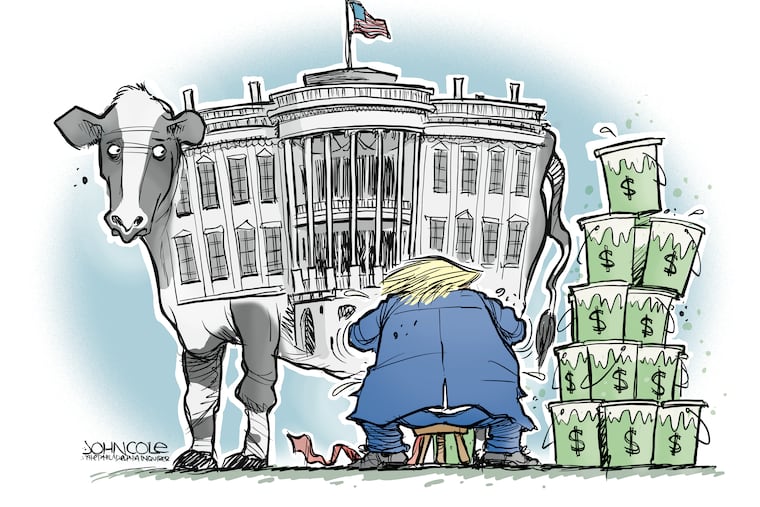
By year’s end, it’s expected there will be roughly 300,000 fewer federal government employees, thanks to Trump’s cost-cutting and anti-DEI initiatives. At 19%, Black workers are disproportionately represented in those ranks.
According to an analysis by the New York Times, African American women have been the hardest hit since Trump’s return to public office. An estimated 319,000 have left both private and public sector jobs.
That’s a staggering number. To help visualize just how many that is, consider that the number is roughly equivalent to the population of Pittsburgh. Imagine what would happen to that area’s economy if everyone in Steel City had become unemployed. The impact would be devastating, and the ripple effect would be felt throughout the country.
Black female unemployment nationally spiked to 6.7% in July, which is deeply concerning. The overall national average is 4.3%.
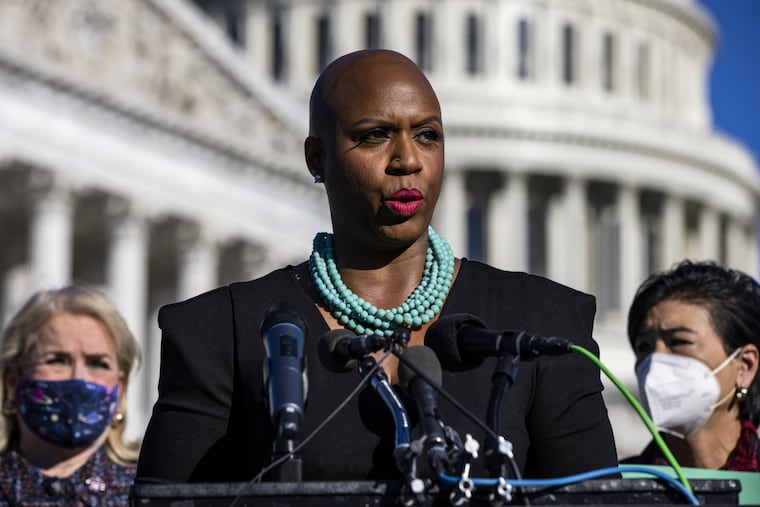
I’m happy to report that Rep. Ayanna Pressley (D., Mass.) isn’t just sitting back and letting it happen. Last week, she reached out to Federal Reserve Chair Jerome Powell, demanding answers for what she described as a “glaring red flag that forebodes danger for the entire country.”
“The U.S. Federal Reserve has a statutory mandate to promote maximum employment and that must be true for all people, regardless of race and gender,” Pressley wrote in the letter. “Given your role as Chair of the Federal Reserve Board of Governors, I write to you to request data about the impact of Black women’s job loss on the U.S. economy and a response on how this issue will be addressed.”
Annita Bonner is one of the women in that group. As a child growing up in Waynesboro, Miss., she remembers being taught that she needed to “get an education and a good government job.” She did both. After obtaining a master’s degree in public administration, she sent out hundreds of applications before being hired by the Small Business Administration in 2020.
At the time, she naively assumed her economic problems were over. “I was able to pay rent on time for a change,” she recalled. “I was able to take my kids on little trips and not have to worry, ‘If I do this, are my lights going to get turned off?’ or ‘If I do this, I can’t pay my car insurance.’”
Remote work gave the divorced, single mother more time with her 10-year-old. For the first time, she was able to travel without worrying about the broader effects on her household budget and took trips to Dubai and Jamaica. She looked forward to one day having a government pension. Bonner said: “I was able to say, ‘I feel empowered. I don’t have to have a husband to do these things for me.’”
According to recent statistics, African American women represent just 7% of the overall labor force, but hold down 12% of federal jobs. So many of their lives are being upended by all the cuts — not that Trump cares.
He has a history of disrespecting Black women — 92% of whom voted for former Vice President Kamala Harris. His responses at times to African American female reporters have been beyond the pale. Last week, he insulted NBC News White House correspondent Yamiche Alcindor, one of the nation’s most respected journalists, after she asked him, “Are you trying to go to war with Chicago?”
Her question wasn’t out of order since a day earlier, Trump had posted an apocalyptic-looking social media meme that reads, in part, “Chicago about to find out why it’s called the Department of WAR.” But instead of answering her question, the president raised his voice and accused her of being “fake news” and told her to “be quiet.”
He also called her “second rate,” which is similar to the way he has insulted other high-profile African American women, such as Harris and Rep. Jasmine Crockett (D., Texas), by claiming they are low IQ when they clearly are not.
Meanwhile, most of Trump’s cabinet picks are white. Since he has been back in office, he has fired Carla Hayden, the first Black librarian of Congress, and Gwen Wilcox, the first Black female member of the National Labor Relations Board. He has also tried, but so far failed, to fire Lisa Cook, the first Black woman to serve on the Federal Reserve’s Board of Governors.
Meanwhile, that old saying about African Americans usually being “the last hired and the first fired” proved sadly prescient for Bonner, as well.
Since being terminated from her job in disaster relief in April, Bonner hasn’t found any sort of work comparable to her government position. When I caught up with her on Tuesday, Bonner was waiting in a Walmart Supercenter parking lot, hoping to earn a few bucks as a delivery driver using the Spark app.
Her job loss put her into a depression as she wondered: “How am I going to make this same money back? Where can I go? What can I do? And my worth is just out the window because this job was just allowing me to do the things I wanted to do. I feel a sense of hopelessness.”
As do countless others in her situation, who understand that Black women historically serve as canaries in the coal mine. It’s clear that the economic consequences of Trump’s wrongheaded policies have negatively impacted Black women first, but our demographic will hardly be the last.