Progressive candidates line up to challenge Council incumbents | Shackamaxon
Plus: Self-driving cars come to Philly, and the city shines as a host during America’s 250th birthday year.
This week’s column looks at next year’s races for City Council, self-driving cars, and Philadelphia’s success as a host city for major events like the MLB All-Star Game.
Council challenge
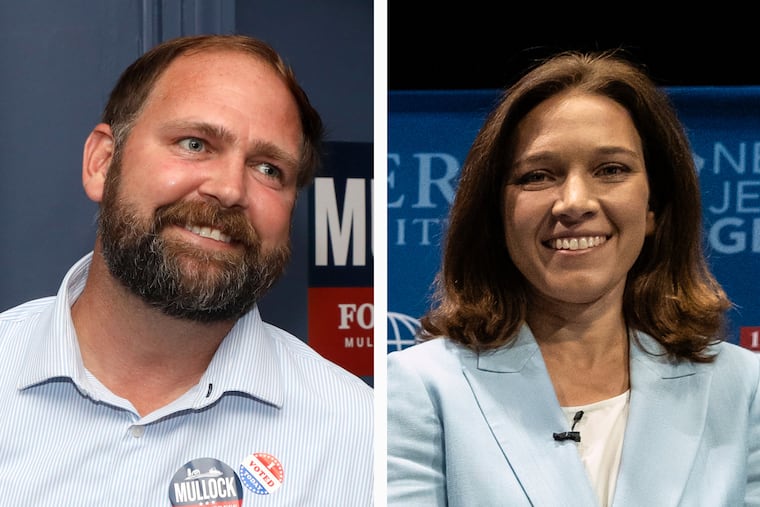
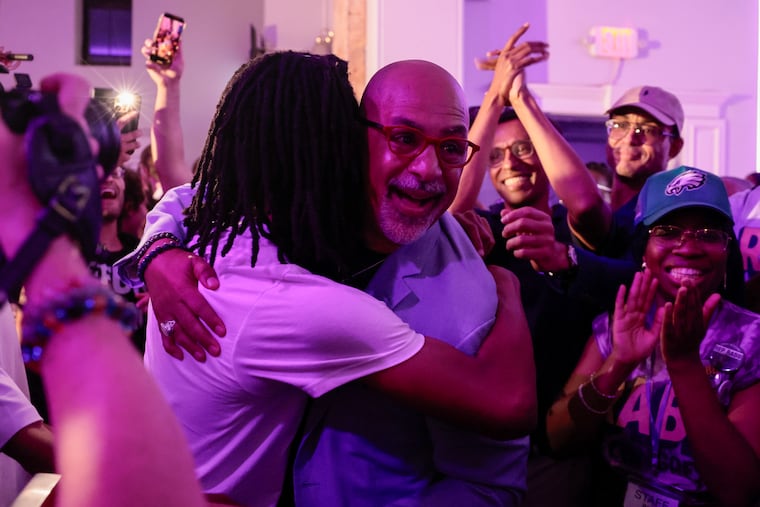
State Rep. Chris Rabb’s success in the 3rd Congressional District’s Democratic primary has galvanized local progressives. According to Inquirer reporting, which aligns with the chatter I’ve heard, the plan is to challenge for more seats on City Council. Specifically, those of 8th District Councilmember Cindy Bass and 1st District Councilmember Mark Squilla. Jeffery “Jay” Young, who represents the 5th District, is also likely to be challenged, although none of those candidates are explicitly aligned with the city’s progressive movement.
As someone who closely follows City Council, I have mixed feelings about this news.
I’ve strongly criticized Bass for her handling of land use in her district, which is often perplexing. Many iconic buildings have been left vacant under her watch, and her determination to serve as the decision-maker has frustrated community groups and constituents who have their own ideas for their neighborhoods. However, her likely progressive opponent did not impress me at all during the last election. At candidate forums, on questionnaires, and in his endorsement meeting with my colleagues on the Editorial Board, Seth Anderson-Oberman had admirable passion, but nowhere near Bass’ deep understanding of city government.
Young has not served his constituents well in his first term. From senior housing in Strawberry Mansion to the renovation of the Cecil B. Moore Library, he’s consistently made baffling decisions. The only thing that could possibly save his reelection is if the vote is diluted by the number of challengers he’s expected to face — Jalon Alexander, Curtis Wilkerson (who ran but failed to secure enough signatures in 2023), Dustin Dove, and Max Tuttleman are all rumored candidates. Perhaps the petition process will shrink the field.
In the 1st District, why change? I don’t always agree with Squilla, but I can say that he shows up consistently. He answers emails himself, usually promptly. He tries to balance everyone’s input and find a fair way forward. He asks reasonable questions at hearings and doesn’t scapegoat city staff to score easy points.
Another issue with any progressive takeover is the lack of vision.
It is good to see the local establishment Democrats forced to campaign and defend their records, but what do progressives plan to do with their power once they get it? Some of the ideas progressives frequently campaign on, like a wealth tax or rent control, are unlikely to pass constitutional muster in Pennsylvania’s courts. Policy ideas that have been implemented, like inclusionary zoning, have failed to deliver.
It is easy to decry the state of Philadelphia’s schools and services, but where would a progressive Council majority find revenue to invest in them? How would they grow our anemic business sector?
When progressives have won upset victories, it has been because they have something tangible to offer. Larry Krasner became district attorney because he really could prosecute police officers for misconduct, overturn wrongful convictions, and change the department’s culture if elected. New York’s Zohran Mamdani might not be able to convince the MTA that free buses are a good idea, but he is making them faster, and he has implemented the promised freeze for the city’s rent-stabilized apartments.
Driver’s seat
It seems like every week I see more Waymo vehicles around the city. The autonomous cars are regulated by Harrisburg, not City Hall. At a March City Council hearing, lawmakers were told explicitly: Philadelphia is entirely preempted on this issue.
At the time, I talked to some opponents of the new technology. They are pushing for a yearslong delay. At a rally before the hearing, speakers referenced both safety concerns and worries about job losses.
While a couple of speakers referred to admittedly jarring incidents, it does seem like the computers do a better job of driving safely overall. A study done by Swiss Re, an insurance company, found that Waymos are less likely to damage both people and property. Looking at 25 million miles of operations, the Waymo cars recorded nine cases of property damage and two cases of bodily injury. The typical result for human drivers over a stretch like this would be 78 cases of property damage and 26 bodily injury claims. This is a serious and positive shift when it comes to road safety for all users.
I certainly can understand worrying about losing your job to new technology. At the same time, human drivers have not disappeared from the cities where Waymo already operates, even as rideshare apps keep more and more of the fare for themselves.
Another argument is that Waymos represent more cars at a time when cities are moving away from auto-oriented policymaking. It is no secret that I am a strong supporter of this shift, but cars aren’t going away anytime soon. Just one in 10 Americans rarely or never drive a car. In much of the country, getting around without a vehicle is arduous, if not outright impossible.
If Waymo can provide safer and cheaper access to mobility for people who can’t drive themselves, it may be a net positive.
Hopping host
The biggest festivities of America’s 250th birthday may be over, but Philadelphia continues to shine as a host. Baseball fans and commentators mostly praised the city’s efforts, and Independence Mall might have been the most historic setting ever for the All-Star Game’s red carpet show. MLB’s tribute to The Sandlot took us to city neighborhoods, the Home Run Derby was enlivened by the antics of our fans, and the fourth annual Swingman Classic gave HBCU athletes the opportunity to play in a big-league ballpark.
I finally got up to the FIFA Fan Festival in Fairmount Park, which also showcased the city’s strengths as a host. It was genuinely impressive to see the range of options for food and activities, and how short the lines typically were despite the thousands of people who came to visit every day.
While changing a city’s perception takes time, there are undoubtedly many visitors who are going back home and telling folks that Philadelphia is so much nicer than they expected.